
Intel Patents a Tool That Shifts Camera Angles in 3D Scenes to Train AI
Intel has patented a way to make a GPU automatically capture and subtly reposition the camera angle of a 3D scene — not for the user's benefit, but to build richer datasets for training AI graphics models.
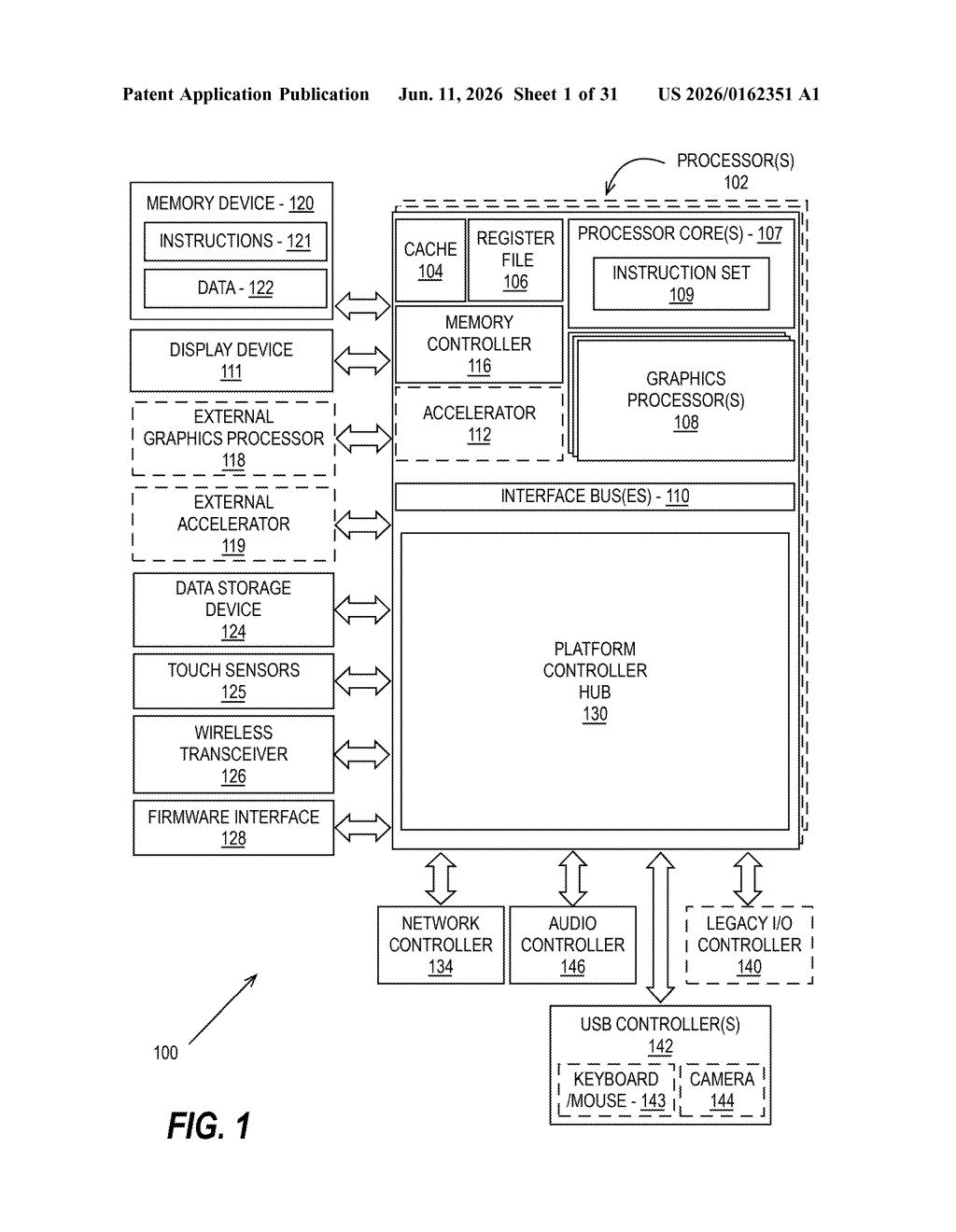
What Intel's viewport-shifting GPU tool actually does
Imagine you're trying to teach an AI how to render a 3D scene — say, a video game environment. To learn well, the AI needs to see that same scene from dozens of slightly different angles, not just one fixed viewpoint. Gathering all those variations by hand would take forever.
Intel's patent describes a tool built directly into the GPU pipeline that does this automatically. It intercepts the graphics instructions a 3D application is already sending to the chip, captures individual frames, and then systematically shifts the virtual camera position for each one — generating a whole collection of slightly different perspectives without anyone having to re-render the scene from scratch.
The result is a conditioned dataset — a structured library of frames from multiple angles — that can be fed into an AI model to help it learn how to upscale, predict, or reconstruct 3D visuals more accurately. Think of it as a data-collection assistant that piggybacks on work the GPU is already doing.
How the GPU captures and reframes each 3D frame
The patent describes a system with three main components working together inside a graphics processing unit (GPU):
- Processing resource — the normal GPU execution engine running graphics commands from a 3D application.
- Capture tool — a layer that intercepts and records those graphics commands as they flow through the pipeline, without disrupting the application itself.
- Data generator — a component that takes the captured commands, renders individual frames of interest, then systematically modifies the viewport settings (the virtual camera's position and orientation) for each frame to produce a set of shifted variations.
The term "viewport shifting" refers to adjusting where the imaginary camera sits within the 3D scene — even small shifts can give an AI model meaningfully different spatial information about geometry, lighting, and depth. By automating this at the GPU level, Intel's approach sidesteps the need to manually re-author 3D content or run separate rendering passes.
The filing specifically targets non-real-time 3D applications, meaning offline rendering pipelines — the kind used for generating training data or reference imagery — rather than live interactive games.
What this means for AI-driven graphics and game rendering
The practical payoff here is in AI-based upscaling and super-sampling — techniques like Intel's own XeSS that use neural networks to reconstruct high-resolution frames from lower-resolution inputs. Those networks need large, diverse datasets to train well, and getting varied viewpoint data from 3D scenes has traditionally been tedious to produce at scale.
By embedding a dataset-generation pipeline directly in the GPU, Intel could streamline the feedback loop between its graphics hardware and its AI rendering research. For you as a user, better training data could eventually translate into cleaner upscaled visuals in games or content creation tools — though this patent is firmly in the infrastructure layer, not the end-user product layer.
This is a quiet but sensible piece of infrastructure work. Intel is essentially automating the data-collection grunt work that sits behind AI graphics features like XeSS — and doing it at the hardware level is a smart way to keep that pipeline efficient. It's not headline-grabbing, but it's the kind of foundational tooling that makes iterative AI rendering improvements actually feasible at scale.
There are more where this came from
We read every patent application Big Tech publishes and send you the ones worth knowing. Plain English, free, every week.
Want this weekly breakdown for a company we don't cover? Patentlyze Pro →