
Samsung Patent Stores AI Lookup Data Directly Inside the Memory Chip
Every time a streaming service suggests a show you might like, a massive lookup table gets searched at high speed. Samsung's new patent puts that table inside the memory chip itself, cutting out the long round-trip to a traditional processor.
What Samsung's near-memory AI lookup actually does
Imagine a grocery store where the staff has to run to a back office every time a customer asks where something is. Now imagine that same information is posted right on the shelf. That's roughly the idea behind this Samsung patent.
AI recommendation systems (the kind that decide what shows, ads, or products to show you) rely on giant lookup tables called embedding tables. Normally, a processor has to fetch data from distant memory chips over and over, which wastes time. Samsung's patent stores those tables inside a new kind of memory chip that can also do the searching itself.
The result is that multiple lookups can happen at the same time, in parallel, without data constantly shuttling back and forth. For the companies running these systems at scale, that could mean faster results using less energy.
How CXL-PNM handles parallel embedding lookups
The patent describes a system built around CXL-PNM (Compute Express Link-based Processing-Near-Memory) devices. CXL is a modern hardware connection standard that lets memory chips talk to processors more efficiently than older interfaces. PNM means the chip has its own small processor sitting right next to the memory, so it can do work locally instead of waiting for a central CPU.
The core steps are:
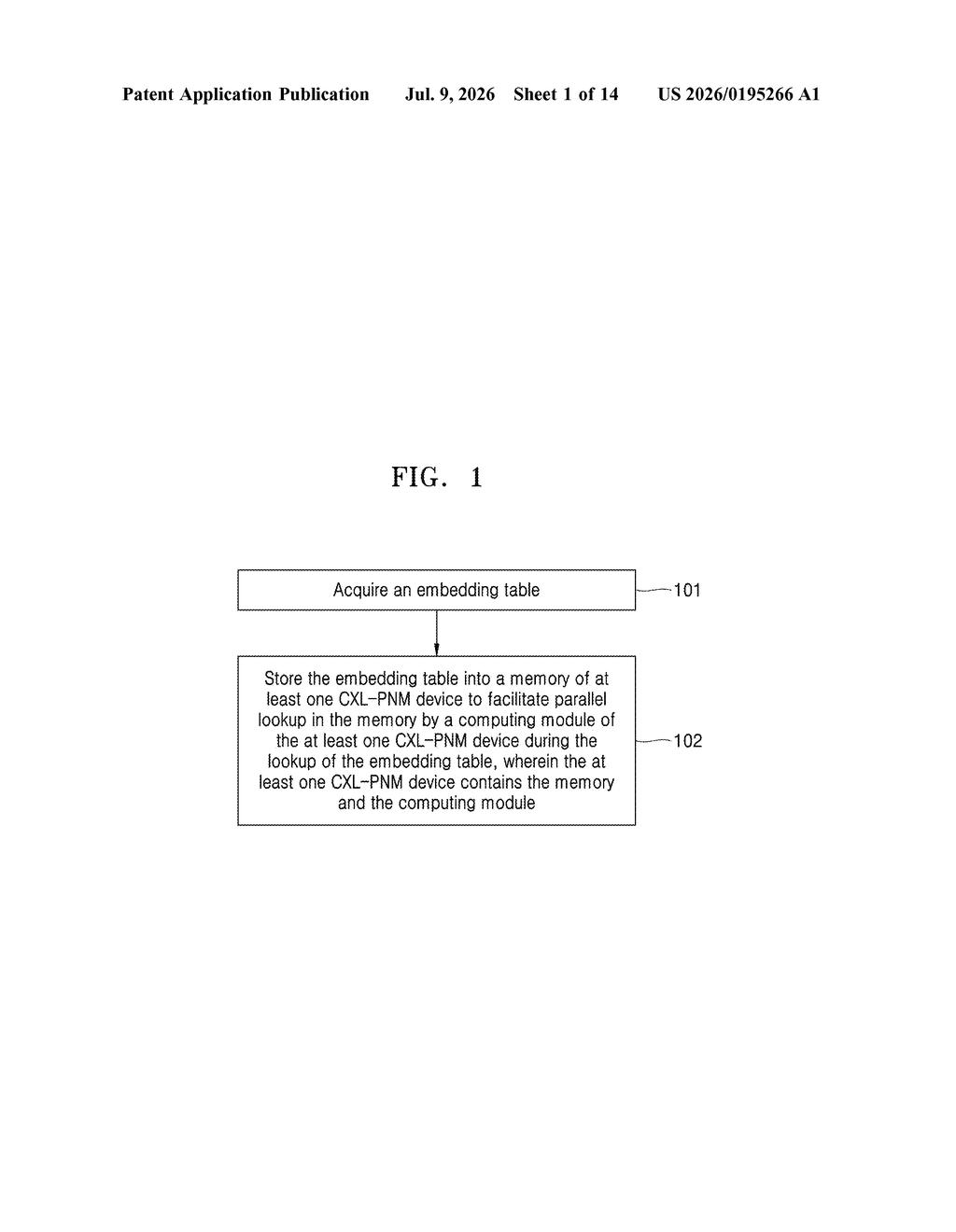
- An embedding table (a large matrix that maps abstract concepts, like user preferences or product categories, into numbers an AI can compare) is loaded into the CXL-PNM device's memory.
- The device's built-in processing circuitry searches different parts of that table simultaneously, rather than one section at a time.
- Multiple CXL-PNM devices can work together, each holding a portion of the table and searching in parallel.
This approach attacks a well-known bottleneck in AI inference (running a trained model to produce a result). Embedding lookups are among the most memory-hungry operations in recommendation AI, and traditional CPU-to-DRAM trips are slow relative to the speed of modern processors. Keeping the data and the computation in the same physical chip shrinks that gap.
What this means for AI recommendation speed
Recommendation engines power a surprisingly large share of internet traffic, from social feeds to e-commerce to ad targeting. The companies running those systems at scale spend enormous resources on the hardware that keeps latency low. A chip architecture that cuts the back-and-forth between processor and memory could meaningfully reduce the server count (and therefore the energy cost) needed to serve the same number of requests.
For Samsung, this also fits a broader push into memory chips that do more than just store data. If processing-near-memory becomes standard for AI workloads, Samsung wants its chips to be the ones doing that extra work, not just the passive storage layer underneath someone else's processor.
This is infrastructure-level engineering, not a flashy consumer feature, but it addresses a real and well-documented problem in AI hardware. The embedding-table bottleneck is a genuine pain point for anyone running recommendation models at scale, and the CXL standard is gaining real traction in data centers. Whether Samsung's specific approach wins out is an open question, but the problem it's solving is worth taking seriously.
Get our take in your Top Stories
Liked this breakdown? Add Patentlyze as a preferred source on Google, and our plain-English take shows up more often in your Top Stories the next time Samsung patent news breaks.
There are more where this came from
We read every patent application Big Tech publishes and send you the ones worth knowing. Plain English, free, every week.
Want this weekly breakdown for a company we don't cover? Patentlyze Pro →