Samsung
Samsung · Chip · Filed Aug 4, 2025 · USPTO published Jul 9, 2026 · Jul 9 release
Samsung Patents a Processor That Skips Slow Tasks Instead of Waiting
Most processors stall when a task takes too long to get a reply. Samsung's new patent describes a chip that simply moves on to other work, then picks up where it left off once the slow result arrives.
- Publication number
- US 2026/0195137 A1(US20260195137A1)
- Applicant
- Samsung Electronics Co., Ltd.
- Filed · Published
- Aug 4, 2025 · Jul 9, 2026
- Inventors
- Jongmin KIM, Taewan KIM, Kyungsik UM, Minsik OH, Joohyeong YOON, Youngjin CHO
- Status when we published
- Waiting for an examiner
- Document
- 20 claims
- US classification
- 712/220
How Samsung's processor avoids wasting time on slow tasks
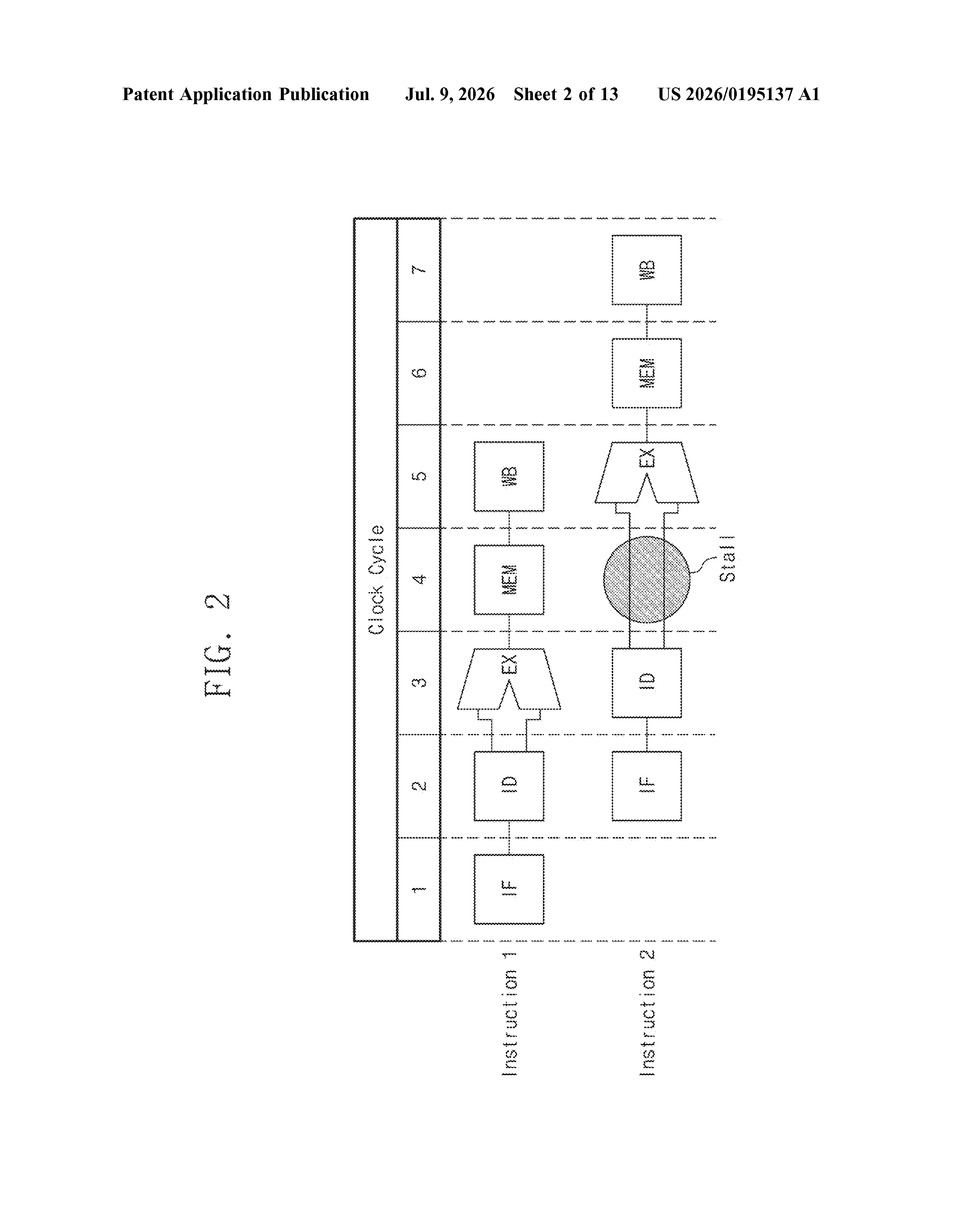
Imagine you're a waiter who places a food order at the kitchen, then just stands at the window waiting for it instead of serving other tables. That's roughly how many processors behave when they send a request (say, fetching data from memory) and have to wait for the answer before doing anything else.
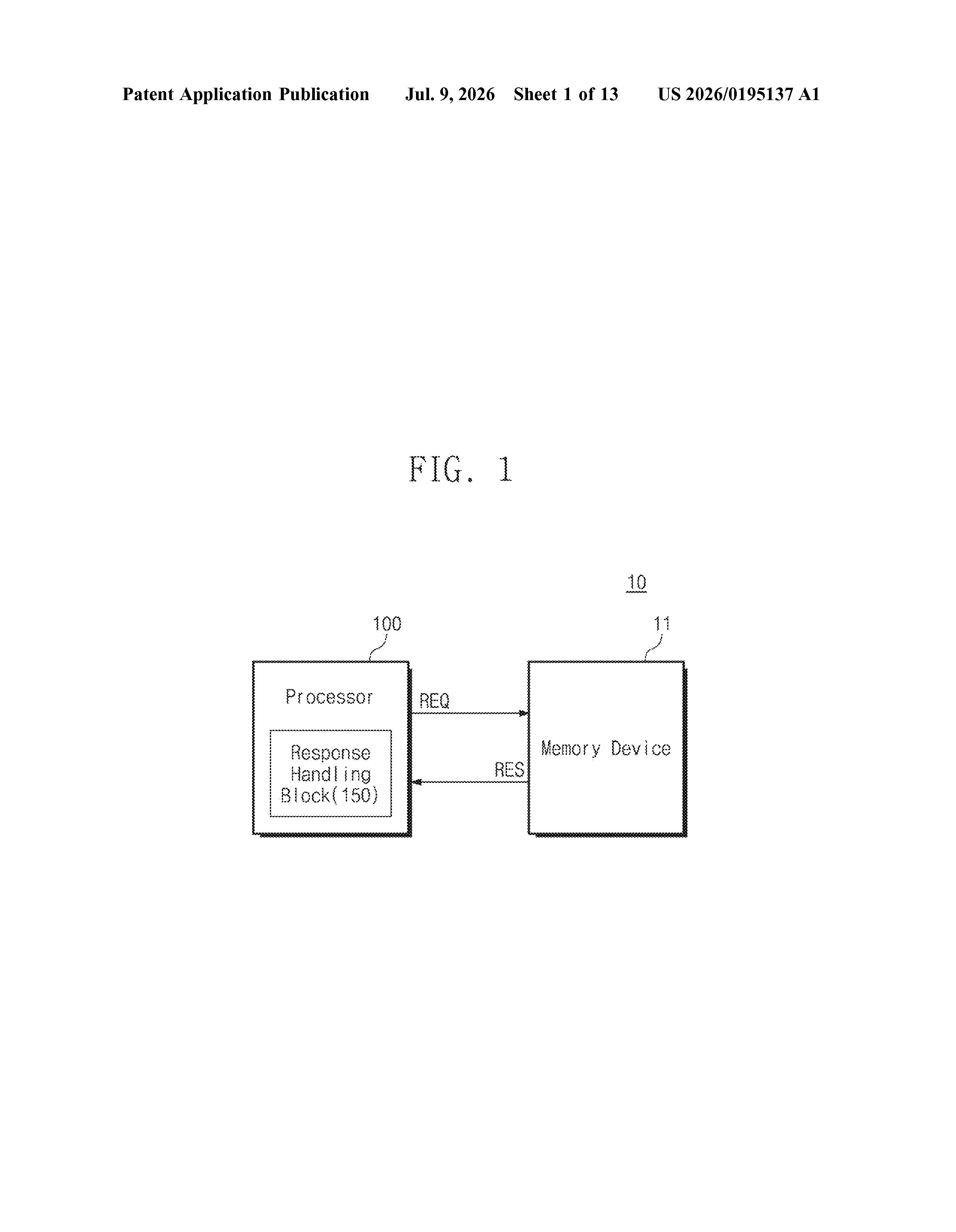
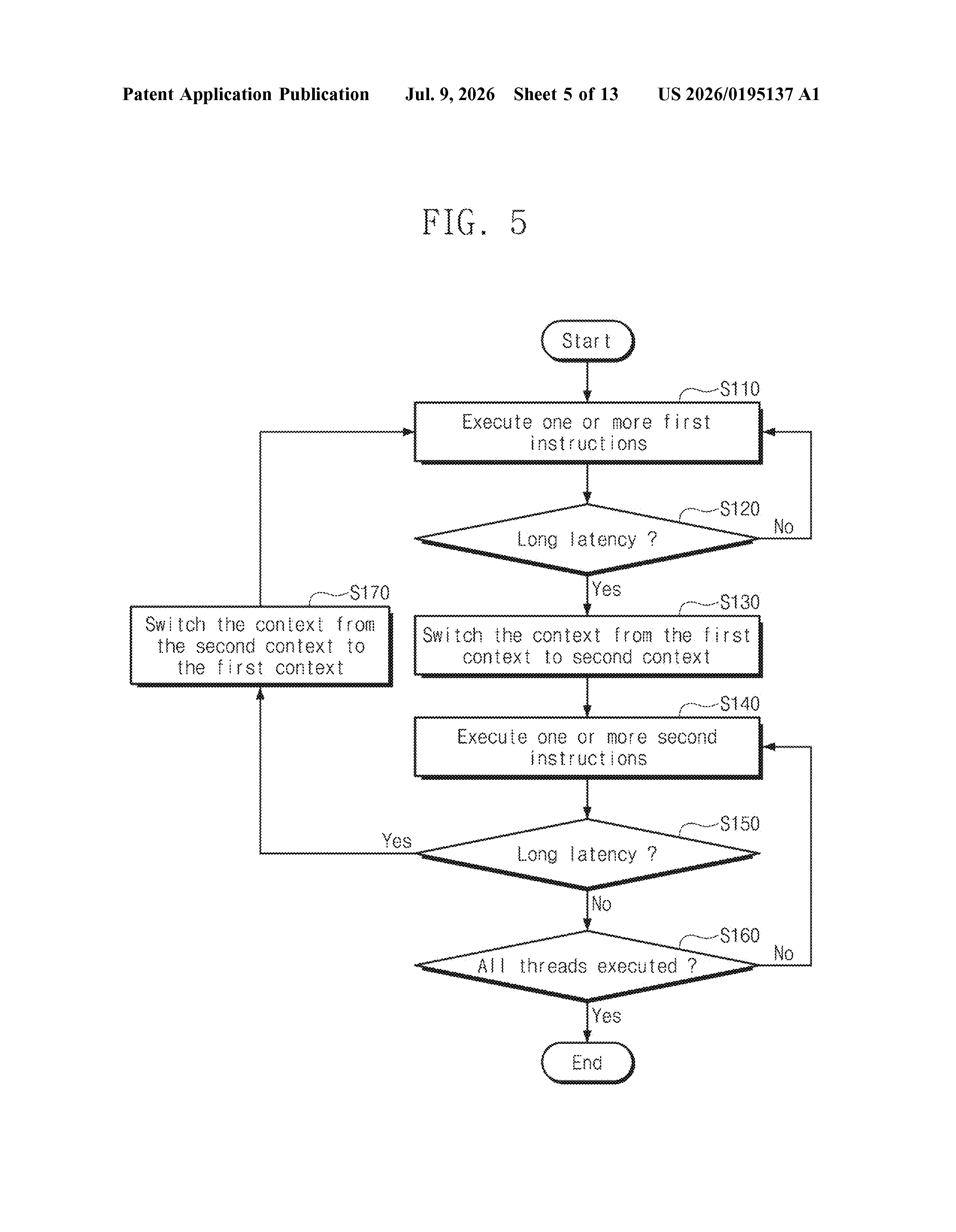
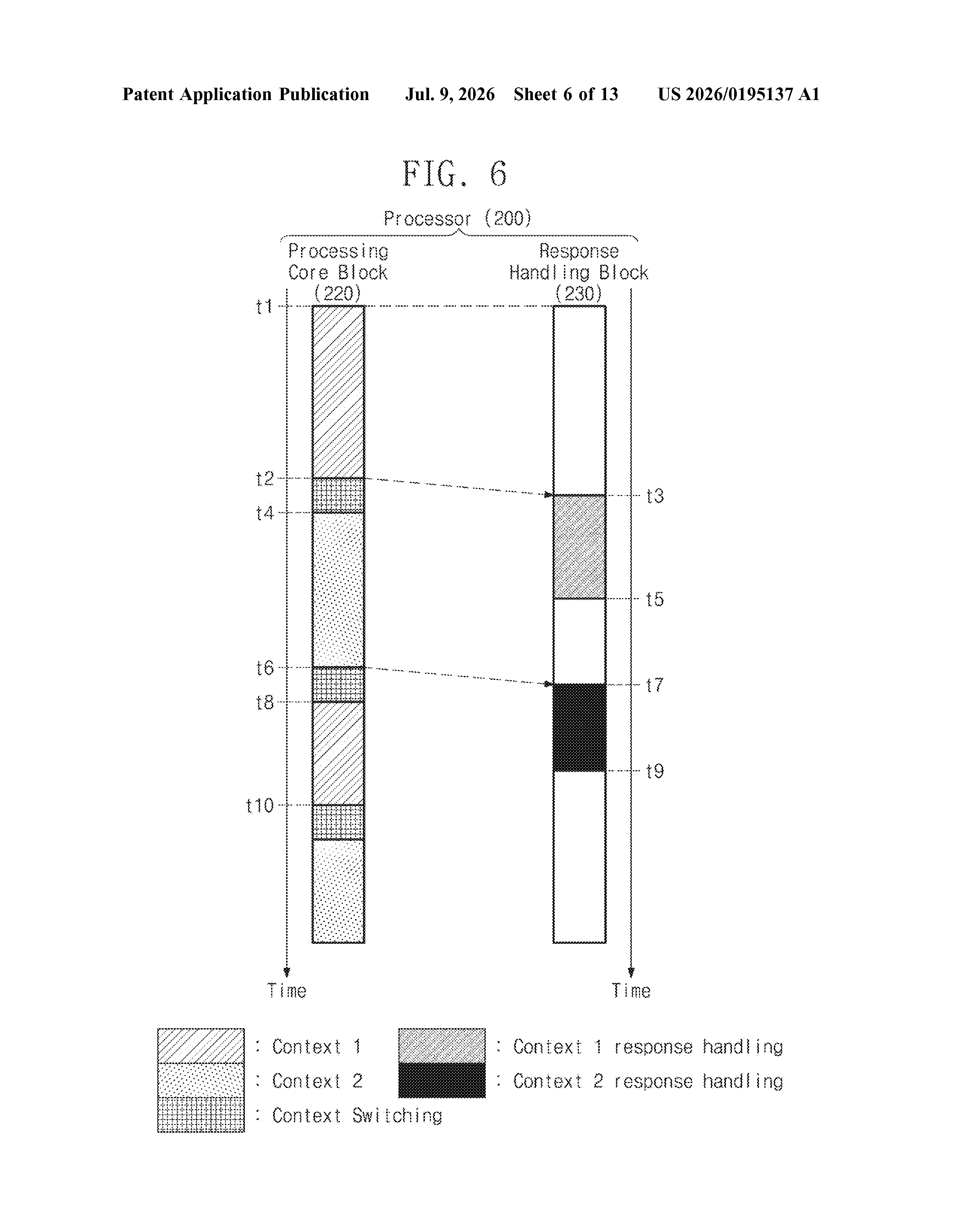
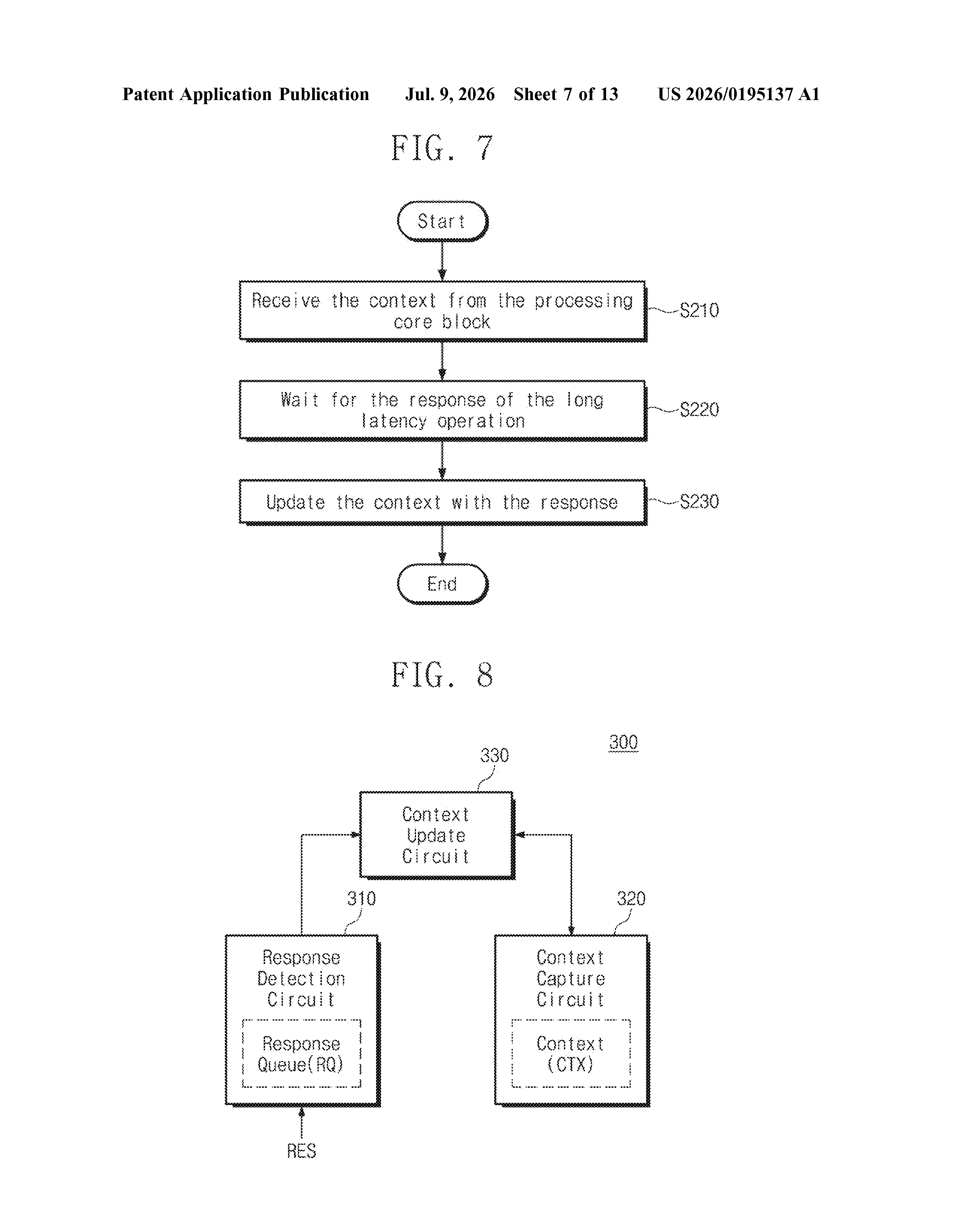
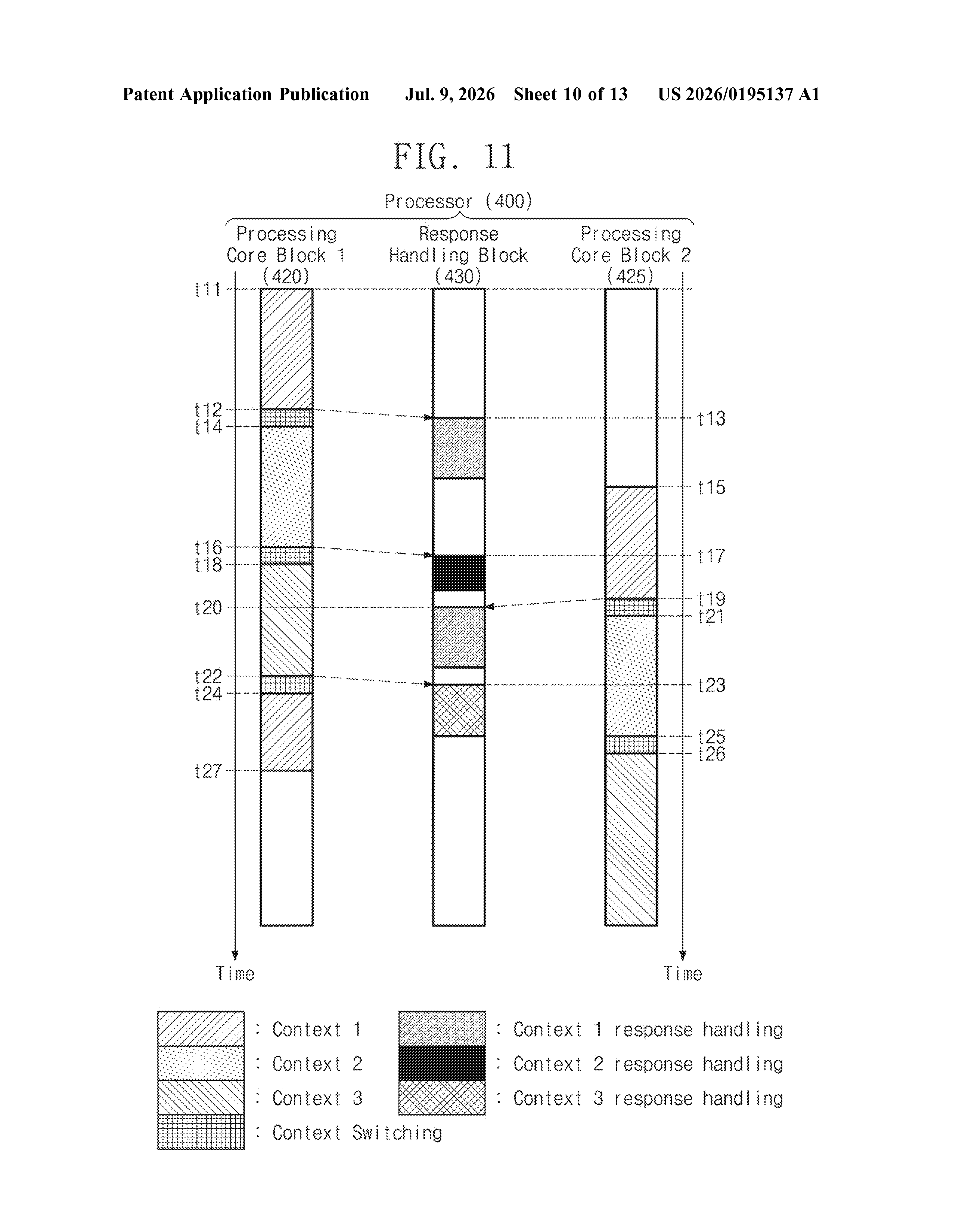
Samsung's patent describes a processor that acts more like an efficient waiter. When the chip detects that a particular task is going to take longer than expected, it saves its place, hands off the waiting job to a separate component called a response handling block, and switches to a different task entirely. The response handler watches for the slow answer and fills in the saved notes when it arrives.
Once that answer comes back, the original task is updated and ready to be picked back up. The processor never has to just sit there doing nothing, which means it can get a lot more done in the same amount of time.
How the response handling block manages mid-task switching
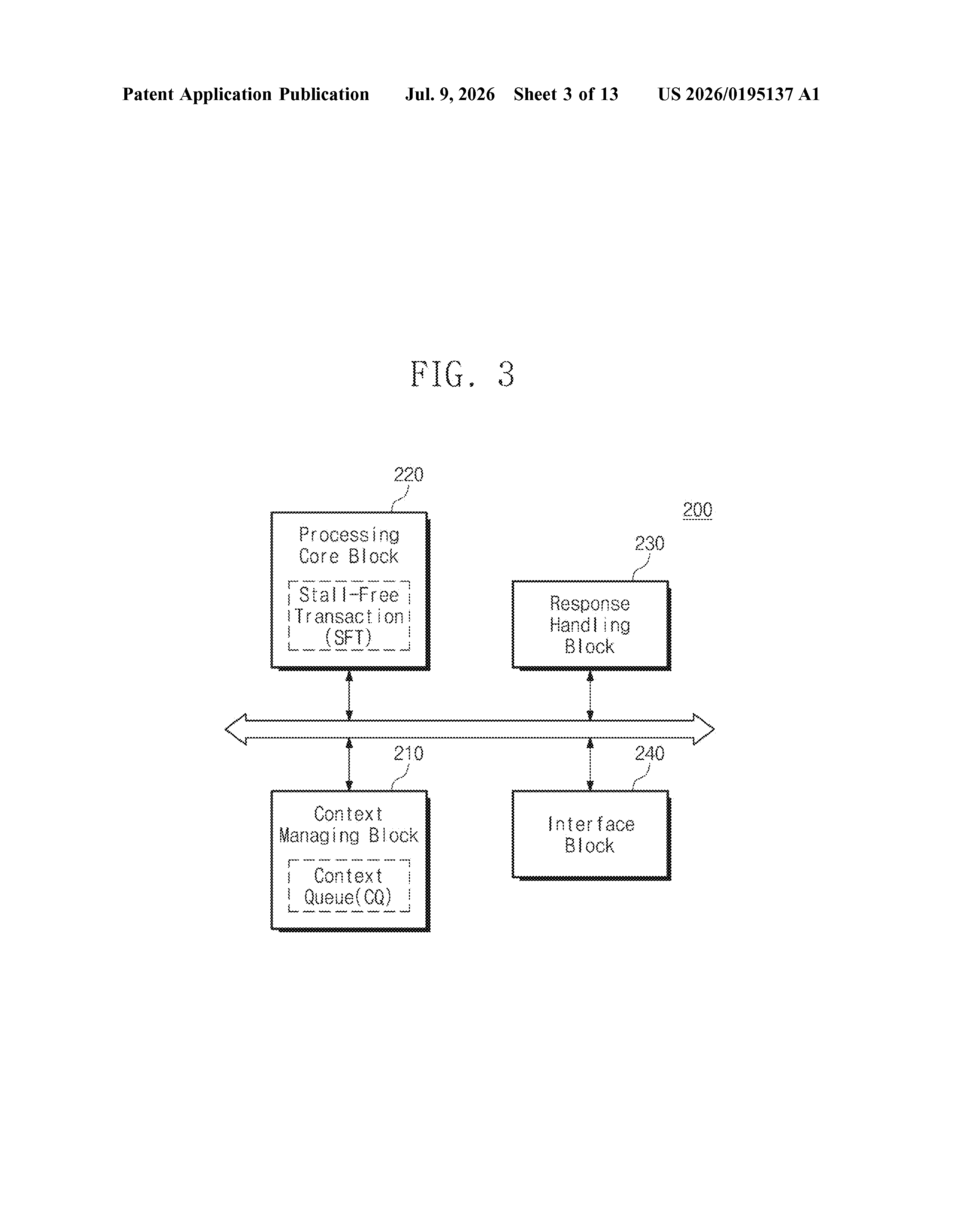
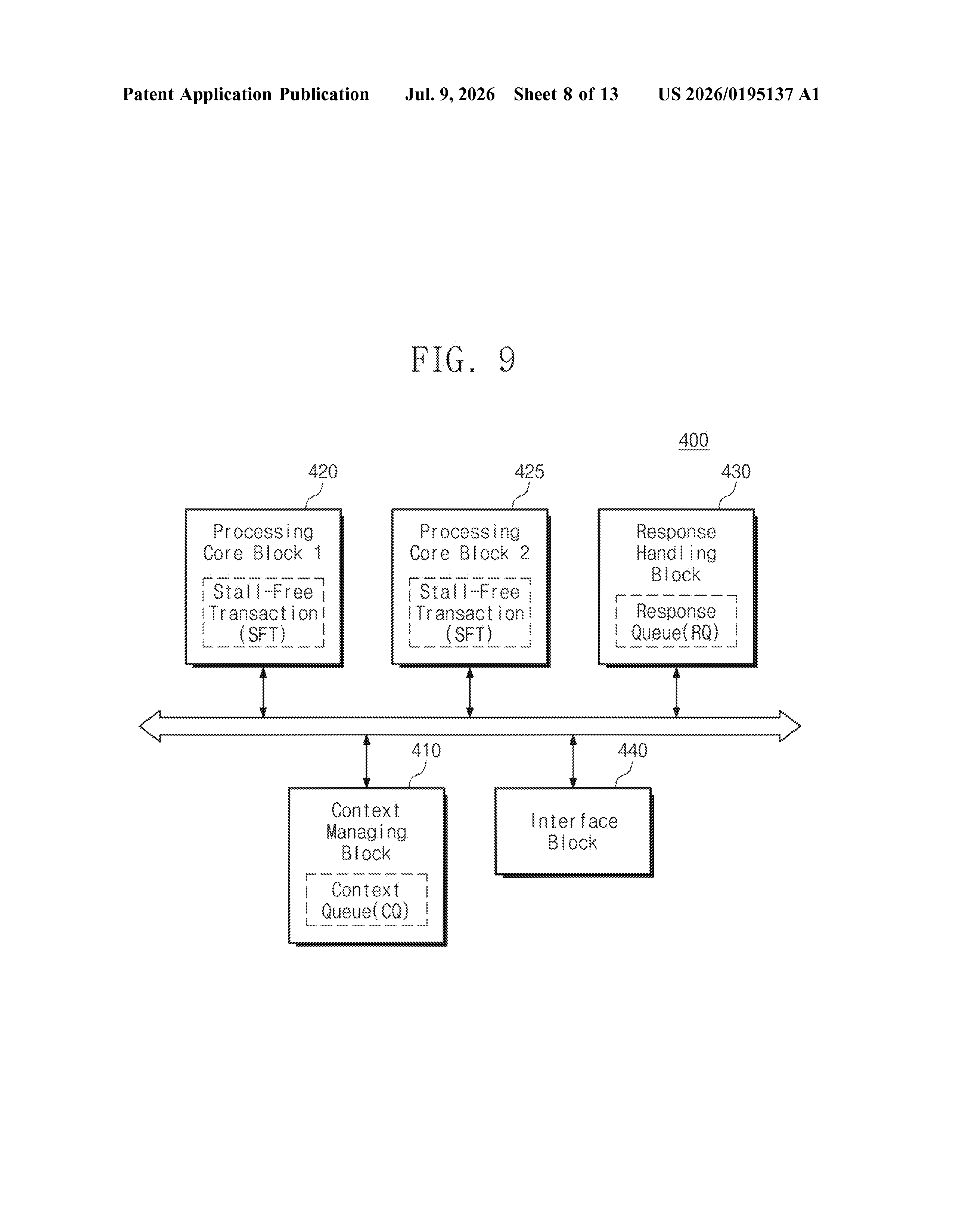
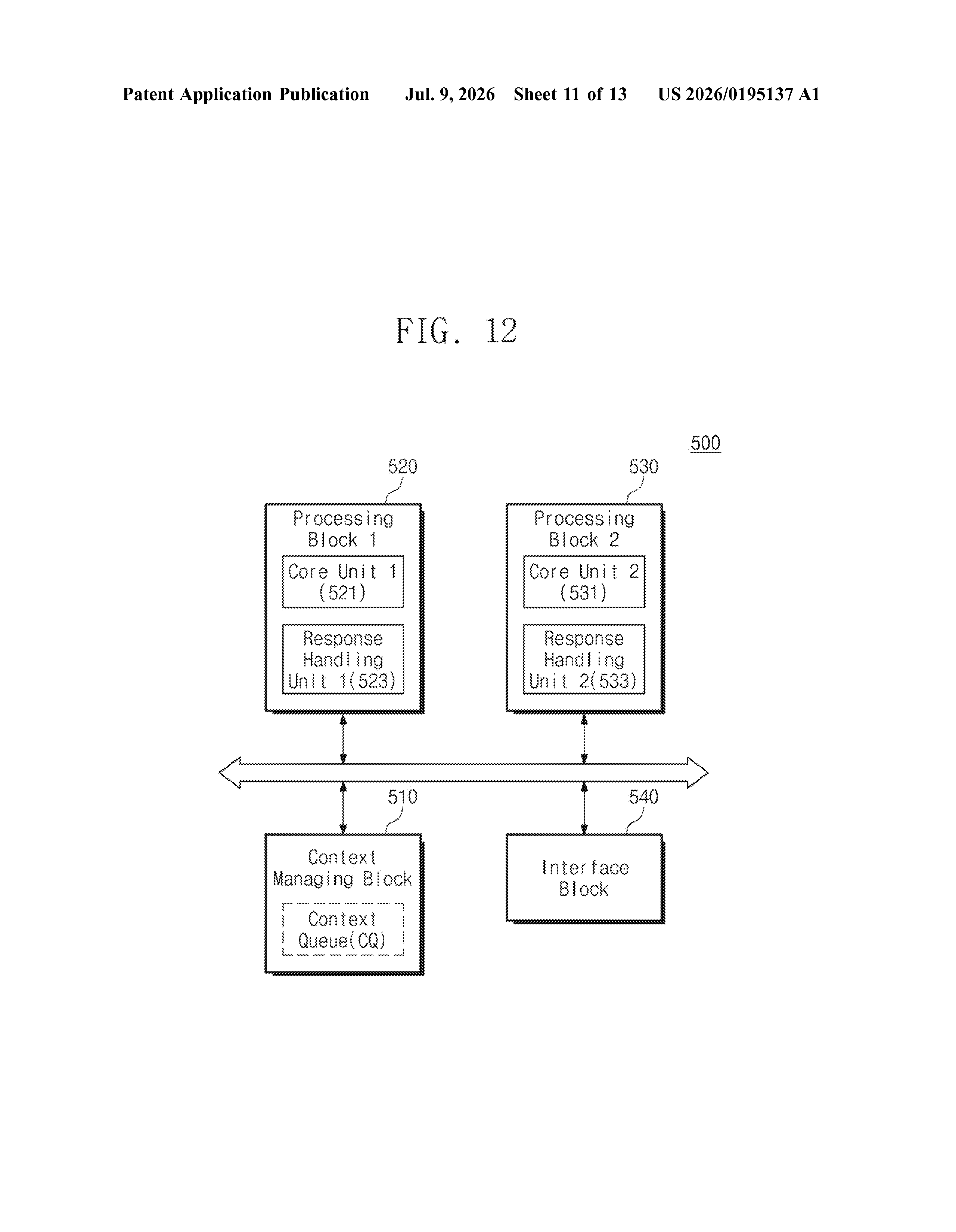
The patent describes a processor made up of two main parts working together:
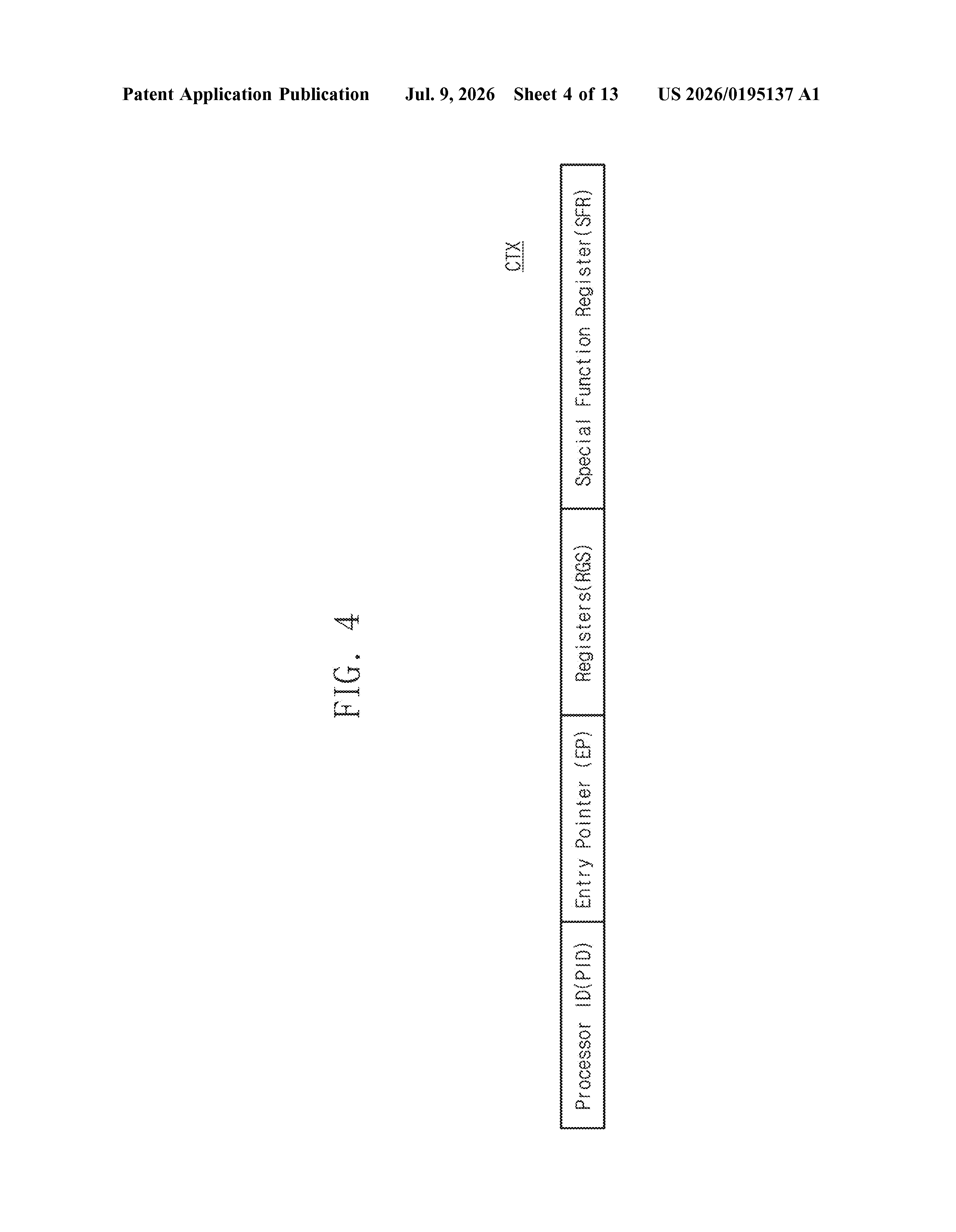
- Processing core block: This is the main worker. It runs instructions and tracks its progress in a structure called a context (think of it as a sticky note with everything the chip needs to remember about a job in progress).
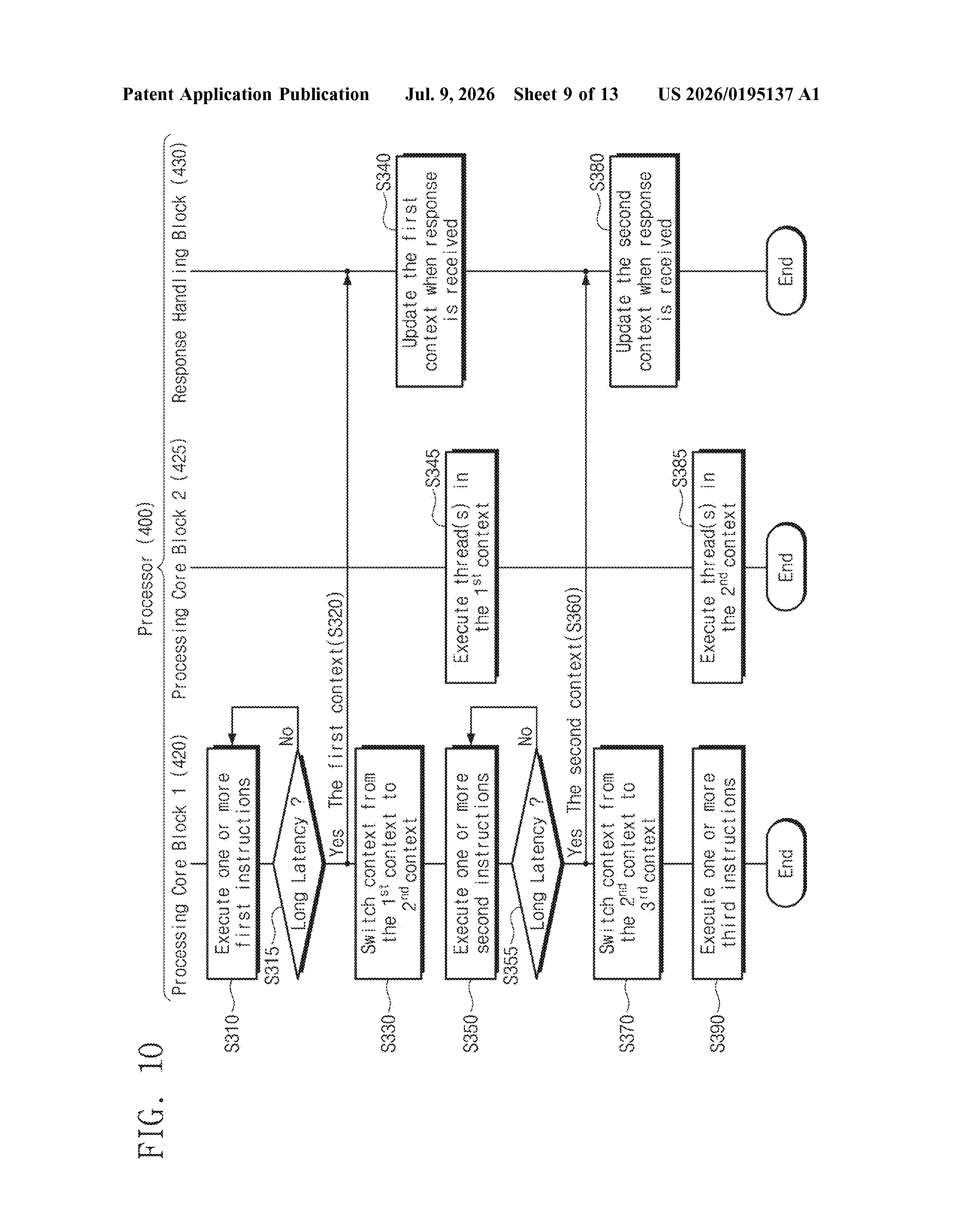
- Response handling block: A dedicated side unit that takes over waiting duties. When the core detects that a pending operation will take longer than a set time limit (the threshold value), it hands its sticky note to the response handler and switches to a completely different task.
The key trigger is the last instruction the core executes before switching. If that instruction signals a long-latency wait, say a memory fetch or a network-bound request, the core doesn't idle. Instead, it performs context switching, jumping to a fresh task with a new context.
Meanwhile, the response handling block sits with the original context, waits for the slow answer to arrive, writes the result back into that saved context, and marks it updated. When the core eventually circles back, the job is ready to continue from exactly where it left off, with the answer already filled in.
What this means for chip efficiency in AI and data workloads
Waiting on slow responses is one of the biggest sources of wasted compute time, especially in workloads like AI inference, database queries, and network-heavy applications where a chip constantly sends requests and waits for replies. A processor that can automatically park those waits and stay busy has a real throughput advantage.
For Samsung, which makes chips for everything from phones to data center accelerators, this kind of architecture is particularly relevant as AI workloads grow and memory-access bottlenecks become a bigger constraint. If this approach makes it into production silicon, you could see it improving the speed of AI chips or server processors without any change to how software is written.
Source: US 2026/0195137 A1 at the USPTO (PDF). Full patent text and figures are in the official publication.
Get our take in your Top Stories
Liked this breakdown? Add Patentlyze as a preferred source on Google, and our plain-English take shows up more often in your Top Stories the next time Samsung patent news breaks.
Add Patentlyze on Google
One click.
There are more where this came from
We read the new patents from Big Tech, carmakers and more and send you the ones worth knowing. Plain English, free, every week.
The drawings · 13 sheets
13 drawing sheets from US 2026/0195137 A1 · click any drawing to enlarge
Show the other 5 sheets
More from Samsung
All 1,662 Samsung patents →
More in Chip
All 651 Chip patents →
Qualcomm
Qualcomm Patents a Way to Shrink AI Image Filters by Cutting Redundant Math
AMD
Chip Designer AMD Patents an AI Processor That Runs Two Types of Math at Once
AMD
Xilinx Patents a Processor That Loans Its CPU Cores to an Accelerator on Demand
AMD