
Google Patents Smarter Fall Detection for XR Headsets That Ignores Dropped Devices
Your XR headset could one day call 911 after a car crash — but only if it can tell you were actually wearing it at the time. Google's latest patent tackles exactly that problem.
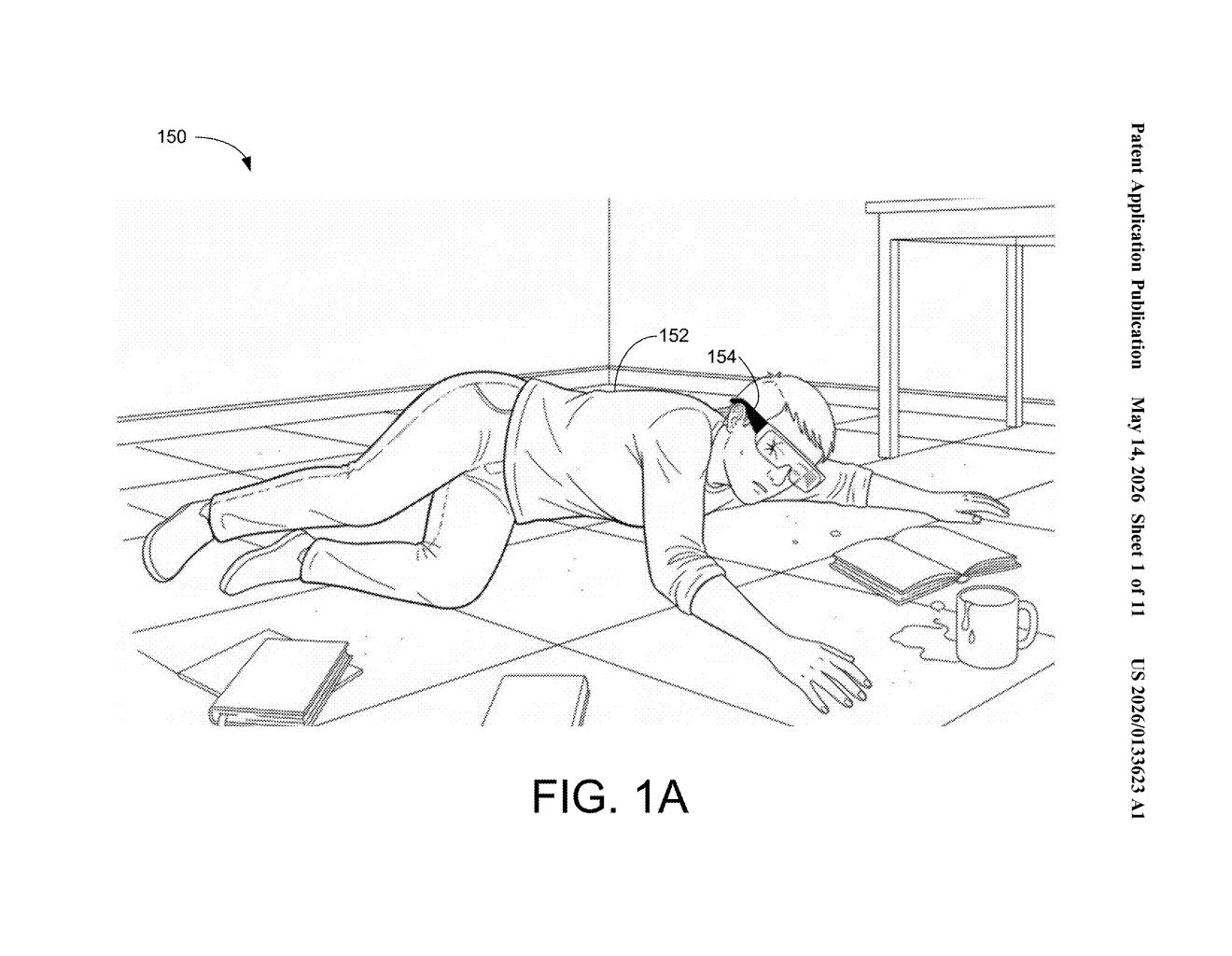
How Google tells a real fall from a dropped headset
Imagine you're wearing a pair of AR glasses and you take a bad fall. Ideally, the headset detects the impact and sends an emergency alert. But what if you just set the glasses down on a table a little too hard? A dumb sensor would treat both the same way — flooding you with false alarms or draining your battery running sensors you don't need.
Google's patent proposes a smarter sequence: first confirm the device is actually on someone's head, then start watching for sudden changes in orientation or movement. Only if both conditions are met does the system escalate to a full impact analysis — checking for the kind of sharp deceleration you'd see in a fall or a vehicle crash.
This "confirm wear first, then watch" approach keeps the system from crying wolf every time you toss your headset on the couch, and it conserves battery by keeping the heavier sensor processing dormant until there's a real reason to wake it up.
How wear detection gates the impact sensor pipeline
The patent describes a layered detection pipeline for head-wearable devices — think XR or AR glasses — that sequences sensor checks to minimize both false positives and unnecessary power draw.
Step one: wear confirmation. The system first verifies the device is actually being worn. The patent references a visual sensor (likely a proximity or eye-tracking sensor) as one way to confirm user presence. This single gate eliminates an entire class of false alarms caused by the device being moved, dropped, or jostled while sitting on a desk.
Step two: motion change detection. Once wear is confirmed, the system monitors for abrupt changes in orientation (which direction the device is pointing) or movement (velocity and trajectory) within a defined time window. This is the early-warning layer — cheap to run, always-on.
Step three: deceleration analysis. Only after a suspicious motion event is flagged does the system compute a deceleration value and check whether it clears a set threshold — the signature of a genuine impact like a fall or vehicular crash. Additional sensors can be spun up at this stage without wasting power during normal use.
The patent names a Fall Event Identifier component that aggregates these signals and produces a Fall Event Output — presumably a trigger for downstream actions like an emergency SOS.
What this means for emergency response in AR glasses
For XR headsets to earn a place in everyday life — not just gaming rigs — they need safety features people actually trust. False alarms erode that trust fast; a headset that pings emergency services every time you drop it onto your couch is a headset people stop wearing. Google's staged approach makes fall detection practical for a device that users will inevitably handle, not just wear.
This also signals that Google is thinking about always-on health and safety sensing as a first-class feature in its XR hardware roadmap, not an afterthought. Apple already bakes fall detection into the Apple Watch; bringing equivalent capability to a head-worn device — where a fall is more likely to mean a serious head injury — is a meaningful extension of that category.
This is solid, unsexy engineering that solves a real product problem. The insight — confirm wear before activating impact sensing — is obvious in retrospect, which is usually the mark of a good idea. If Google ships AR glasses with any health-safety angle, this patent describes exactly the kind of infrastructure you'd need under the hood.
There are more where this came from
We read every patent application Big Tech publishes and send you the ones worth knowing. Plain English, free, every week.
Want this weekly breakdown for a company we don't cover? Patentlyze Pro →