
IBM Patents a System That Finds the Exact Paragraph You're Looking For Inside Any File
Instead of returning an entire document when you search for something, IBM's new patent describes a system that pinpoints the specific section of a file that actually answers your question. Think of it as keyword search, but for meaning.
How IBM's file-chunk search actually works
Imagine you ask a question and your computer searches through thousands of documents to find the answer. Most search tools either return the whole document or match on exact words. That means you get a 200-page PDF when you just needed the one paragraph on page 47.
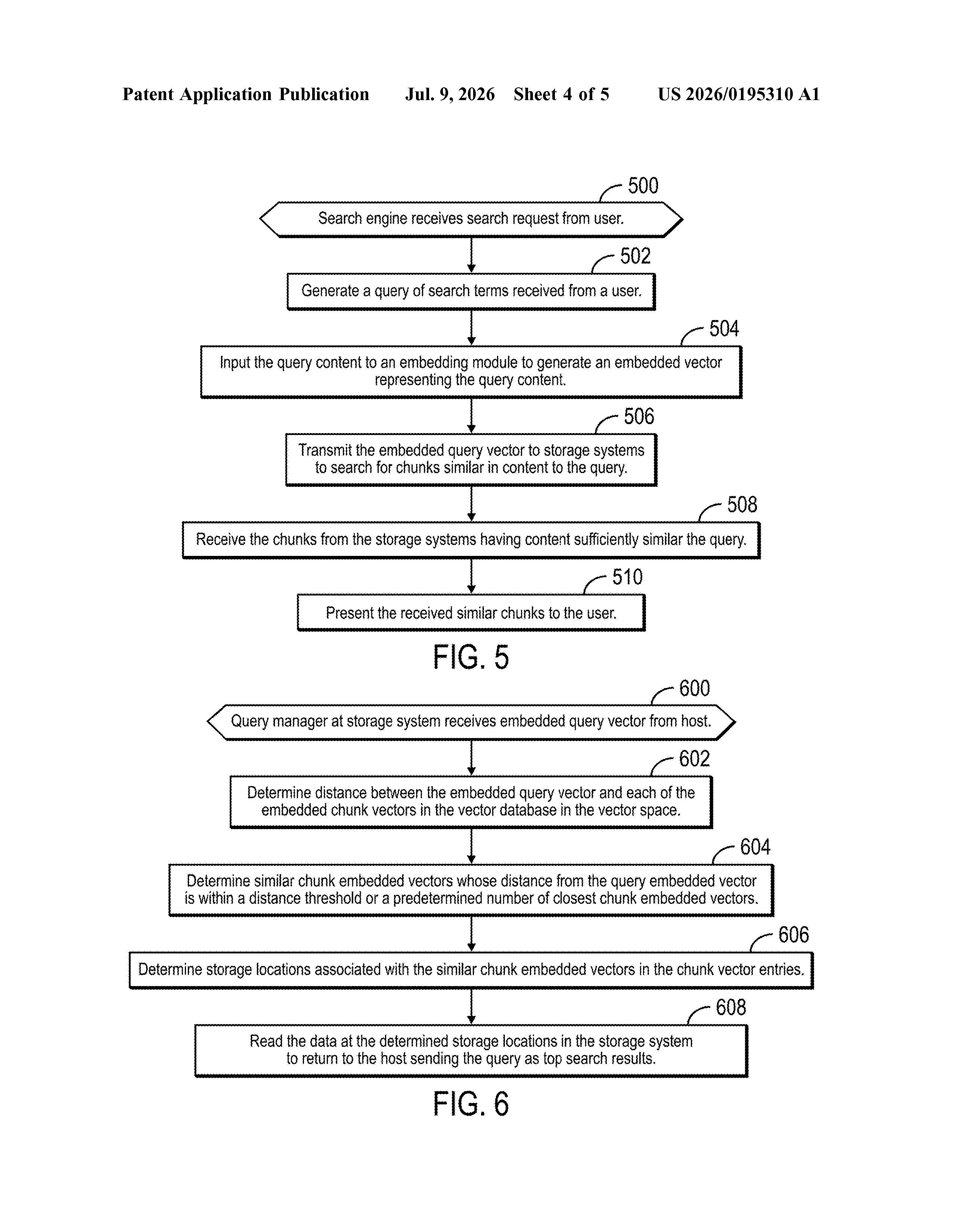
IBM's patent describes a system that reads every file in advance, breaks it into smaller pieces (called chunks), and captures what each piece means, not just what words it contains. Those meanings get converted into numbers and stored in a special database. When you ask a question later, the system converts your question into numbers too and finds the chunks whose numbers are closest.
The result: instead of a list of documents, you get back the specific sections of files that actually answer what you asked. This is the core mechanic behind most modern AI question-answering tools, and IBM is staking out a specific approach to how the chunks are stored and retrieved.
How the vector database maps content to storage locations
The patent describes an end-to-end pipeline for building and querying a vector database (a database that stores meaning as numbers rather than text).
Here's the core flow:
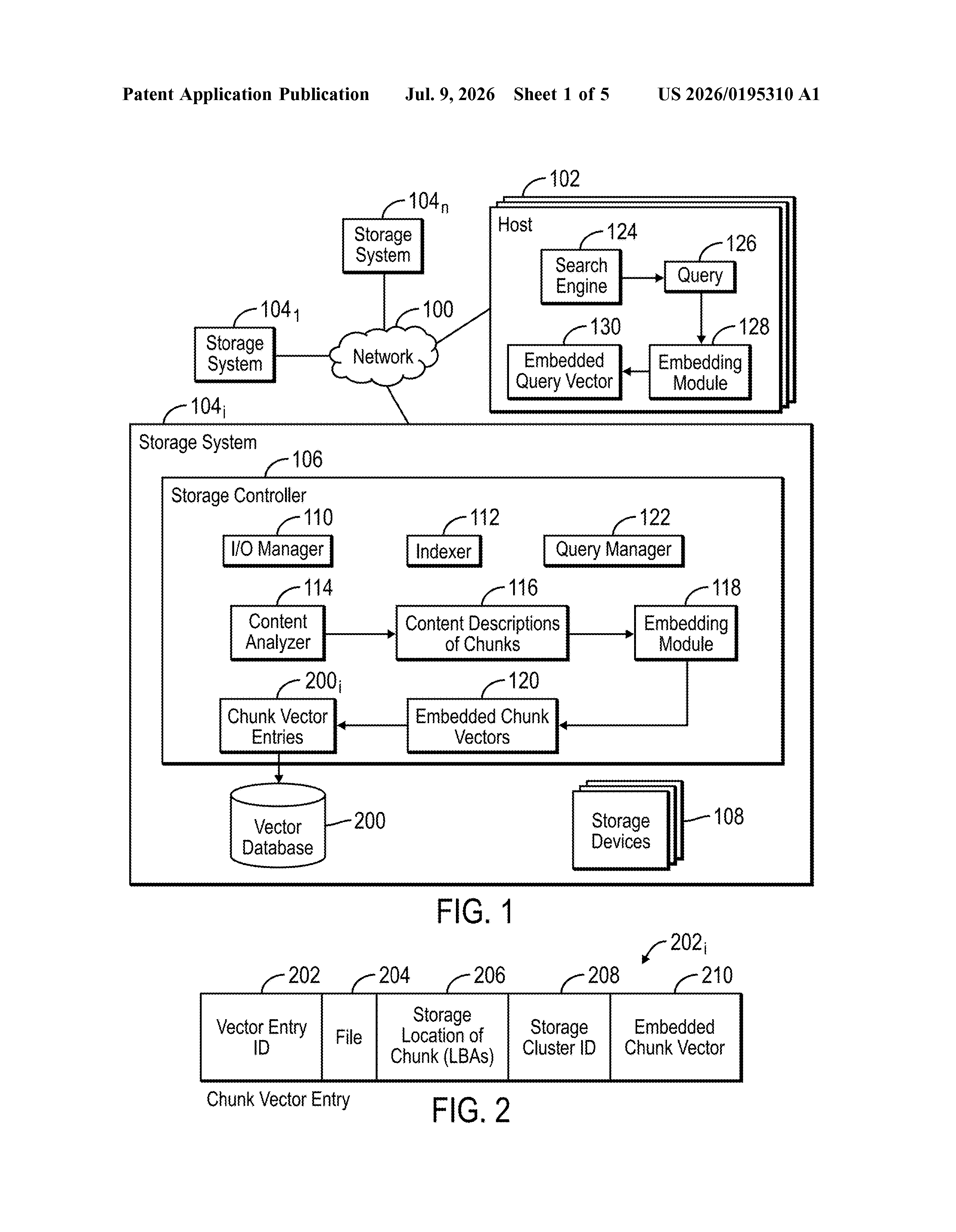
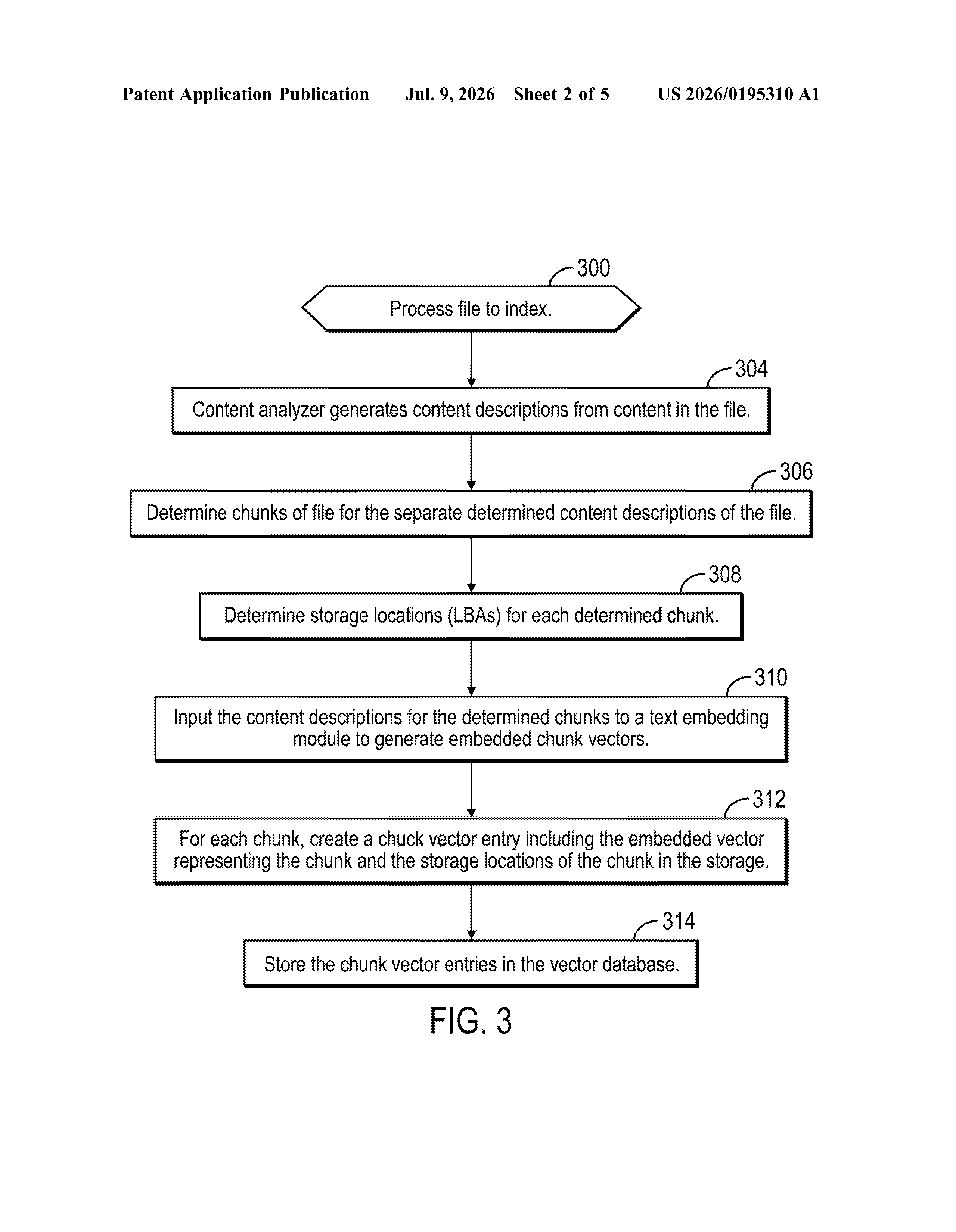
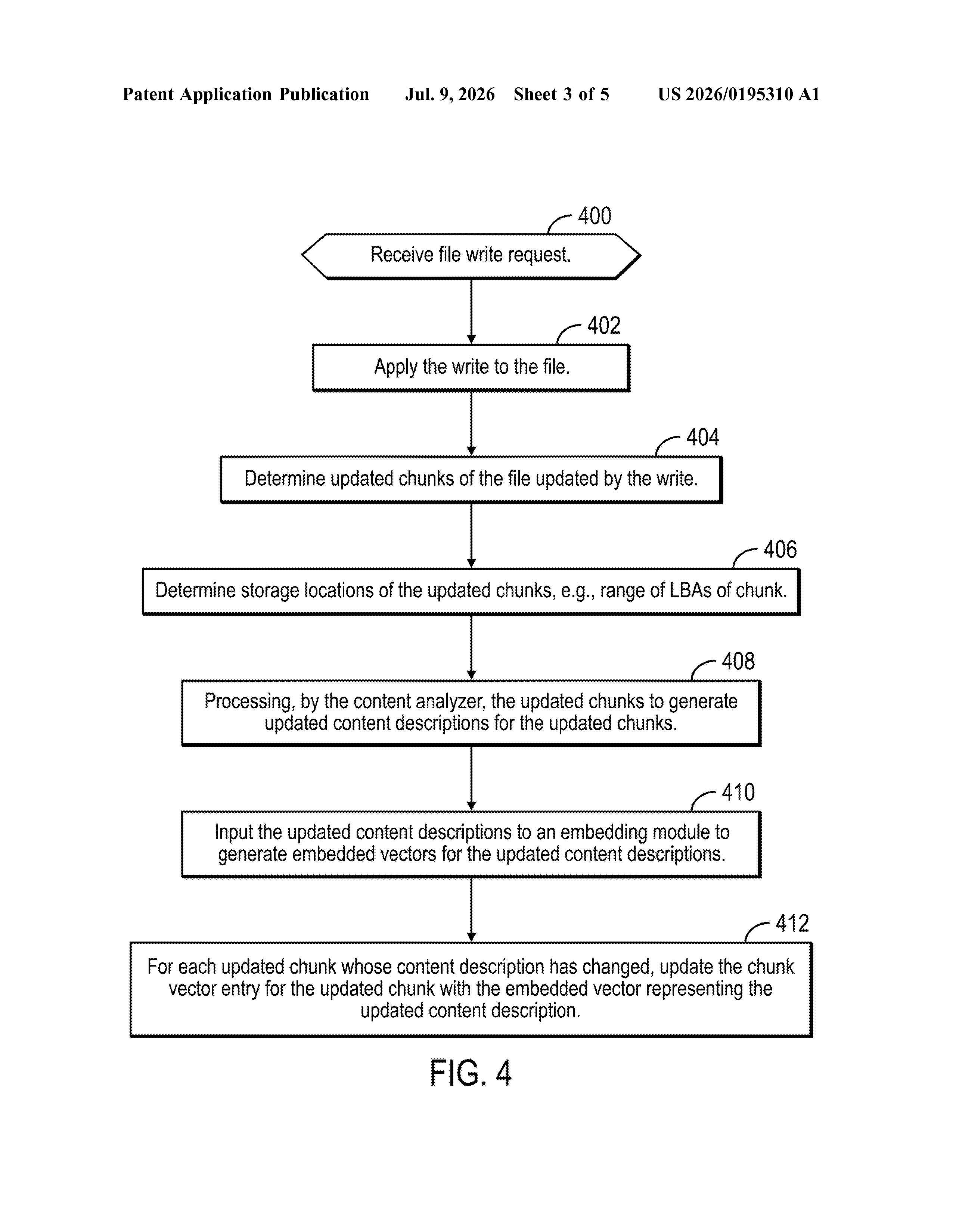
- A content analyzer reads a file and produces "content descriptions" for each meaningful section. These descriptions capture the context and meaning of what's in that section, not just a copy of the words.
- The system identifies chunks, specific segments of the file at particular storage locations, that correspond to each description.
- Each description is converted into an embedded vector (a list of numbers that represents meaning in a mathematical space) using a process called embedding. Similar meanings produce numbers that are numerically close to each other.
- Those vectors, along with pointers back to exactly where in the original file each chunk lives, are stored in the vector database across many files.
When a query arrives, it's converted into its own embedded vector. The system scans the database for stored vectors that are mathematically close to the query vector (meaning they're about the same topic), then returns the original file chunks at those storage locations. The key detail IBM emphasizes is preserving the precise storage location of each chunk, so retrieval goes directly back to the source material.
What this means for enterprise AI search tools
This is foundational infrastructure for retrieval-augmented generation (RAG), the technique where an AI assistant looks up real documents before answering a question rather than just guessing from memory. Getting this layer right determines whether the AI gives you the right answer or a plausible-sounding wrong one.
For enterprises using IBM's storage and AI platforms, a patent like this signals that IBM wants to own the pipeline from raw files to AI-ready search. If you work somewhere that stores contracts, manuals, or research reports on IBM infrastructure, this is the kind of technology that could eventually let you ask a plain-English question and get back the exact clause or finding you need.
This is a well-trodden area. Vector databases and chunk-based retrieval are already the backbone of products from Pinecone, Weaviate, and dozens of others, and the RAG pattern is practically standard practice in enterprise AI. IBM's specific angle here is tying vector storage tightly to physical storage locations within files, which could matter for large-scale storage systems where that pointer fidelity is important. But as a patent, this is unlikely to surprise anyone working in the space.
Get our take in your Top Stories
Liked this breakdown? Add Patentlyze as a preferred source on Google, and our plain-English take shows up more often in your Top Stories the next time IBM patent news breaks.
There are more where this came from
We read every patent application Big Tech publishes and send you the ones worth knowing. Plain English, free, every week.
The drawings
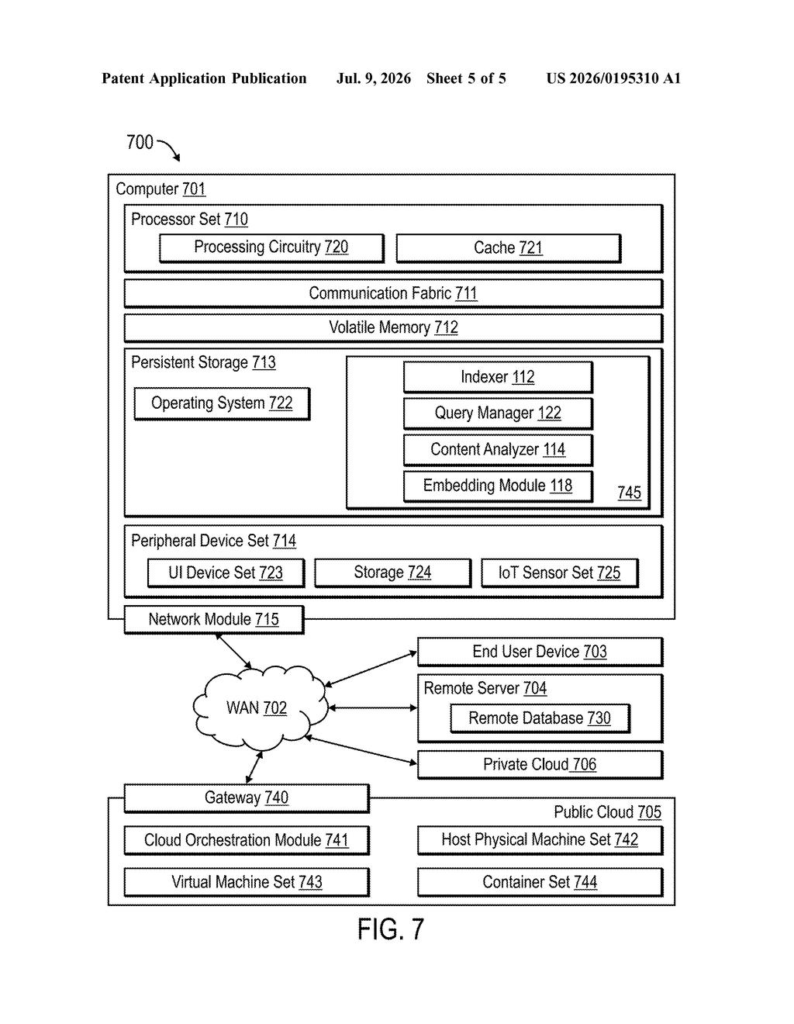
5 drawing sheets from US 2026/0195310 A1 · click any drawing to enlarge
Want this weekly breakdown for a company we don't cover? Patentlyze Pro →