
Apple Patent Shows Camera Module Mounted Directly Within the Rear Cover
Apple is patenting a phone back cover that does double duty: the glass or plastic panel itself forms the raised camera housing, with the camera module snapping into a matching recess on the inside. It's a structural rethink of how the camera bump attaches to the phone.
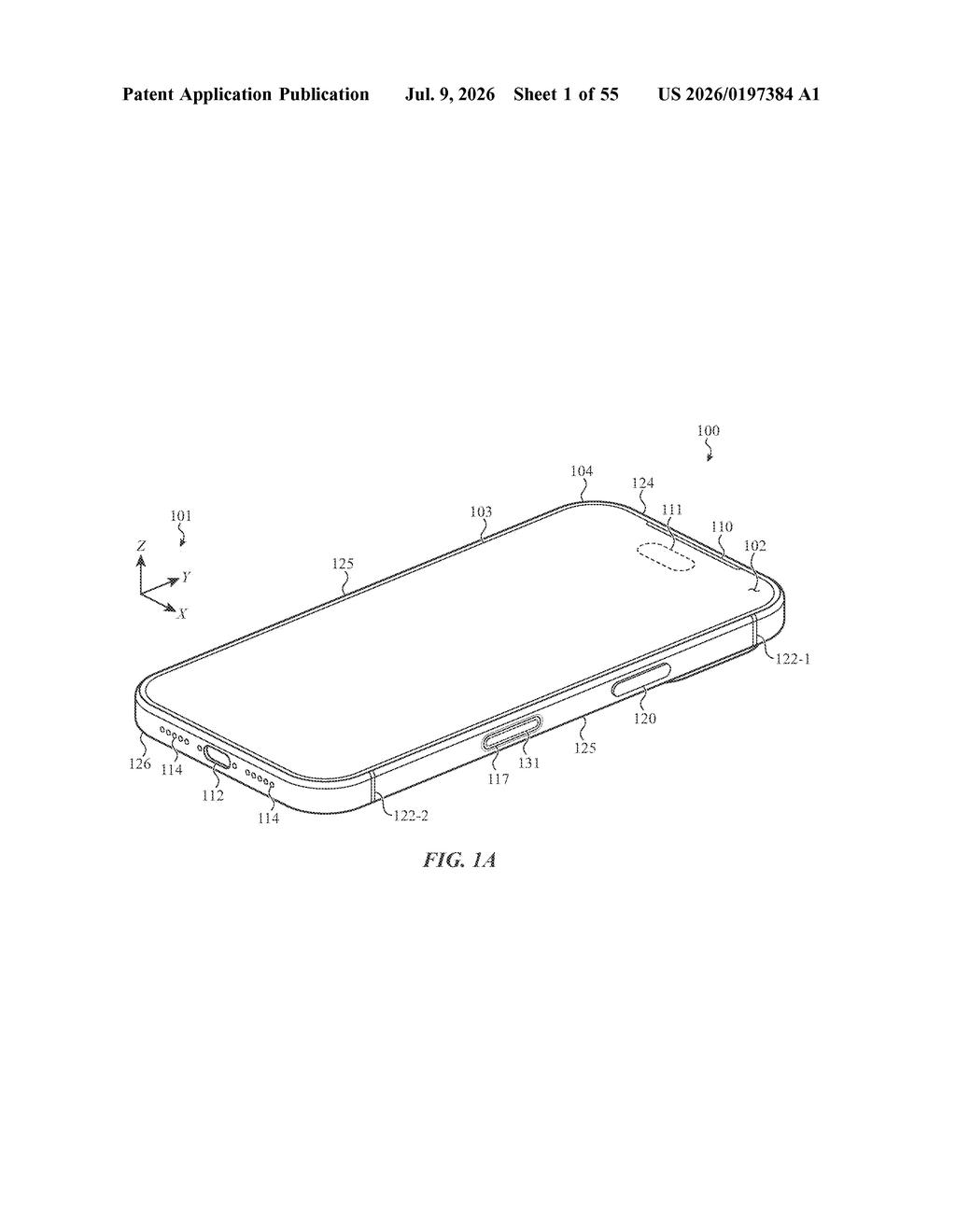
What Apple's camera-in-cover design actually means
Imagine the camera bump on the back of your phone not as a separate metal ring glued on top of the glass, but as part of the glass itself. That's the idea here.
Apple's patent describes a rear cover made from a dielectric material (think glass or ceramic) where the raised camera region is shaped directly into the panel. On the outside, it pokes out as the familiar bump. On the inside, there's a matching hollow recess, and the camera module sits in that hollow, attached to the cover rather than to the internal frame.
Right now, camera bumps on most phones are essentially a separate housing bolted to the body, with the rear glass cut around it. This approach fuses the bump and the cover into one piece, which could mean fewer parts, a cleaner seal, and potentially a thinner overall assembly.
How the protrusion and recess anchor the camera
The patent covers a mobile phone architecture where the rear cover is a single dielectric (non-conductive, typically glass or ceramic) panel that serves two roles at once: a flat back surface and a camera housing.
The camera region is defined by two geometric features working together:
- A protrusion on the exterior surface, the outward bump you see and feel on the back of the phone.
- A recess on the interior surface, a hollowed-out pocket on the inside of the cover, directly opposite the bump.
A hole passes through the cover inside that region, and the camera module sits in the bottom of the recess, positioned through that hole. This means the camera is physically coupled to the rear cover itself, not just to the internal chassis behind it.
The claim specifies the rear cover is made of a dielectric material (meaning it doesn't conduct electricity, which matters for antenna performance). Integrating the camera mount into a dielectric cover could help preserve wireless signal quality while keeping the structure compact.
What this means for iPhone camera bump design
Camera bumps have grown larger with every iPhone generation, and the engineering challenge is always the same: how do you make a thick camera system feel intentional and sturdy without adding bulk to the phone's frame? Integrating the bump geometry into the rear cover itself removes one assembly layer, which can tighten tolerances and reduce the gap or lip that tends to collect grime around current camera rings.
For you as a user, the practical payoff could be a camera housing that feels more like part of the phone and less like an afterthought bolted on. It may also open the door to thinner or more structurally consistent designs, since the bump and the back panel move as a single piece rather than two separate components that have to align.
This is a structural engineering patent, not a camera technology patent. It doesn't promise better photos or a new sensor. But the way Apple attaches the camera bump to the body is a real manufacturing pain point, and filing a patent that integrates them into the cover suggests the company is actively working on that problem. Worth a bookmark if you follow iPhone hardware design.
Get our take in your Top Stories
Liked this breakdown? Add Patentlyze as a preferred source on Google, and our plain-English take shows up more often in your Top Stories the next time Apple patent news breaks.
There are more where this came from
We read every patent application Big Tech publishes and send you the ones worth knowing. Plain English, free, every week.
Want this weekly breakdown for a company we don't cover? Patentlyze Pro →