
Samsung Patents Technology That Prepares Storage Location Data Before File Transfers Begin
Every time an SSD reads or writes data, it first has to look up where that data actually lives on the chip. Samsung's new patent wants to do that lookup before the request even arrives, cutting out one of the most common hidden delays in storage.
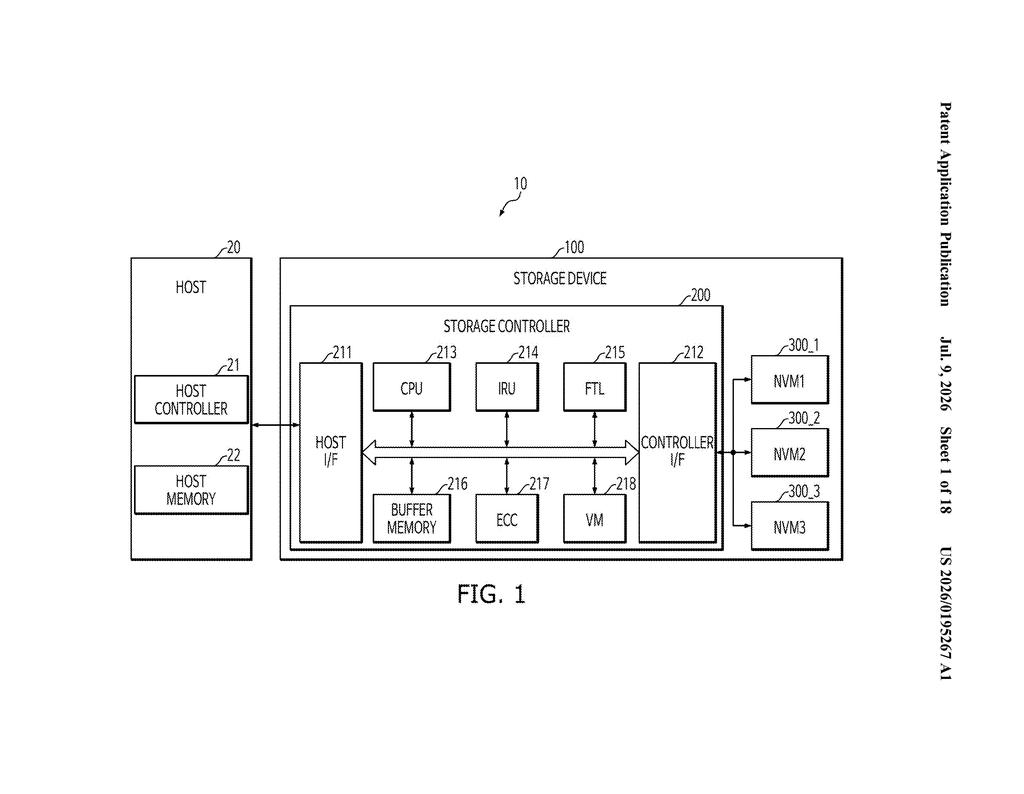
What Samsung's predictive SSD address loading actually does
Imagine a librarian who can see your reading list before you walk through the door. Instead of waiting for you to ask for a book and then hunting for it, she has it ready on the desk when you arrive. That's roughly the idea behind this Samsung patent.
When your computer stores files on an SSD, the drive keeps an internal map that translates the address your computer uses (the "logical" address) into the actual physical location on the chip. Looking up that map takes time, and if the map isn't already loaded into fast memory, the drive has to fetch it first, adding a small but real delay to every operation.
Samsung's approach lets the storage controller peek at the host computer's command queue, see what data is about to be requested, and load the relevant address-translation entries into fast memory ahead of time. By the time the actual read or write command fires, the map is already there and ready.
How the controller pre-fetches mapping tables from the command queue
Modern SSDs use a translation layer called an FTL (Flash Translation Layer) to convert the addresses a computer uses into the physical locations where data is actually stored on NAND flash chips. That translation table, called a mapping table, is large, so only a portion of it is held in fast volatile memory (like DRAM) at any given time. When a command arrives for a section of the drive whose map isn't currently loaded, the controller has to fetch it from the flash itself, a process that adds latency.
This patent describes a system where the host device (the computer or server) proactively sends the logical address range of an upcoming command to the storage controller at the moment that command is placed in the command queue, before the command is actually executed.
The storage controller receives this advance notice and immediately loads the relevant portion of the mapping table into volatile memory. Key components include:
- A command queue on the host side that stages commands before they run
- A non-volatile memory device (the NAND flash) storing the full address map
- A storage controller that manages which mapping table segments are in fast memory
The result is that when the actual command executes, the address translation is already cached and ready, removing the fetch penalty.
What this means for SSD read and write latency
SSD latency improvements at this level matter most in data centers, where storage controllers handle enormous queues of simultaneous commands and a few extra microseconds per operation multiply into meaningful throughput losses at scale. Enterprise NVMe SSDs already use various prefetching tricks, and this patent refines that by tying the prefetch directly to the host's own command queue rather than relying on the controller to guess what's coming.
For consumer devices, the practical impact is less dramatic but still real in scenarios like game loading, large file transfers, or database queries where many small random reads happen in bursts. If Samsung integrates this into future controllers, you'd likely never notice a specific feature toggle; you'd just see slightly faster response times in storage-heavy workloads.
This is a solid incremental improvement to a well-understood bottleneck in SSD design, not a rethinking of how flash storage works. The clever part is the host-controller coordination: instead of the drive guessing what to prefetch, the host tells it directly. That tighter coupling is a sensible direction for high-performance storage, particularly in server environments where Samsung competes hard against SK Hynix and Micron.
Get our take in your Top Stories
Liked this breakdown? Add Patentlyze as a preferred source on Google, and our plain-English take shows up more often in your Top Stories the next time Samsung patent news breaks.
There are more where this came from
We read every patent application Big Tech publishes and send you the ones worth knowing. Plain English, free, every week.
Want this weekly breakdown for a company we don't cover? Patentlyze Pro →