
Tesla Patents a Rapid Hot-Cold Testing System for Vehicle Components
Before any part goes into a Tesla, it has to survive the temperature equivalent of a polar plunge after a sauna. Tesla has filed a patent for a controlled system designed to do exactly that, automatically and precisely.
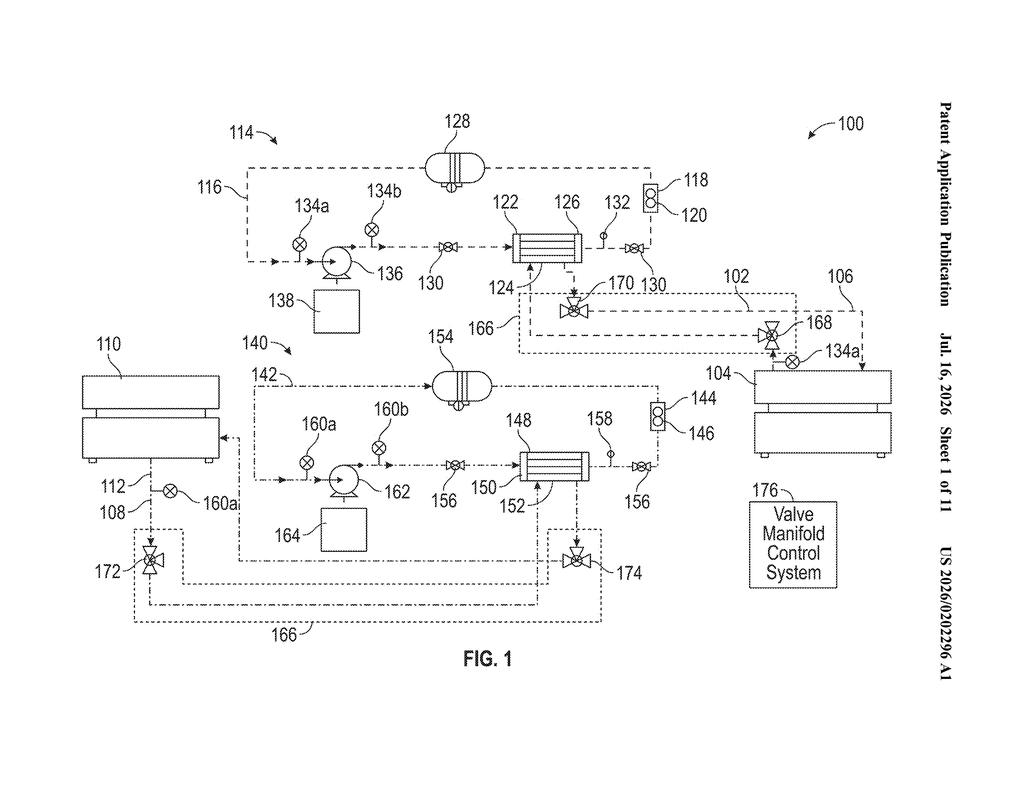
What Tesla's thermal shock testing system actually does
Imagine pulling a glass dish straight from a freezer and dropping it into a hot oven. The sudden temperature swing can crack it. Car parts face the same risk, going from a scorching summer road to a frigid winter morning, sometimes over and over again. Engineers call this thermal shock, and it's one of the most brutal tests a component can face.
Tesla's patent describes a testing machine that deliberately inflicts this kind of abuse on parts before they ever reach a car. The system keeps two separate fluid loops, one very cold, one very hot, and uses a set of valves to rapidly switch which loop is heating or cooling the part being tested. A third fluid acts as a go-between, picking up the temperature from whichever loop is active and transferring it to the component.
The point is to find weaknesses early, in a lab, rather than out on the road. If a battery connector, sensor, or circuit board is going to fail under temperature stress, Tesla wants to know about it before it's inside your car.
How the valve manifold switches between hot and cold circuits
The system runs three separate fluid circuits simultaneously. Two of them, a cold fluid supply circuit and a hot fluid supply circuit, maintain stable temperature extremes at all times. The third, called the thermal shock circuit, is the loop that actually contacts the component being tested.
A heat exchanger sits at the center of the design. It connects all three circuits and acts as the transfer point where heat moves between fluids without the fluids themselves mixing. A valve manifold (essentially a set of motorized valves that can be switched on command) determines whether the heat exchanger pulls heat from the hot supply or dumps it into the cold supply at any given moment.
When the valves open the cold path, the tertiary fluid chills down and exposes the test component to a low temperature. When the valves switch to the hot path, the tertiary fluid heats up quickly and exposes the same component to a high temperature. Cycling between these states simulates years of real-world temperature swings in a controlled, repeatable way.
- Cold fluid supply circuit: maintains the low-temperature extreme
- Hot fluid supply circuit: maintains the high-temperature extreme
- Heat exchanger: transfers heat between supply circuits and the test loop
- Valve manifold: selects which extreme the test component experiences
- Thermal shock circuit: the loop that directly contacts the component under test
What this means for Tesla's hardware reliability testing
Tesla builds cars with a lot of electronics, battery systems, and sensors that all have to survive years of temperature cycling in the real world. A dedicated, in-house thermal shock testing rig gives Tesla tighter control over how parts are qualified before production. Rather than relying on third-party testing labs or off-the-shelf equipment with fixed parameters, this system appears designed to be configurable for specific temperature ranges and switching speeds.
For you as a driver, better pre-production testing generally means fewer field failures. Components that crack, delaminate, or fail under temperature stress are caught in the lab rather than in a vehicle on the road. This is the kind of unglamorous but important engineering infrastructure that shapes long-term reliability.
This is squarely an internal manufacturing and quality-control patent, not a consumer-facing feature. It's not exciting on its own, but it signals that Tesla is investing in proprietary testing infrastructure rather than outsourcing reliability validation. That's a reasonable bet for a company trying to tighten control over its supply chain and hardware quality at scale.
There are more where this came from
We read every patent application Big Tech publishes and send you the ones worth knowing. Plain English, free, every week.
Want this weekly breakdown for a company we don't cover? Patentlyze Pro →