
Qualcomm Patents an AI System That Reroutes Drones Based on Cell Signal Quality
Qualcomm wants a drone's flight path to bend around bad cell coverage automatically, using an AI model fed by the same network-measurement tools carriers already use to tune their towers.
How Qualcomm's drone-network AI actually works
Imagine a delivery drone flying across a city and suddenly losing its connection to the cellular network because it wandered into a weak-signal zone. Today, that's mostly a human problem to solve after the fact. Qualcomm's new patent describes a system where an AI model watches the wireless network in real time and either reroutes the drone or adjusts the cell tower settings to fix the problem before it gets serious.
The system pulls in standard network health reports that carriers already collect, things like signal strength logs and tower performance data, and feeds them into an AI model. That model then decides whether to change the drone's route, tweak how a nearby tower is configured, or both.
Think of it like GPS rerouting, but instead of avoiding traffic jams, the system avoids connectivity dead zones, and it can also widen the "road" by adjusting the network itself.
How the AI reads signal data and reconfigures the network
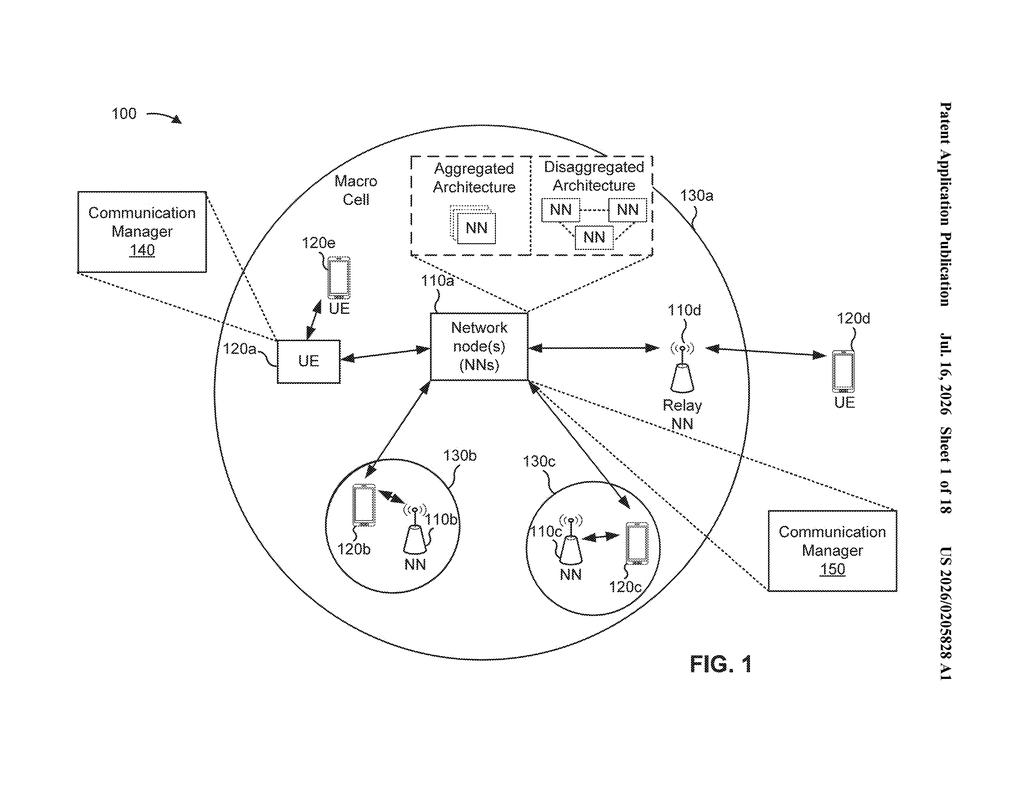
The patent describes an apparatus, likely a network server or base station, that collects two types of carrier-grade diagnostic data:
- MDT (Minimization of Drive Test) reports: automated signal-quality measurements collected by devices as they move, replacing the old method of sending engineers in cars with test equipment.
- SON (Self-Organizing Network) reports: automated logs that cellular networks generate to help towers self-tune their power and coverage settings.
- General radio condition data: real-time snapshots of how well the network is performing in a given area.
All of that data gets fed into an AI/ML model (an artificial intelligence system trained to spot patterns and recommend fixes). The model's output is a reconfiguration instruction directed at either the drone itself (change your flight path) or a network node such as a cell tower (adjust your antenna tilt, power level, or coverage area).
The key design choice is that the system can act on both ends simultaneously. It doesn't just tell the drone to fly somewhere with better signal; it can also tell the network to extend better signal to where the drone needs to go. That two-sided control loop is what makes this more than a simple "reroute" patent.
What this means for drone delivery and 5G drone traffic
As drone delivery and drone inspection services scale up, reliable cellular connectivity becomes as critical as the drone's battery. A delivery drone that drops its connection mid-flight is a safety and business problem, and today's networks were not designed with low-altitude flying objects in mind. Qualcomm, which makes the chips inside many 5G base stations and devices, is positioning its AI infrastructure as the coordination layer for a future where thousands of drones share cellular airspace.
For you as a consumer, this is background plumbing, but it's the kind of plumbing that determines whether drone delivery ever works reliably at scale. If regulators and carriers adopt an approach like this, the drone corridors over cities would become self-managing, the way highway on-ramps use timed signals to smooth traffic flow.
This is a solid, focused patent that addresses a real engineering problem: cellular networks are optimized for ground-level devices, not aircraft. Qualcomm's two-sided approach, adjusting both the drone's path and the tower's configuration, is a more complete answer than rerouting alone. It won't make headlines at a consumer level, but it's the kind of infrastructure thinking that actually has to happen before drone delivery moves beyond pilot programs.
There are more where this came from
We read every patent application Big Tech publishes and send you the ones worth knowing. Plain English, free, every week.
Want this weekly breakdown for a company we don't cover? Patentlyze Pro →
Be the first to weigh in