
Qualcomm Patents a System That Lets Cars and Drones Negotiate Flight Paths
As drones and self-driving cars start sharing the same airspace and roads, someone has to referee. Qualcomm's new patent describes a way for vehicles on the ground and in the air to talk to each other and swap routes automatically, before a conflict turns into a near-miss.
What Qualcomm's vehicle-drone coordination actually does
Every time a delivery drone flies its planned route, it has no idea whether a self-driving car below is also making assumptions about where that drone will be. Right now, there's no standard way for those two vehicles to coordinate in real time.
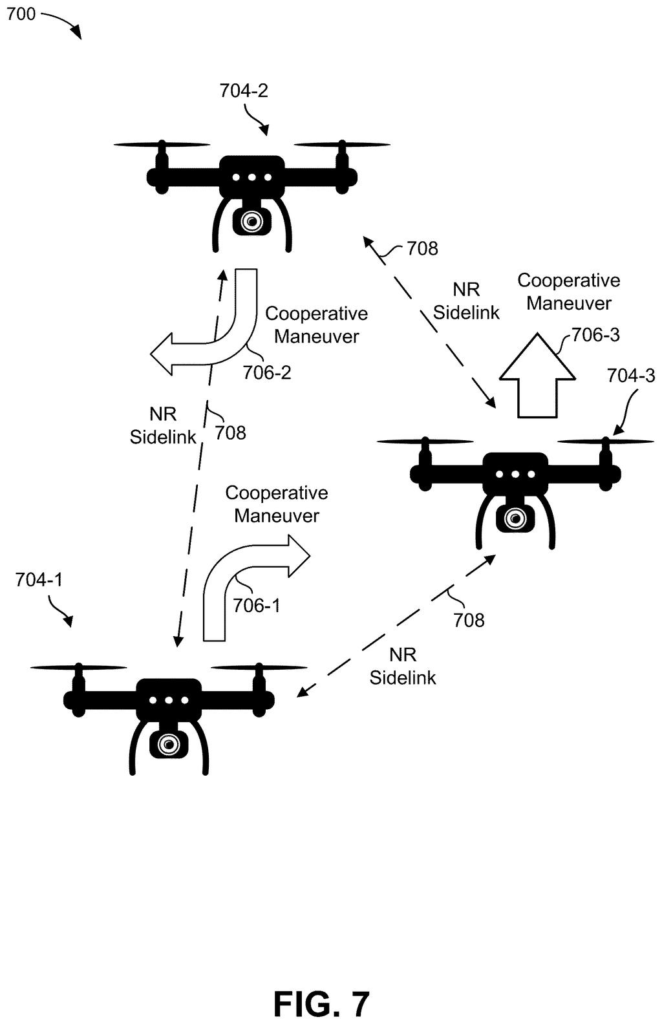
Qualcomm's filing describes a system where a vehicle (say, a car or a drone) can broadcast its location and planned path, then ask other vehicles nearby to adjust their routes. The receiving vehicle can say "yes" and shift course, or trigger the sender to change its own route instead. Both sides update so nobody has to rely on luck.
You'd never see this happen directly. It would run silently, milliseconds in the background, handled by wireless chips in each vehicle. The result would be fewer stop-and-hover moments for drones and fewer sudden-brake events for cars sharing the same urban corridor.
transmit a message including location data and route data associated with the apparatus to request adjustment of a route of one or more aerial vehicles …
Translation: The vehicle sends its current position and travel path to ask nearby flying drones to change their routes.
How the route-negotiation messages work
The system works through a structured wireless message exchange between two or more vehicles. One vehicle, whether ground-based or aerial, composes a message carrying two key pieces of data: its current location (where it is right now) and its route data (where it intends to go).
That message is a request, not a command. It asks the receiving vehicle or vehicles to adjust their own routes to avoid a conflict. The receiving vehicle processes the request and sends back a response indicating acceptance, meaning it agrees to change its path.
When the original sender gets that acceptance, one of two things happens:
- The sender adjusts its own route based on what the other vehicle agreed to do.
- The sender triggers the other vehicle to actually execute the route change.
The patent covers both ground vehicles and aerial vehicles (drones) as participants. The underlying channel is wireless communication, which in Qualcomm's world typically means cellular or a vehicle-to-everything (V2X) radio link, a short-range wireless protocol designed specifically for vehicles to broadcast position and intent to each other in real time.
… receive a response to the message from the one or more aerial vehicles, the response indicating acceptance of the message to adjust the route of the one or more aerial vehicles …
Translation: The system gets a reply confirming that the drones have agreed to alter their flight paths.
What this means for drone delivery and self-driving roads
Drone delivery and autonomous driving are both racing toward the same physical space: low-altitude urban corridors where a delivery drone and a tall vehicle or a rooftop-landing pad might occupy overlapping paths. Today, most traffic management for drones relies on pre-filed flight plans and remote operators, not live negotiation. A system where vehicles sort this out themselves, in the moment, closes a gap that pre-planned routes can't cover.
For you as a future passenger or someone waiting on a delivery, the practical payoff is fewer unexplained delays. When a drone doesn't have to hold position waiting for human air-traffic approval, and a car doesn't have to brake hard because a low-flying drone crossed its sensor field, both services get more predictable. Qualcomm keeps filing on vehicle-to-everything wireless coordination, and this patent extends that work into the air.
Qualcomm's 456th filing in our Qualcomm coverage since May adds to a run that includes the eye-distance zoom patent and the cross-device identity AI.
The practical benefit here is fewer disruptions to your delivery or your ride. Instead of a drone freezing mid-air or a self-driving car grinding to a halt whenever paths cross, the vehicles reroute around each other by exchanging location and plan data directly, without waiting for a distant server to referee.
You would notice this most when things are busy: a crowded urban corridor, a stadium letting out, a sudden surge in deliveries. Those are exactly the moments when a rigid system fails visibly, and where this negotiation approach is designed to keep things moving.
The honest caveat is that the benefit depends on vehicles from different companies agreeing to speak the same language, which is a regulatory and industry coordination problem, not a technology one. When that alignment happens, this is part of why your package arrives on time instead of sitting in a holding pattern above your street.
There are more where this came from
We read every patent application Big Tech publishes and send you the ones worth knowing. Plain English, free, every week.
The drawings
9 drawing sheets from US 2026/0288146 A1 · click any drawing to enlarge


Want this weekly breakdown for a company we don't cover? Patentlyze Pro →
Be the first to weigh in