
Salesforce Patents a System Where AI Agents Watch a Factory Simulation and Direct Real Robots
Salesforce, the company most people associate with sales software and CRM dashboards, has filed a patent for a system that lets AI agents watch a virtual simulation of a factory floor and then issue commands to the actual robots working in it.
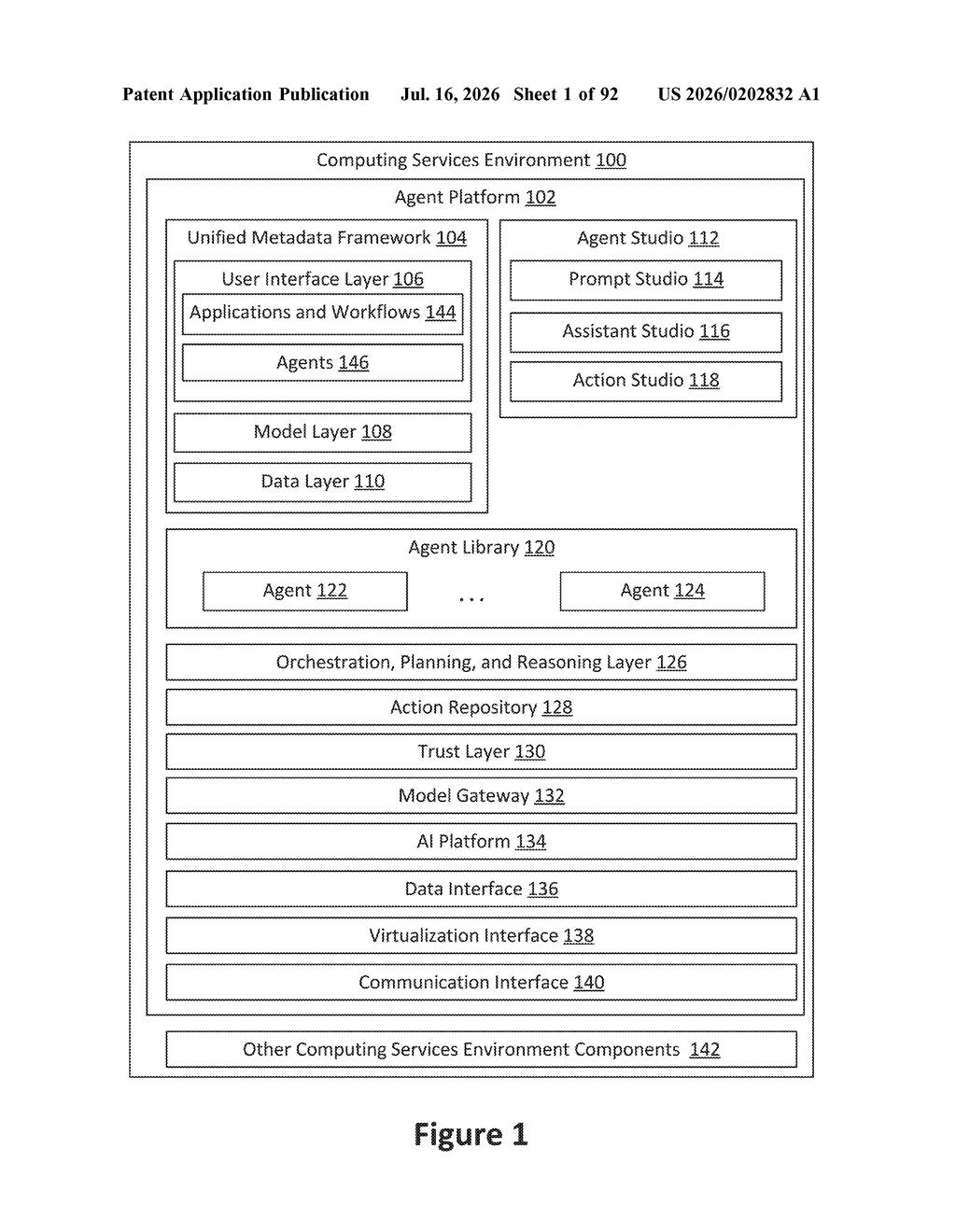
How Salesforce's factory AI agents actually work
Imagine a security camera system that doesn't just record footage but automatically calls the police, locks doors, and files an incident report all on its own. Salesforce's patent describes something like that, but for factories.
The system runs a live 3D simulation of a manufacturing environment, complete with virtual robots. AI "agents" watch what's happening inside that simulation, figure out what needs to be done, and then send instructions to the real physical robots on the factory floor. A language model (the same kind of AI behind chatbots) acts as the brain that translates what's happening in the simulation into specific commands.
The whole setup sits inside Salesforce's existing cloud platform, which means the same database that tracks your company's customer orders could, in theory, also be telling the robot arm on your assembly line what to do next.
How the simulation feeds instructions to physical robots
The patent describes a layered architecture with several distinct pieces working together:
- A graphics rendering system that generates a real-time virtual simulation of a factory, including digital representations of the robots operating inside it.
- An agent platform that hosts multiple AI "agent instances" (think of each one as an autonomous software worker assigned to a specific task or zone).
- A generative language model interface that gives those agents access to a large language model, letting them reason in natural language about what they observe and what to do next.
- An orchestration and planning service that spins up agents as needed, monitors the simulation output, identifies relevant "topics" (situations or conditions that require a response), picks appropriate actions from a predefined menu, and then fires those actions at the actual robots.
The key loop is: simulation outputs a state, the orchestration layer asks the language model what it means, the language model picks an action, and that action flows back to the physical manufacturing environment. The whole system runs inside Salesforce's cloud database infrastructure, tying factory-floor activity to the same records that track orders, inventory, and client data.
What this means for Salesforce's industrial ambitions
Salesforce's core business is helping companies manage relationships with customers. This patent is a significant step into a completely different domain: telling machines what to do on a physical factory floor. If Salesforce can make this work inside its existing platform, it becomes a plausible single system for everything from receiving a customer order to dispatching the robot that assembles the product.
For industrial companies already using Salesforce, that integration angle is the interesting part. The patent doesn't require a separate industrial software stack. The AI agents pulling factory robot strings would live inside the same environment managing your sales pipeline and customer records, which could simplify operations considerably, but also raises real questions about putting production-critical decisions in the hands of a language model.
This is a genuinely ambitious swing from a company that has spent decades perfecting business software. The technical architecture is coherent, but the hard problem isn't the patent, it's convincing industrial operators to let a language model touch their production line. Salesforce has the enterprise relationships to open those doors; whether it can build the operational trust is a different question entirely.
Get our take in your Top Stories
Liked this breakdown? Add Patentlyze as a preferred source on Google, and our plain-English take shows up more often in your Top Stories the next time Salesforce patent news breaks.
There are more where this came from
We read every patent application Big Tech publishes and send you the ones worth knowing. Plain English, free, every week.
Want this weekly breakdown for a company we don't cover? Patentlyze Pro →