
Nvidia Patents a Physics-Based Simulator That Teaches AI to Identify Objects
Teaching an AI to recognize objects normally requires thousands of real photos, hand-labeled by humans. Nvidia's approach: skip the real world entirely and run the objects through a virtual physics engine instead.
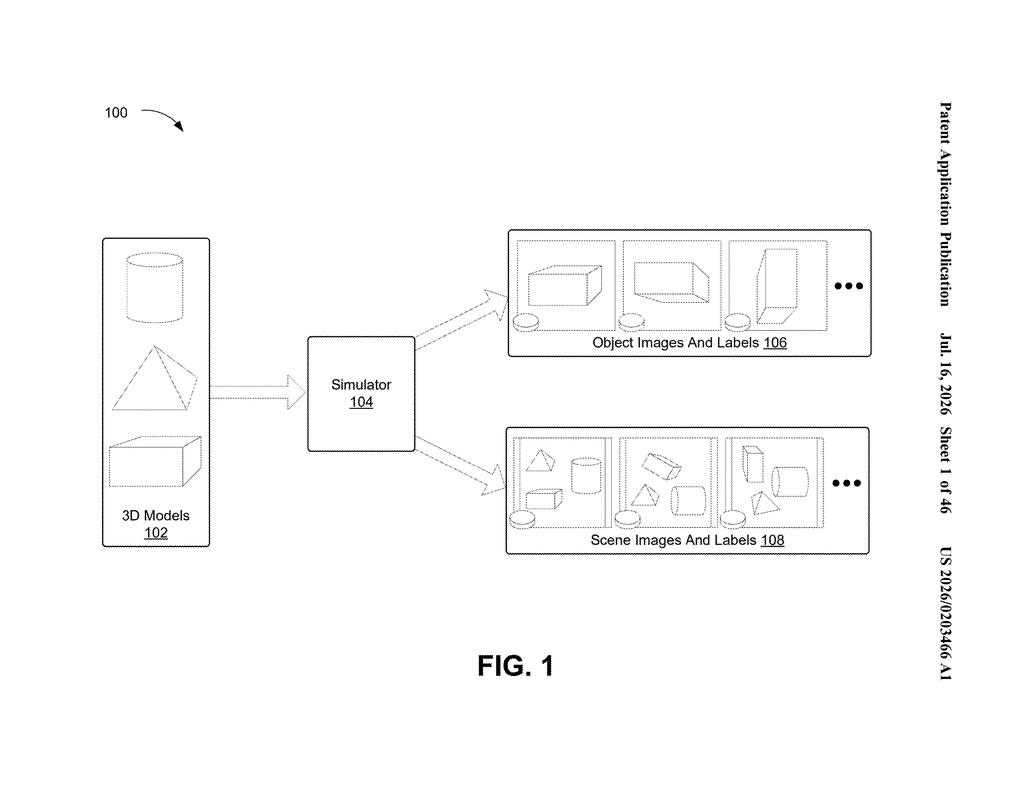
How Nvidia's virtual physics lab teaches AI to see
Imagine you want to teach an AI to spot a coffee cup on a table, but you need tens of thousands of photos of coffee cups in every possible position, lighting condition, and angle. Taking and labeling all those photos by hand is slow and expensive.
Nvidia's patent describes a shortcut: build 3D models of the objects, then drop them into a computer simulator that mimics real-world physics, including gravity, friction, and how things settle when they fall. The simulator generates huge batches of images automatically, showing objects in all sorts of realistic poses.
Those simulated images then get fed into an AI model as training data, teaching it to detect and classify real objects from photos or video. The idea is that physics-based simulation produces more realistic and varied training images than hand-crafted datasets, without anyone having to photograph a single real cup.
How the physics simulator builds AI training images
The system works in three main stages.
- 3D model acquisition: The simulator starts with digital 3D models of the objects you want the AI to learn about, things like boxes, tools, or vehicles.
- Physics-based simulation: Those models get placed inside a virtual environment governed by real physical rules: gravity pulls them down, friction slows their sliding, and surfaces push back realistically. The objects settle into natural, varied positions that would be hard to stage manually.
- Image generation and training: The system renders images of the simulated scenes from different camera angles and lighting conditions. Those images, already labeled because the simulator knows exactly what each object is, become the training dataset for a neural network (the AI model responsible for detecting and classifying objects in real photos or video).
The core insight is that a physics engine can produce an almost unlimited number of plausible, realistic scenarios without human photographers or labelers. The neural network trained on this data is then expected to transfer its knowledge to real camera feeds.
What this means for AI cameras and self-driving systems
Object detection sits at the heart of a huge range of Nvidia's target markets: warehouse robots that pick items off shelves, self-driving car cameras that spot pedestrians, and security systems that flag unusual activity. All of those need massive amounts of labeled training data, and collecting it in the real world is one of the biggest bottlenecks in the industry.
If physics-based simulation can reliably substitute for real-world photography, it could cut the time and cost of training new object-detection models significantly. For you as an end user, that might eventually mean AI cameras and robot assistants that learn to recognize new objects faster and more accurately than today's systems.
This is a solid, practical idea in the computer vision space, and physics-based synthetic data generation is a legitimate research direction that several labs have pursued. The fact that all independent claims are canceled, however, is a red flag: it suggests this application may have hit significant patent-office resistance, which limits its near-term strategic value for Nvidia.
Get our take in your Top Stories
Liked this breakdown? Add Patentlyze as a preferred source on Google, and our plain-English take shows up more often in your Top Stories the next time Nvidia patent news breaks.
There are more where this came from
We read every patent application Big Tech publishes and send you the ones worth knowing. Plain English, free, every week.
Want this weekly breakdown for a company we don't cover? Patentlyze Pro →