
Salesforce Patents an AI That Figures Out Why a Customer Actually Called
Every customer service agent has been there: someone calls in, but the real reason they're upset is buried in a week-old chat thread. Salesforce is patenting a system that makes an AI do that digging automatically.
What Salesforce's contact-reason AI actually does
Imagine a customer emails your support team on Monday, then chats with a bot on Wednesday, and finally calls a human on Friday. Each conversation is stored in a different place, in a different format. A support agent picking up that Friday call has to piece together why the customer is actually frustrated.
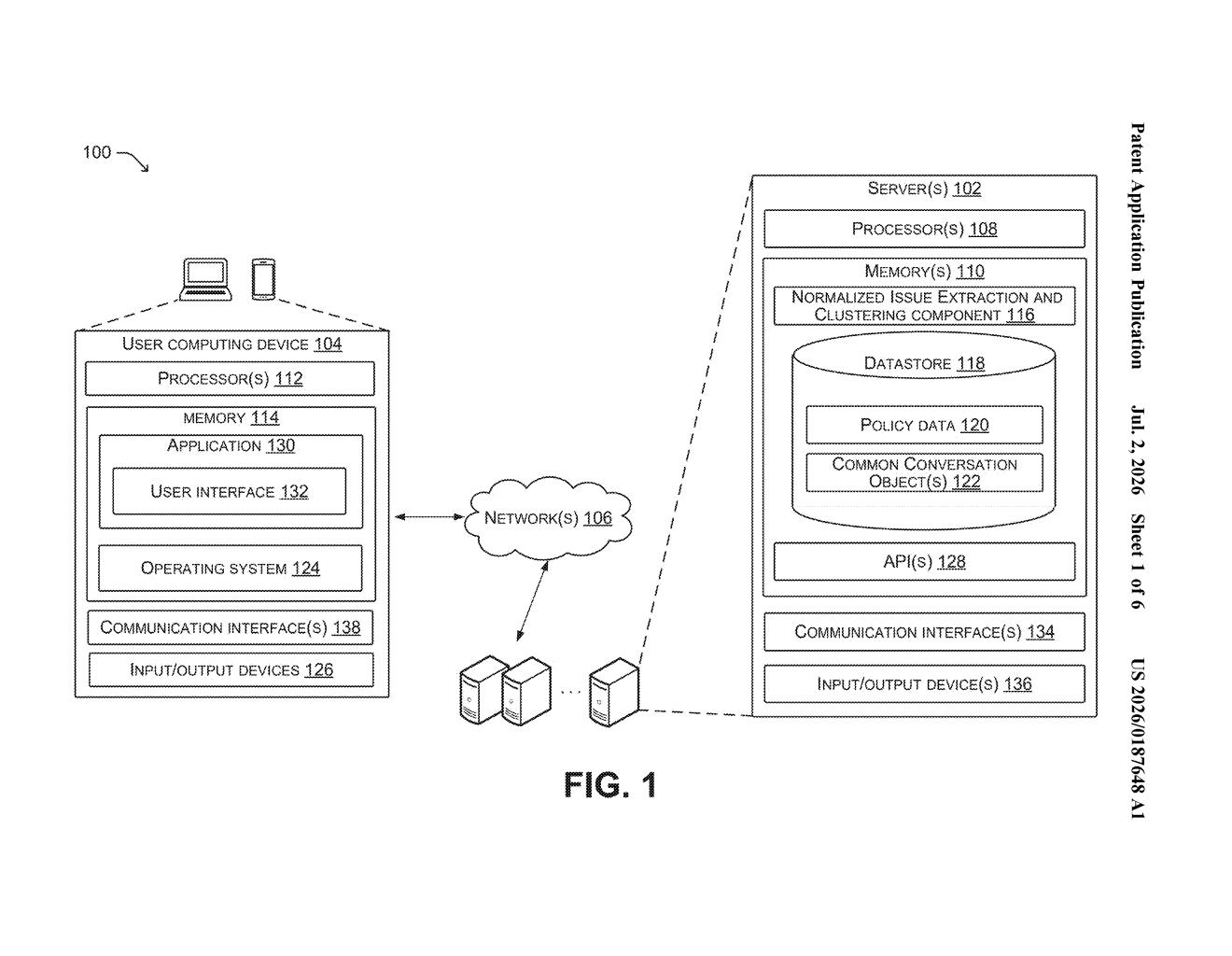
Salesforce's patent describes a system that pulls all of those conversations together, regardless of where they happened, and feeds them to an AI. The AI's job is to strip out the filler (greetings, hold music transcripts, repeated pleasantries) and figure out the one core reason the customer reached out in the first place.
It does this in two steps: first, it summarizes everything and flags the parts that actually matter. Then it takes those flagged parts and produces a clean, plain-English explanation of the customer's problem. The goal is to give support teams a consistent answer no matter which channel the customer used.
How the two-pass LLM pipeline filters noise
The system centers on what the patent calls a common conversation object, a normalized data structure that takes conversations from email, chat, phone, and other channels and converts them into a single, consistent format an AI can read without getting confused by formatting differences.
Once that unified record exists, the system runs a two-pass prompting sequence against a large language model (LLM):
- Pass one: The LLM is asked to summarize the full conversation history and flag which parts are actually relevant to the customer's problem, discarding things like greetings, system messages, and off-topic small talk.
- Pass two: The LLM takes only the flagged relevant portions from pass one and produces a final, concise explanation of the customer's primary reason for contact.
The two-step approach matters because large language models can lose focus when given very long inputs. By having the model first identify what matters before being asked to draw conclusions, the system reduces the chance of the AI getting distracted by irrelevant text and producing a wrong or vague answer.
What this means for CRM software and support teams
For companies running customer support across email, chat, and phone simultaneously, knowing why someone reached out is surprisingly hard to automate consistently. A chat bot might label a contact as a "billing question" while a human agent later notes it as a "cancellation risk." Salesforce's approach tries to produce one consistent label regardless of channel, which is valuable for reporting, routing calls to the right team, and training future AI models.
This fits squarely into Salesforce's broader push to make its Einstein AI tools more useful for contact center teams. If the system works as described, support managers could get cleaner data about what's actually driving call volume without relying on agents to manually categorize every interaction.
This is a practical, unsexy piece of enterprise AI plumbing that will matter a lot to the companies that buy Salesforce Service Cloud. The two-pass prompting design is a reasonable engineering answer to a real problem with LLMs and long documents. It won't make headlines, but if it ships and works, it will reduce the number of support agents who have to read through five different chat logs before picking up the phone.
Get our take in your Top Stories
Liked this breakdown? Add Patentlyze as a preferred source on Google, and our plain-English take shows up more often in your Top Stories the next time Salesforce patent news breaks.
There are more where this came from
We read every patent application Big Tech publishes and send you the ones worth knowing. Plain English, free, every week.
Want this weekly breakdown for a company we don't cover? Patentlyze Pro →