
Nvidia Patent Separates Motion Data From Visual Content in AI Video Generation
Nvidia filed a patent describing an AI system that generates video by treating motion and visual content as two separate ingredients, mixing them together to produce a clip. It's an early look at a structural approach to AI video that separates 'what things look like' from 'how they move.'
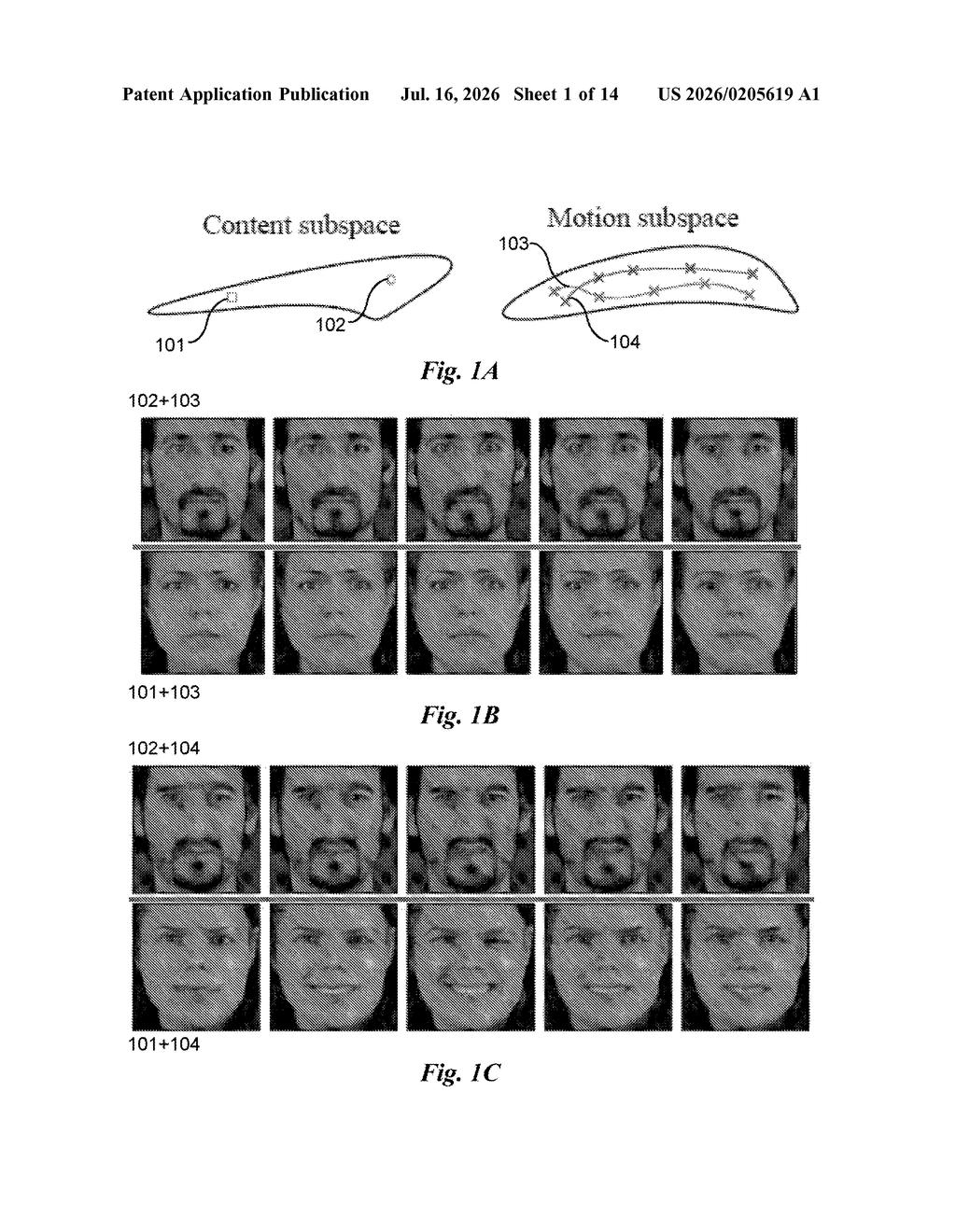
How Nvidia's system builds video clips from scratch
Imagine trying to animate a bouncing ball. You need two things: what the ball looks like, and how it moves. Nvidia's patent describes an AI system built on exactly that split. One part of the system generates a series of motion instructions, describing movement over time. A second part takes those motion instructions and combines them with a description of the visual content to produce an actual video clip.
The key idea is that motion and appearance are kept separate until the final step. That means you could, in theory, apply the same motion pattern to different visual content, or change the motion while keeping the look the same.
This kind of architecture appeared in AI video research around 2018 to 2020, so this patent reflects an earlier generation of thinking in the field rather than the latest diffusion-based approaches you see in tools like Sora today.
How motion vectors and content samples combine into video
The system uses two neural networks working in sequence. The first is a recurrent neural network (a type of AI that processes information as a series of steps over time, like reading a sentence word by word) that generates a sequence of motion vectors, basically a frame-by-frame description of how things should move in the video.
The second network, called the generator, receives those motion vectors alongside a content vector, a compact numerical description of what the scene or subject looks like. It then samples from both to produce the final video clip.
Both the motion sequence and the content description are initially drawn from random variables (random starting points in a mathematical space), which means the system can generate varied outputs without needing a specific input image or video to copy.
The claim structure is notable: claims 1 through 31 were canceled, which typically means the patent's scope was narrowed during examination or the application was restructured. That limits how much weight this filing carries as a marker of Nvidia's current video AI direction.
What this means for AI-generated video tools
Separating motion from content in video generation is a real architectural idea with practical appeal. If you can control those two dimensions independently, you get more precise editing tools: change how a person walks without changing what they look like, or apply a camera movement to a new scene. That kind of control is something current video AI tools still struggle with.
That said, this patent dates to a filing period and technical approach that predates the diffusion-model wave that now dominates AI video research. With all independent claims canceled, the enforceable scope of this specific filing appears minimal. It reads more like a historical marker of Nvidia's early video-generation research than a blueprint for something shipping soon.
This is an archival filing, not a product announcement. The canceled claims strip out most of the legal weight, and the recurrent-network approach it describes has largely been superseded by diffusion-based video models. Interesting as a window into where AI video research was five-plus years ago, but not a strong signal about where Nvidia is going.
Which company should we read for you?
We track 17 companies here. Pro is the same weekly breakdown for any company you choose, delivered privately. Type a name and we'll scope it and send you a quote.
Get one Big Tech patent every Sunday
Plain English, intelligent commentary, no hype. Free.
Editorial commentary on a publicly published patent application. Not legal advice.