
Sony Patents a System for Jumping to Any Point in a 3D Video File Without Losing Quality
Skipping to a specific moment in a compressed 3D video file is harder than it sounds. Sony's new patent describes a way to store special navigation markers inside those files so you can jump to any point without having to decode everything before it.
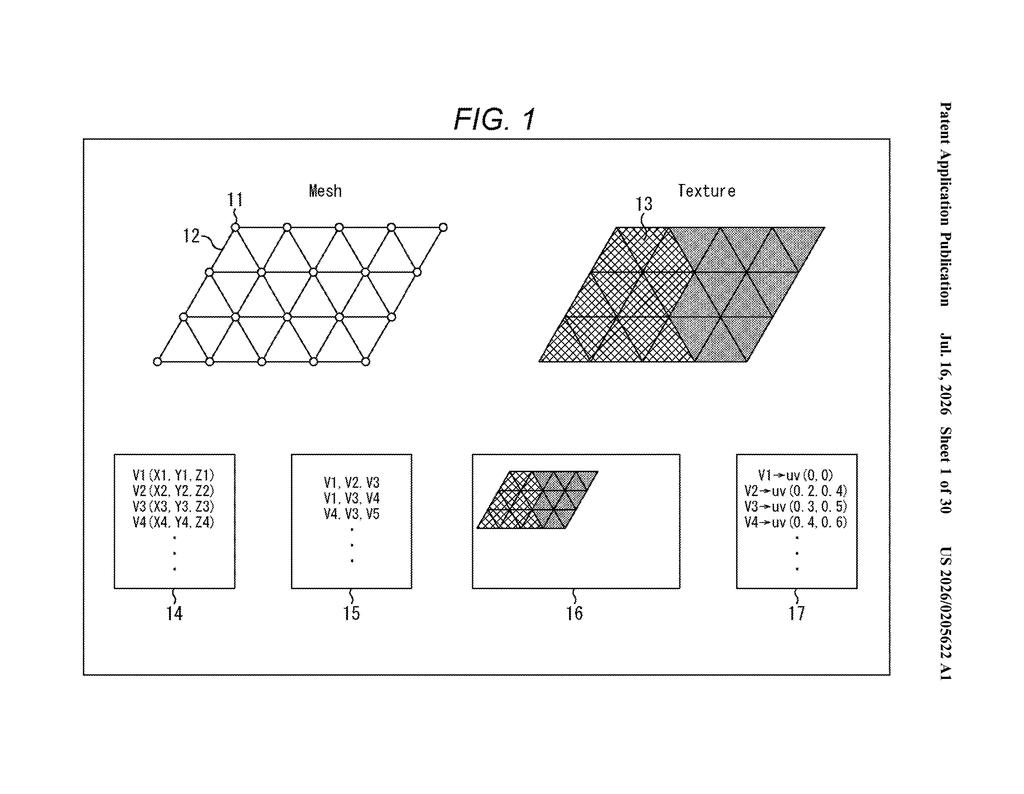
What Sony's 3D mesh random-access system actually does
Imagine trying to skip to a specific chapter in a book, but the book was written in a code where every sentence only makes sense if you read every sentence before it. That's roughly the problem with compressed 3D video files today. Jumping to a random point in the file can force a device to decode a huge amount of data it doesn't actually need, which is slow and wasteful.
Sony's patent describes a fix: embed small navigation markers called random access metadata directly inside the 3D file. These markers act like bookmarks, telling a device exactly where it can safely jump in and start playing without needing to process everything that came before.
The trick is that Sony's system anchors these markers to specific frames (called inter-mesh samples) that already contain enough information to reconstruct the 3D scene on their own. The result is a file that stays compact but is also easy to scrub through, which matters a lot for things like interactive 3D content or volumetric video calls.
How the inter-mesh sample metadata guides playback
The patent covers an encoding and playback system for mesh data, the kind of 3D geometry used in volumetric video, where a person or object is captured as a moving 3D shape rather than a flat 2D image.
When you compress that kind of data, many frames are encoded as inter-mesh samples, meaning they only describe what changed from the previous frame rather than storing a complete picture. That's efficient for storage, but it creates a problem: if you want to start playback from one of those frames, the decoder first needs all the earlier frames to reconstruct it.
Sony's system solves this by generating random access metadata tied specifically to inter-mesh samples. This metadata is stored inside the same content file as the mesh data itself. The key components are:
- A metadata generation unit that identifies which inter-mesh samples can serve as valid starting points
- A storage unit that bundles this navigation data directly into the content file
- A playback controller that reads the metadata and uses it to jump directly to the right frame without unnecessary decoding
The system is designed to balance two competing goals: keeping file sizes small (coding efficiency) and keeping navigation fast (random accessibility).
What this means for volumetric video and 3D streaming
Volumetric video, where real people or objects are captured as full 3D models you can view from any angle, is one of the more demanding formats emerging in immersive media. Smooth scrubbing and instant scene-loading are table stakes for any viewer experience, and right now those capabilities often come at the cost of much larger file sizes or slower decoding.
Sony has deep interests in both professional video production and consumer entertainment hardware, so a patent like this fits neatly into efforts to make next-generation video formats practical at scale. If volumetric content ever becomes a standard part of streaming or live broadcasting, the infrastructure for handling it efficiently needs to exist at the file-format level, and that's exactly what this patent is targeting.
This is a quiet but practical piece of infrastructure work. It doesn't point to a specific flashy product, but it's the kind of foundational filing that companies need in place before they can ship high-quality volumetric video experiences to real users. Sony is clearly thinking ahead about how 3D mesh content gets stored, navigated, and played back at scale.
There are more where this came from
We read every patent application Big Tech publishes and send you the ones worth knowing. Plain English, free, every week.
Want this weekly breakdown for a company we don't cover? Patentlyze Pro →
Be the first to weigh in