
Samsung Patents a Payment System That Knows Exactly Which Terminal to Pay
Tap-to-pay can accidentally charge the wrong terminal when two readers sit side by side. Samsung's new patent uses ultra-wideband radio to map a precise "pay-zone" in space so your phone only sends money to the device directly in front of you.
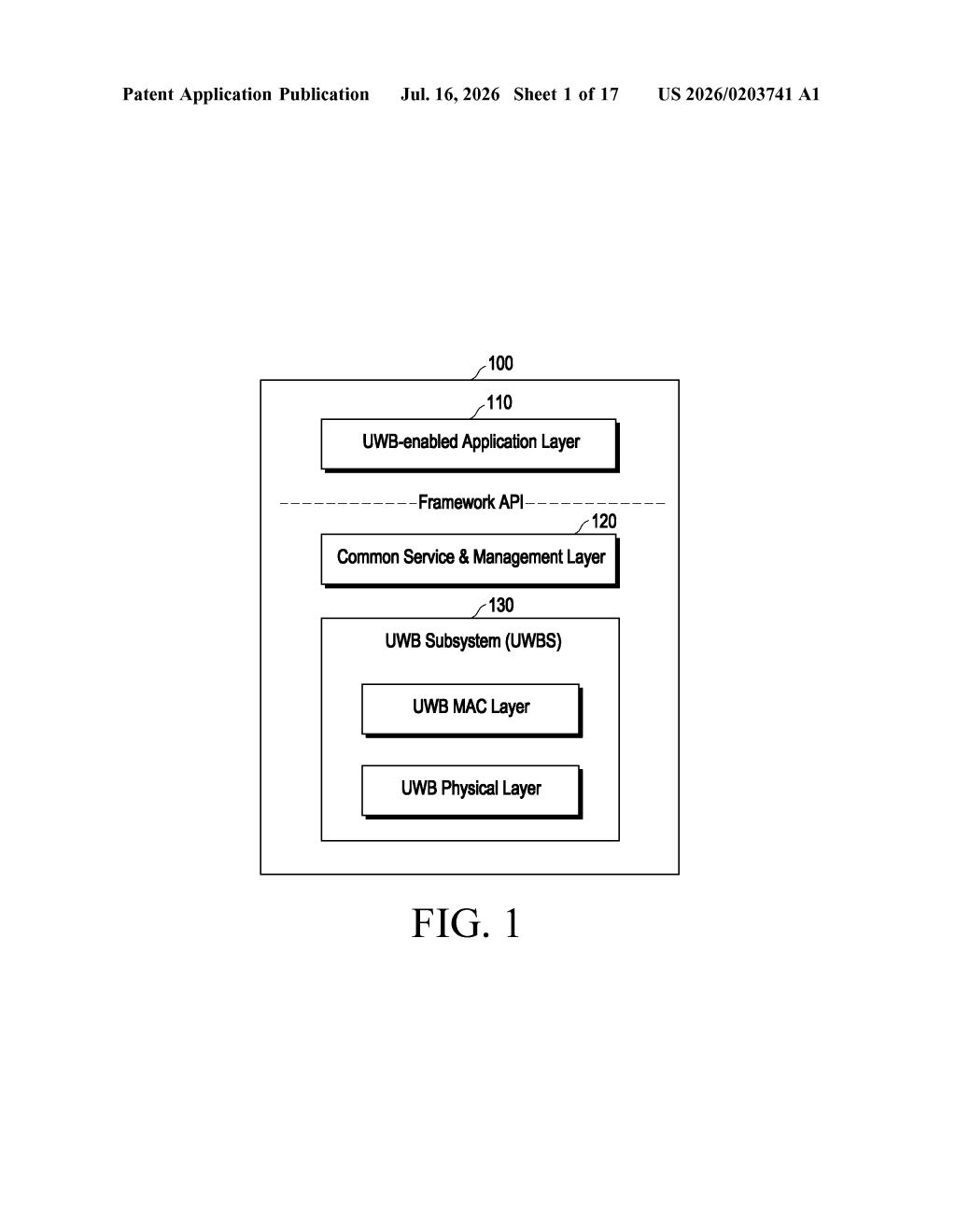
How Samsung's directional payment zone actually works
Imagine you're at a busy food court and two payment terminals sit just a foot apart on the counter. When you hold up your phone to pay, how does it know which machine you're actually pointing at? Today's contactless payments use Bluetooth or NFC, which can bleed into neighboring devices and cause confusion.
Samsung's patent describes a system that adds two extra measurements before any money moves. Your phone first figures out how far away every nearby terminal is, then figures out which direction each one is coming from. Only the terminals that fall inside a defined "pay-zone" (the right distance and the right angle) get the payment signal.
The whole exchange happens over ultra-wideband (UWB) radio, the same short-range technology already inside Samsung and Apple phones for tasks like finding lost keys. Because UWB measures distance down to centimeter accuracy, the pay-zone can be kept tight enough to exclude the terminal one register over.
How UWB ranging and angle detection define the pay-zone
The patent describes a three-step handshake before any payment goes through.
- Broadcast: The paying device (your phone) sends out a UWB advertisement message that includes a signal-strength threshold. Nearby terminals that hear it strongly enough reply.
- Ranging: The phone performs UWB Two-Way Ranging (TWR), a technique where radio pulses bounce back and forth to calculate distance with centimeter-level precision, for each terminal that replied.
- Angle of Arrival (AoA): The phone also measures the angle from which each reply signal arrived, essentially figuring out which direction each terminal is sitting in, left, right, or straight ahead.
Combining distance and angle, the phone draws an invisible pay-zone in space. Only terminals whose position falls inside that zone receive the actual payment data in the third signal. Terminals that are too far away, or off to the side beyond the angle threshold, are ignored even if they heard the original broadcast.
The threshold value advertised in the first signal gives the system a tunable sensitivity knob: tighten it to restrict the zone to centimeters, loosen it for a wider reach.
What this means for contactless payments in crowded spaces
Contactless payment fraud sometimes exploits the imprecise range of NFC or Bluetooth, where a rogue reader can intercept a signal meant for a legitimate terminal. By requiring both a distance check and a directional angle check before releasing payment data, Samsung's approach makes it significantly harder for an unintended device to receive your payment information.
For Samsung Pay and future Galaxy device integrations, this could translate into a more confident tap-to-pay experience in dense environments: transit hubs, stadiums, or multi-lane checkout counters where terminals cluster together. UWB is already built into recent Galaxy flagships, so the hardware foundation exists. Whether Samsung routes this through its existing wallet software or pitches it as a platform feature for point-of-sale hardware makers remains to be seen.
This is a genuinely useful application of UWB that solves a real, if niche, problem with today's contactless payments. It's not a moonshot; it's careful engineering applied to a specific failure mode. Given that UWB is already shipping in Samsung's high-end phones, the gap between this patent and a real product feature is narrower than usual.
There are more where this came from
We read every patent application Big Tech publishes and send you the ones worth knowing. Plain English, free, every week.
Want this weekly breakdown for a company we don't cover? Patentlyze Pro →