
Google Patent Aims to Help Robotaxis Find Passengers in Busy Pickup Areas
Matching a passenger to a waiting robotaxi sounds simple until you factor in busy sidewalks, confusing intersections, and a car that can't exactly roll down a window and shout your name. Waymo's latest patent tackles this head-on.
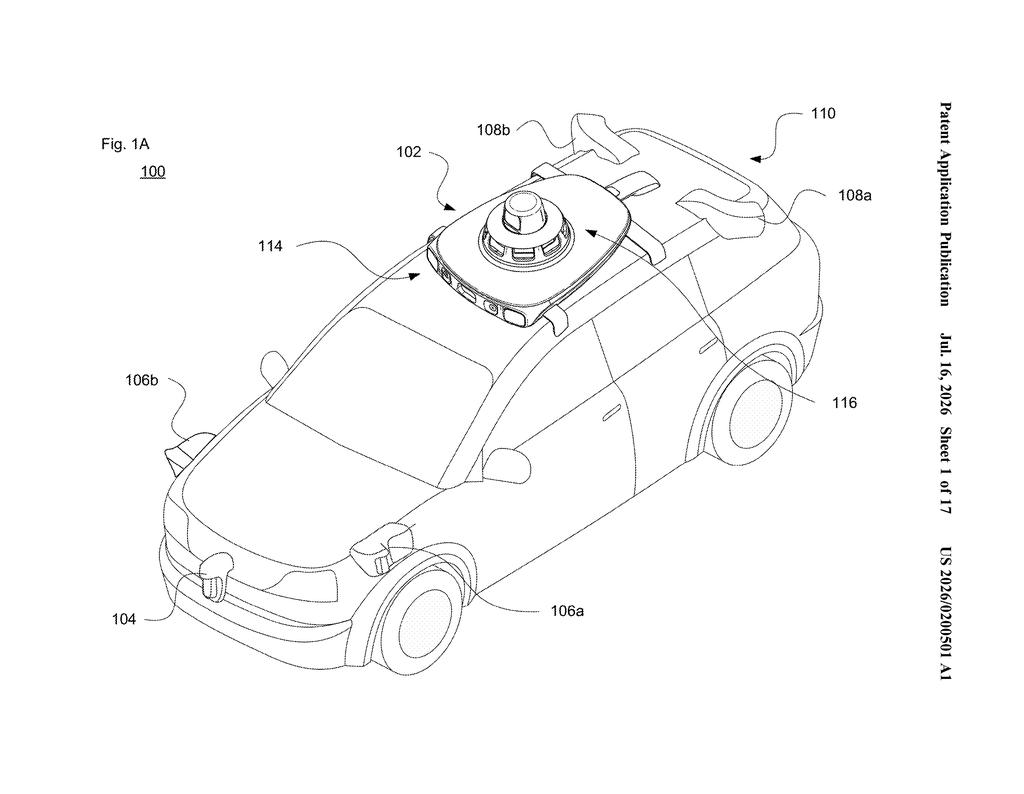
How Waymo's car figures out which pedestrian is you
Imagine ordering a Waymo ride and walking toward the curb, only the car is half a block away and you're not sure if it's yours, and the car isn't sure you're the right person either. That confusion is exactly what this patent is designed to fix.
Waymo's system watches pedestrians near the pickup zone using the car's sensors and tracks where each person is walking. It then predicts their path and judges whether any of them is likely heading toward the car as a customer. Once it's confident enough, it can send you a notification in the app, nudge the car to reposition, or adjust the official pickup spot to meet you where you're headed.
If you're still stuck, a remote human agent can jump in and use your phone's camera to guide you directly to the vehicle, with the car's own sensor data helping that person see what's around you. It's a layered system that treats the pickup itself as something that needs active management, not just a pin on a map.
How the vehicle tracks walking paths to confirm a match
The core mechanic is pedestrian path prediction. The vehicle's onboard processors continuously log what every nearby pedestrian has been doing (position, speed, direction) and use that history to project where each person is likely going next. That predicted trajectory is then scored against the expected behavior of someone walking toward the car at the scheduled pickup location.
If the score crosses a confidence threshold, the system flags that pedestrian as the customer and triggers one or more responses:
- Sending a push notification or in-app cue to the customer's phone, giving them directions or distance information to help them reach the car
- Adjusting the pickup location so the car moves closer to where the customer is actually headed
- Modifying the car's driving behavior, such as pulling forward or waiting longer, to align with the confirmed customer's position
The patent also describes a rider support mode where a remote human operator can view a live feed from the customer's phone camera, combined with the vehicle's own sensor data, to give real-time verbal or visual wayfinding help. This is the fallback layer when the automated system can't resolve the situation on its own.
What this means for the messy reality of robotaxi pickups
The pickup problem is one of the most common failure points in the robotaxi experience. Without a driver to wave, honk, or call out a name, passengers often wander, and the car just waits. This patent suggests Waymo is investing significant engineering effort into making that moment feel natural and reliable, treating the space between ride confirmed and door closed as a product problem worth solving with the same rigor as the driving itself.
For Waymo's commercial expansion, particularly in dense urban environments where pickup spots are shared, contested, or hard to pinpoint, a system that actively resolves passenger identity in real time could be a meaningful operational edge. It also reduces the need for passengers to know exactly where to stand, which matters a lot if you're new to a city or unfamiliar with how robotaxi pickups work.
This is genuinely practical engineering. The pickup-and-identification problem doesn't get talked about much, but anyone who's used a rideshare in a busy area knows how bad it gets. Waymo is filing patents that treat the human side of the ride as a real technical challenge, and that focus is what separates a working commercial service from a demo.
There are more where this came from
We read every patent application Big Tech publishes and send you the ones worth knowing. Plain English, free, every week.
Want this weekly breakdown for a company we don't cover? Patentlyze Pro →
Be the first to weigh in