
Waymo Patents a Real-Time Acceleration Envelope for Self-Driving Cars
Waymo's latest patent tackles one of the trickiest problems in autonomous driving: how does a self-driving car know exactly how hard it can brake or corner before things go wrong — in real time, not just on average road conditions?
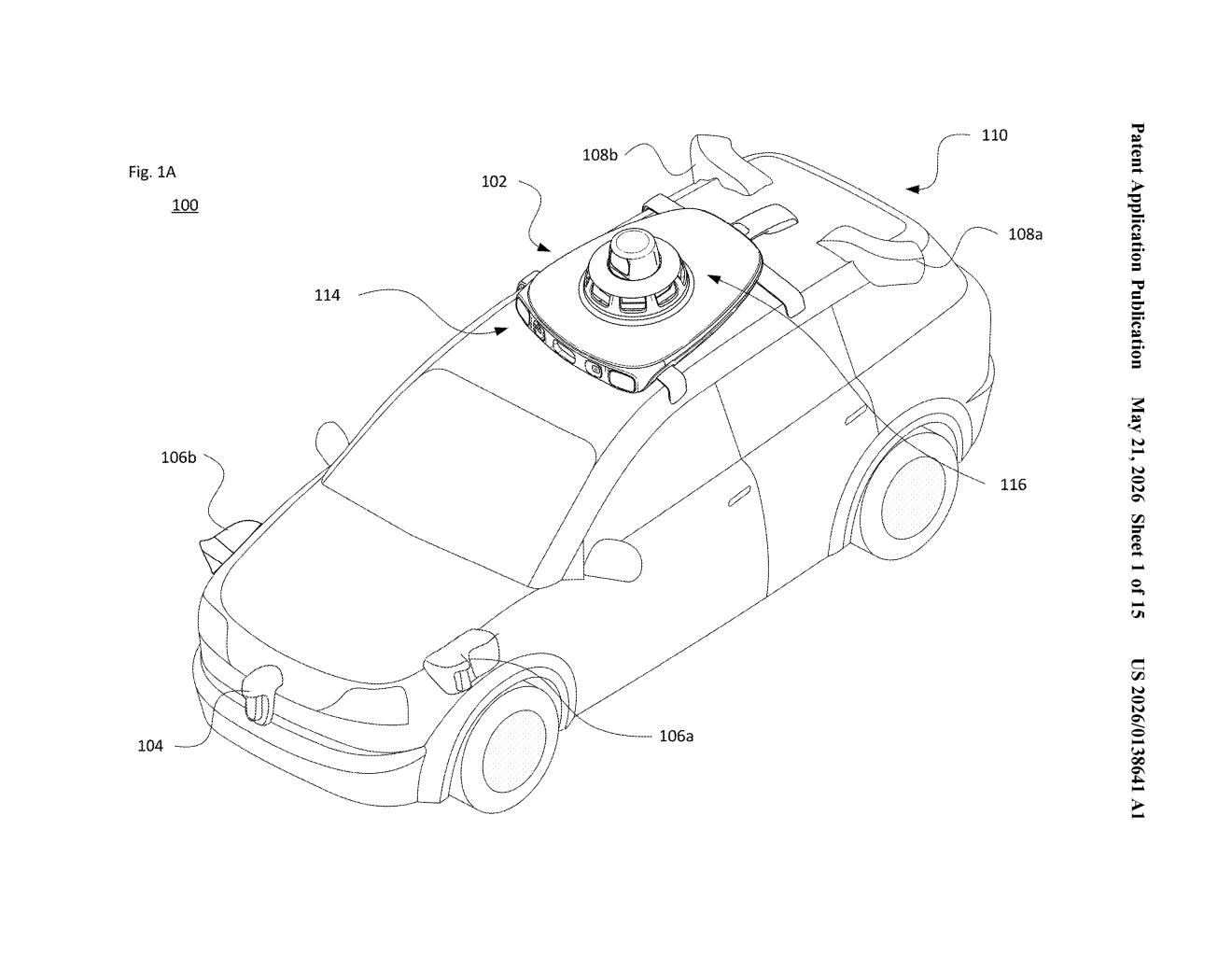
How Waymo's motion envelope keeps its robotaxis in control
Imagine driving into a sharp turn on a rain-slicked road. You instinctively ease off the gas because you feel that the car might skid. A self-driving car doesn't have instincts — so Waymo is building a system that gives it the next best thing.
This patent describes a "motion control envelope" — basically a constantly updated map of how hard the vehicle can accelerate, brake, or steer at any given moment. It pulls in data about the road surface (is it icy? sloped? wet?), the tires, the car's current speed and weight, and even wind or gravity on a hillside. From all that, it builds a real-time picture of what the car can safely do.
The planner — the part of Waymo's system that decides where to go and how fast — then uses this envelope to make decisions. Instead of working from fixed limits, the car's limits shift dynamically as conditions change. Think of it as the vehicle continuously asking: "Given everything around me right now, what's my safe performance ceiling?"
How Waymo calculates the available acceleration model
The core of the patent is an available acceleration model — a computed boundary defining the maximum longitudinal (forward/backward) and lateral (sideways) accelerations the vehicle can safely apply at any moment.
To build this model, the system estimates three layered inputs:
- Local friction envelope: derived from road surface data and tire state sensors — essentially, how much grip is available right now.
- External force impact: accounts for gravity vectors (think steep hills) and environmental forces like crosswinds that act on the vehicle from outside.
- Internal force impact: captures what the vehicle's own drivetrain, brakes, and steering can physically deliver — factoring in mass, load distribution, and current kinematic state (velocity, heading, etc.).
These three estimates are combined to generate the envelope, which then feeds a traction generation profile — a kind of dynamic performance budget that the planner module consults when deciding how to execute any given maneuver.
Critically, this isn't a static lookup table. The limits vary continuously as conditions change — so the system tightens the envelope when roads are slippery and loosens it on dry, flat surfaces. The autonomous planner stays within whatever the current envelope permits, giving the vehicle a principled, physics-grounded basis for every control decision.
What this means for robotaxi safety and edge-case handling
For robotaxis operating at scale, edge cases on real roads — wet pavement, sharp off-camber turns, heavy passenger loads — are where things go wrong. A fixed acceleration limit is either too conservative (slow, frustrating rides) or too aggressive (dangerous in bad conditions). A dynamic envelope threads that needle, letting the vehicle perform confidently in good conditions while automatically pulling back when physics demand it.
This also matters for regulatory trust. If Waymo can show regulators that its vehicles operate inside a continuously computed, physics-based safety boundary rather than hardcoded rules, that's a meaningful argument for expanding operational domains — more cities, more weather conditions, more edge cases handled with principled engineering rather than whack-a-mole patches.
This is serious, foundational autonomy engineering — the kind of work that doesn't make headlines but separates companies that can actually deploy at scale from those still hand-tuning edge cases. Waymo formalizing a variable motion envelope in a patent suggests they're systematizing what was likely previously handled through ad hoc tuning, which is exactly what you'd do before aggressively expanding to new cities and weather regimes.
There are more where this came from
We read every patent application Big Tech publishes and send you the ones worth knowing. Plain English, free, every week.
Want this weekly breakdown for a company we don't cover? Patentlyze Pro →