
Waymo Patents a Way to Stop Its Robotaxis From Drowning Out Each Other's Radar
When two Waymo robotaxis drive near each other, their radars could interfere — like two people shouting the same phrase at the same time. This patent describes a system for giving each vehicle its own unique radar "dialect" so they stop stepping on each other's signals.
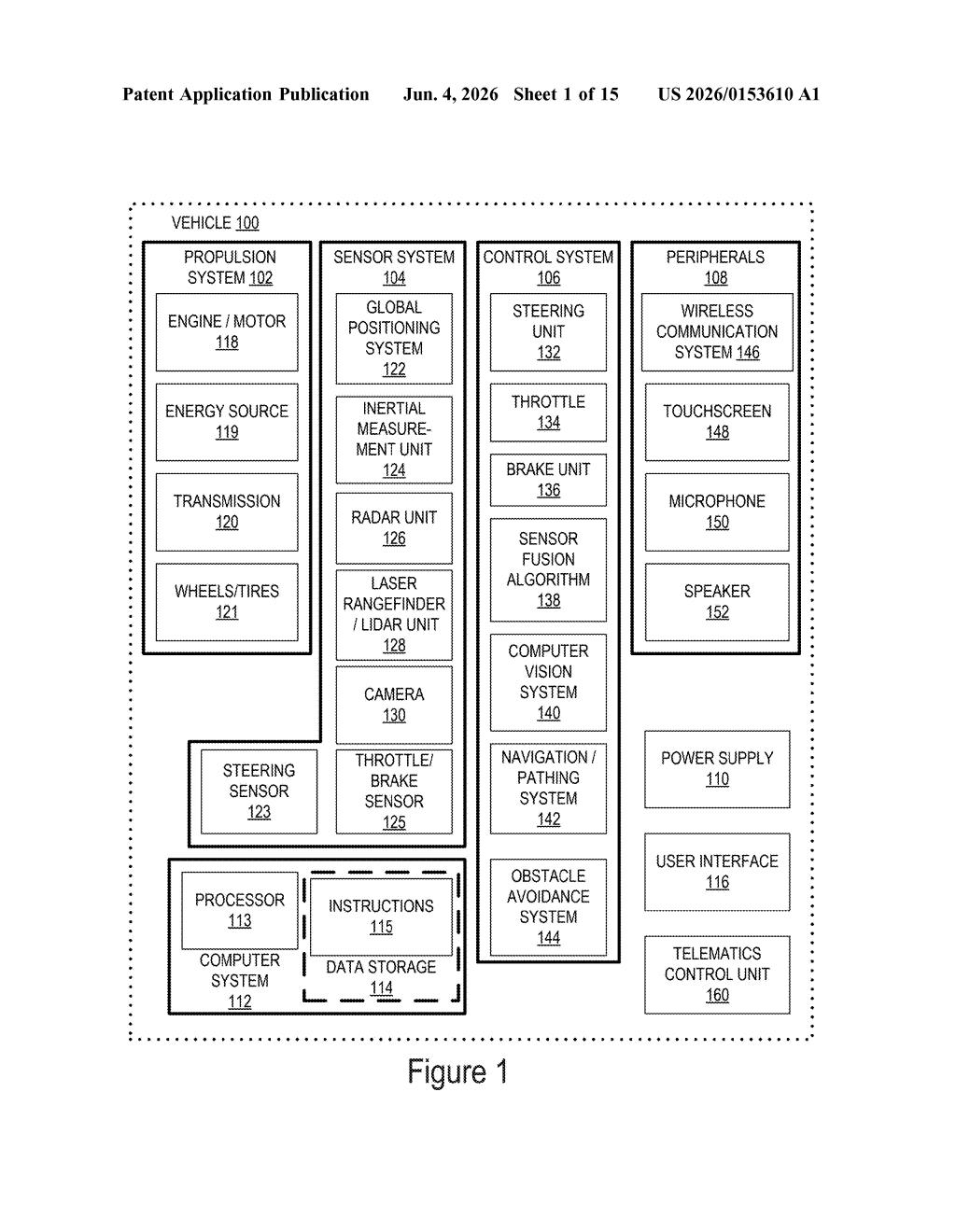
What Waymo's radar waveform diversity actually does
Imagine a busy city intersection with a dozen self-driving cars all firing radar pulses at once. Without coordination, those signals bounce off everything — including each other — and the cars start "hearing" phantom objects or missing real ones. That's a genuine safety problem as autonomous fleets scale up.
Waymo's approach is to give each radar unit a unique code sequence — essentially a fingerprint that tells the radar how to vary the direction and timing of each pulse it fires. Because every vehicle's pattern is different, a car can filter out radar echoes that don't match its own code, like tuning a radio to your station and ignoring the static.
The system can also hand out these unique codes wirelessly, in real time, so vehicles in the same area automatically get assigned non-overlapping patterns. It's a bit like a traffic controller distributing lane assignments — except for radio waves instead of cars.
How the code sequence controls each radar pulse
The core mechanism is a code sequence assigned to each radar unit. That sequence specifies two things for every pulse in a transmission chain: the ramp direction (whether the frequency sweeps up or down — think of it as the pitch of the radar chirp) and a phase shift (a deliberate offset in the wave's timing). Together, these create a unique signal pattern that a demodulator on the receiving end can match back to its own transmissions and reject everything else.
The patent also describes layering in MIMO (Multiple Input, Multiple Output) antenna arrangements — the same multi-antenna trick used in modern Wi-Fi routers — to add a spatial dimension to the diversity. Different antennas transmit slightly different coded variants simultaneously, which sharpens the 3D picture of the environment.
On top of the per-vehicle coding, there's an optional centralized coordination layer: a wireless system that distributes orthogonal code sequences (mathematically non-overlapping patterns) to multiple vehicles or emitters in an area. This means:
- No two nearby vehicles accidentally share the same radar fingerprint
- Codes can be updated dynamically as the fleet density changes
- The approach scales to dense urban deployments without manual reconfiguration
The output of all this — a clean, interference-free reflection map — feeds directly into vehicle control decisions.
What this means for dense autonomous vehicle fleets
As robotaxi fleets grow denser in cities like San Francisco and Phoenix, radar interference becomes a practical ceiling on how many autonomous vehicles can safely operate in proximity. This patent addresses that ceiling directly, and the wireless code-distribution piece suggests Waymo is thinking about fleet-level coordination, not just per-car engineering fixes.
For you as a passenger or pedestrian, the practical upside is a self-driving car that maintains accurate situational awareness even when it's surrounded by other self-driving cars — a scenario that's increasingly common in Waymo's operating zones. It's also a meaningful signal that Waymo is building infrastructure for large-scale fleet density, not just individual vehicle performance.
This is unglamorous but genuinely important work. Radar interference is one of those scaling problems that doesn't show up in demos but will absolutely bite autonomous vehicle operators as fleets grow. The centralized code-distribution architecture is the interesting part — it implies Waymo wants infrastructure-level control over how its vehicles sense the world, not just better hardware on individual cars.
There are more where this came from
We read every patent application Big Tech publishes and send you the ones worth knowing. Plain English, free, every week.
Want this weekly breakdown for a company we don't cover? Patentlyze Pro →