
Waymo Patents a Dual-Brain Fallback System for When Its Robotaxis Break Mid-Drive
What happens when a self-driving car's computer partially fails at 65 mph on a freeway? Waymo's answer is a dual-brain hardware architecture that lets the vehicle limp to safety — either by pulling over or quietly exiting to a surface street — without a human ever taking the wheel.
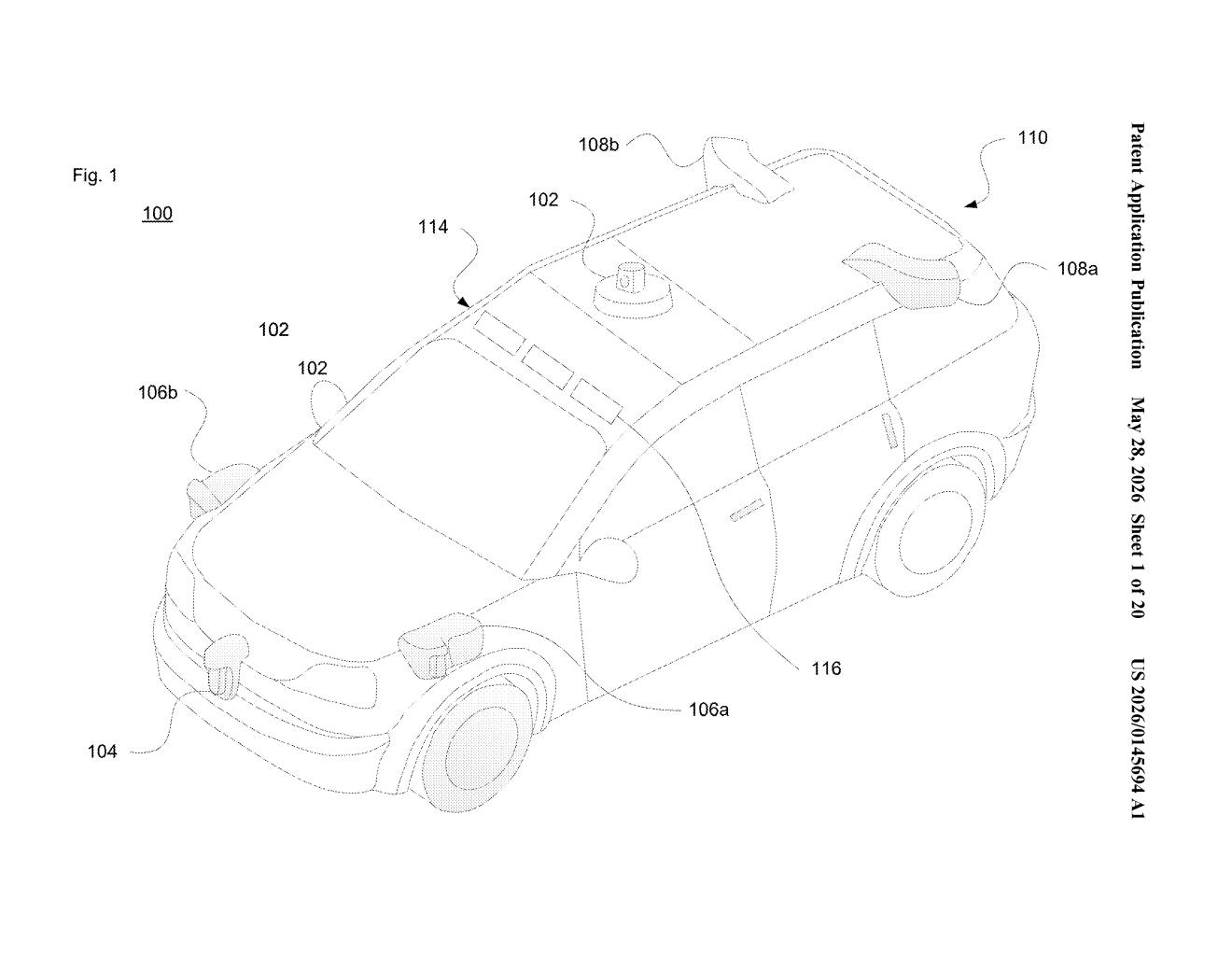
What Waymo's redundant hardware fallback actually does
Imagine you're in a Waymo robotaxi cruising down the highway when one of the car's onboard computers starts acting up. Right now, that kind of failure could be a serious problem. This patent describes Waymo's plan to make sure it isn't.
The idea is to run two separate computing subsystems in parallel, each monitoring a different slice of the car's sensors and systems. If one subsystem degrades or fails, the other can take over and drive the vehicle to a safe stopping point — either pulling over on the freeway shoulder or navigating off the nearest exit onto a surface street.
This isn't just a single backup switch. The system watches for specific types of failures — sensor blind spots, power drops, compute faults — and picks the right fallback response depending on what broke and where the car is. Think of it like a car with two co-pilots who have agreed in advance exactly who takes the controls in which emergency.
How the two computing subsystems divide and hand off control
The patent describes a partially redundant hardware architecture built around two independent computing subsystems. Each subsystem receives sensor data from its own dedicated subset of the vehicle's hardware — cameras, lidar, radar, and other perception inputs. Under normal operation, both run in parallel; when a fault occurs, one takes the lead.
The key mechanism is the triggering condition detector. The system continuously monitors for:
- Reductions in component capability (a sensor going offline, compute performance degrading)
- Current driving mode (freeway vs. surface street)
- Environmental conditions along the planned route
- Specific fault types in either subsystem
Once a triggering condition is identified, the control system selects which subsystem handles the fallback driving mode. That fallback mode has a narrow mandate: get the vehicle to a safe location. On a freeway specifically, that means either navigating to the nearest exit and continuing on surface streets, or pulling over to the shoulder — both of which are spelled out explicitly in the claim language.
Fallback configurations extend beyond just computing. The patent also covers redundant sensor arrangements that guarantee a minimum field-of-view envelope around the vehicle even after partial sensor loss, and redundant power systems to keep the surviving subsystem alive.
What this means for robotaxi safety at highway speeds
For Waymo, this is core infrastructure for scaling robotaxi operations to highways — an environment where low-speed safety valves like 'pull into a parking lot' don't apply. A system that can autonomously manage a graceful freeway exit under partial hardware failure is a significant operational requirement for any commercial self-driving service operating without a safety driver.
For the broader autonomous vehicle industry, the patent signals that redundancy design is moving from a vague safety principle to a deeply engineered, scenario-specific system. Different failure types trigger different fallback responses — not a single emergency stop. That granularity is what regulators and the public will eventually need to see before full driverless deployment on high-speed roads becomes routine.
This is serious safety engineering, not a flashy feature patent. The specificity here — freeway exit vs. shoulder pullover as distinct fallback outcomes, triggered by different failure types — shows Waymo thinking carefully about the exact scenarios that could go wrong at highway speeds. It's the kind of unglamorous work that actually determines whether robotaxis are safe to scale.
There are more where this came from
We read every patent application Big Tech publishes and send you the ones worth knowing. Plain English, free, every week.
Want this weekly breakdown for a company we don't cover? Patentlyze Pro →