
Nvidia Patents a Multi-Teacher Knowledge Distillation System Using LoRA Towers
Training a small AI model to match the performance of a large one is notoriously hard — especially when you want it to learn from multiple expert models at once. Nvidia's new patent describes a clever system that uses dynamically-sized "LoRA towers" to absorb knowledge from multiple teachers simultaneously, adjusting their own complexity on the fly.
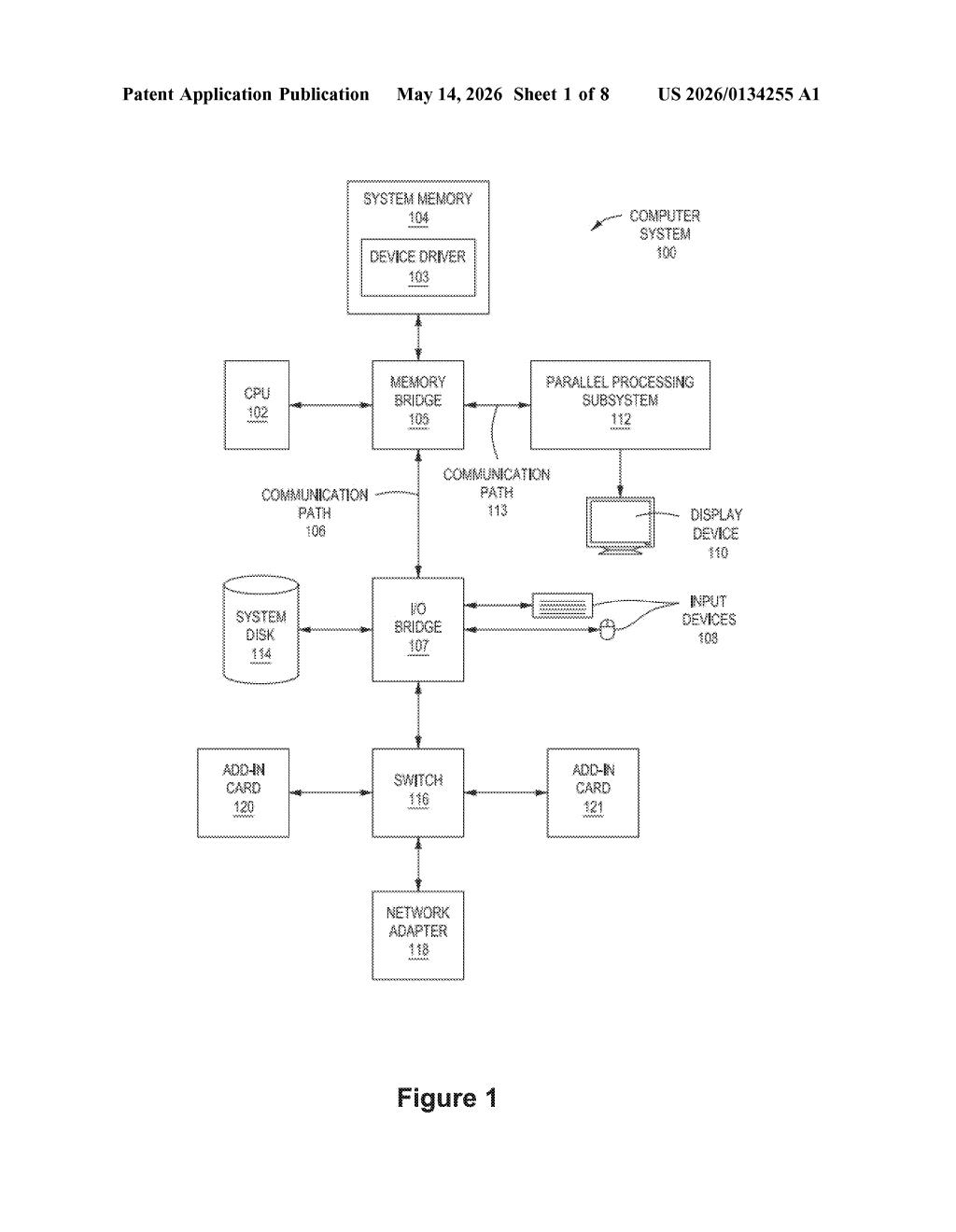
How Nvidia shrinks big AI models without losing their smarts
Imagine you're a student trying to learn from several brilliant professors at the same time. Each professor has a different specialty, and you want to absorb all of their knowledge — but you only have so much room in your notebook. That's roughly the challenge Nvidia is solving here.
Nvidia's approach trains a smaller "student" AI model to mimic one or more large "teacher" models. The student model has special plug-in modules called LoRA towers attached to it. These towers act like adjustable learning adapters — they grow or shrink in complexity depending on how hard the student is struggling to match the teacher's answers.
The key insight is that the towers figure out their own size automatically. When the student makes big mistakes, the system detects that through something called a gradient (essentially, a signal about how wrong the answer was), and uses that to resize the towers. You end up with a compact model that learned efficiently from its teachers — without bloating the whole network unnecessarily.
How LoRA tower ranks adapt dynamically during distillation
The patent describes a training pipeline with three main actors: one or more teacher models (large, already-trained networks), a backbone model (a smaller base network), and a set of LoRA towers attached to that backbone.
LoRA (Low-Rank Adaptation) is a widely-used technique where instead of retraining an entire model, you bolt on small, low-dimensional weight matrices that handle the fine-tuning work. Think of it like adding a focused specialist module to a generalist brain, rather than retraining the whole brain. The "rank" of a LoRA matrix controls how expressive — and how computationally expensive — it is.
Here's what makes this patent distinct:
- The student model runs the same training data through its backbone + LoRA towers and produces a predicted output.
- That output is compared against the teacher model's output, and a loss (error signal) is calculated.
- Gradients derived from the loss are used not just to update weights, but to determine the rank of each LoRA tower — effectively resizing the adapter based on how much it's struggling.
- Multiple teachers can supervise the same student simultaneously, each potentially paired with its own LoRA tower.
This dynamic rank assignment is the novel core: the system isn't stuck with a fixed LoRA size chosen upfront by an engineer — it discovers the right size during training itself.
What this means for deploying leaner, faster AI at scale
For Nvidia, which sells the GPUs that train and run these models, making distillation more efficient is a strategic priority. A better distillation pipeline means customers can produce smaller, cheaper-to-run models — which actually increases deployment volume and, by extension, inference hardware demand. It's a smart place to file IP.
For developers and researchers, this matters because multi-teacher distillation is genuinely hard to get right. Right now, most practitioners either pick a single teacher or do expensive ensemble tricks. A method that handles multiple teachers gracefully — while automatically tuning adapter complexity — could reduce a lot of manual hyperparameter hunting. If this ends up in Nvidia's NeMo or similar training frameworks, it could quietly become a standard step in how production AI models get compressed for deployment.
This is solid, targeted ML research IP — not a flashy consumer feature patent, but exactly the kind of foundational training-infrastructure work that shapes what models actually ship. The dynamic rank assignment is a genuinely interesting wrinkle on standard LoRA distillation, and the multi-teacher framing addresses a real gap in current practice. Worth watching if you care about efficient model training pipelines.
Get our take in your Top Stories
Liked this breakdown? Add Patentlyze as a preferred source on Google, and our plain-English take shows up more often in your Top Stories the next time Nvidia patent news breaks.
There are more where this came from
We read every patent application Big Tech publishes and send you the ones worth knowing. Plain English, free, every week.
Want this weekly breakdown for a company we don't cover? Patentlyze Pro →