
Microsoft Patents a Two-Position Hinge That Locks at Specific Angles
Most hinges let you stop wherever you want. Microsoft is patenting one that snaps to exactly two positions, by design, using a clever combination of mismatched resistance and a physical locking pin.
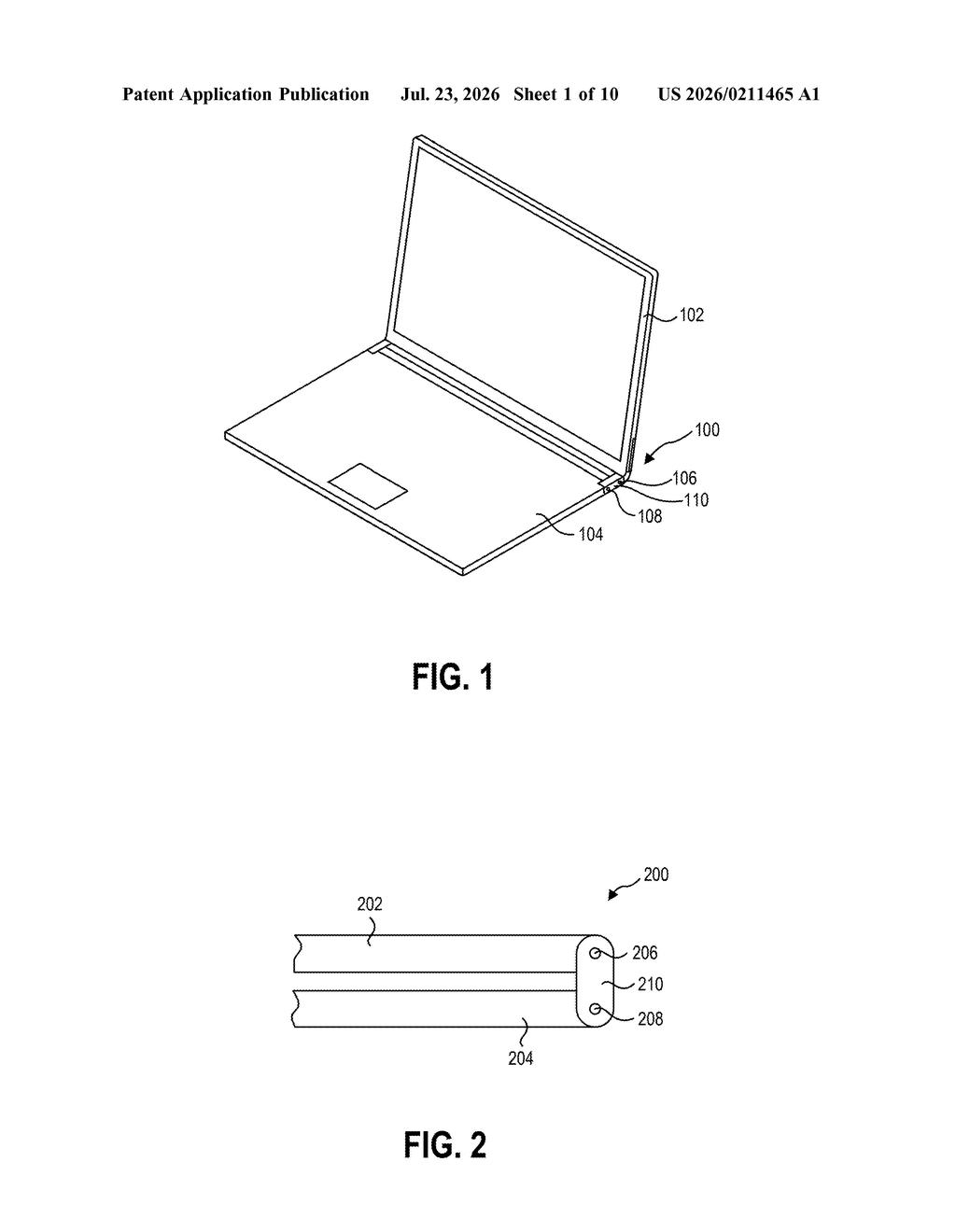
What Microsoft's locking hinge actually does
Imagine a laptop hinge that doesn't just let you open the screen anywhere. Instead, it clicks into two defined positions, like a light switch, either closed or open at a specific angle, with nothing mushy in between. That's the core idea here.
Microsoft's patent describes a hinge made of multiple connected pieces, where each pivot point has a different amount of resistance. One joint is stiffer than the other. That mismatch, combined with a small locking pin that slides in and out, controls which way the hinge moves and where it stops. The pin physically blocks rotation past a certain angle when it's engaged.
The result is what engineers call a bistable hinge, meaning it has two stable resting states and wants to be in one or the other, not somewhere in the middle. Think of it like a snap-open phone stand versus a friction hinge that droops wherever you leave it.
How the mismatched pivots and locking pin work together
The patent describes a hinge system with three main bodies connected by a link, a rigid bar or arm that bridges the first and second body through two separate pivot points.
- First pivot point: has a defined rotational resistance (how hard it is to rotate)
- Second pivot point: has a different rotational resistance, deliberately mismatched from the first
- Third body: a component that can be positioned to block or allow rotation at the first pivot
- Locking pin: a small pin inside the first body that slides between an inserted position (blocking rotation) and a retracted position (allowing it)
Because the two pivot points have different resistances, the hinge follows a predictable, deterministic path when it moves. The stiffer pivot holds while the looser one rotates first, then the pin can engage or disengage to lock the angle at a set point. This is what makes the motion "bistable" (two stable positions) rather than free-floating.
The third body adds a mechanical stop, a physical limiter that prevents the hinge from rotating past a certain angle when it's in its first configuration. Together, these elements give the hinge a defined, repeatable travel between two fixed states.
What this means for foldable laptops and dual-screen devices
Foldable and dual-screen laptops live and die by their hinges. A hinge that drifts or lands at an inconsistent angle creates real usability problems, especially for devices meant to flip between laptop mode, tablet mode, or a tent configuration. A bistable design that snaps predictably between positions would reduce that drift and give users a more reliable, satisfying feel.
Microsoft makes the Surface line, which includes dual-screen and foldable form factors like the Surface Duo and Surface Neo concepts. A hinge like this could help future Surface devices feel more precise and intentional when switching between modes, rather than relying on pure friction that wears down over time.
This is solidly interesting hardware work, not headline-grabbing AI stuff, but hinge engineering is one of the genuinely hard problems in foldable devices. The bistable approach with a locking pin is a real mechanical solution to a real problem: hinges that lose tension over time and stop holding their position. Whether this ships in a Surface product is unknown, but the problem it solves is real.
There are more where this came from
We read every patent application Big Tech publishes and send you the ones worth knowing. Plain English, free, every week.
The drawings
10 drawing sheets from US 2026/0211465 A1 · click any drawing to enlarge


Want this weekly breakdown for a company we don't cover? Patentlyze Pro →