
Adobe Patents AI That Pinpoints the Hero Section Before Generating Web Pages
Before AI can write your website copy, it needs to know where the headline goes. Adobe's new patent describes a system that figures that out automatically.
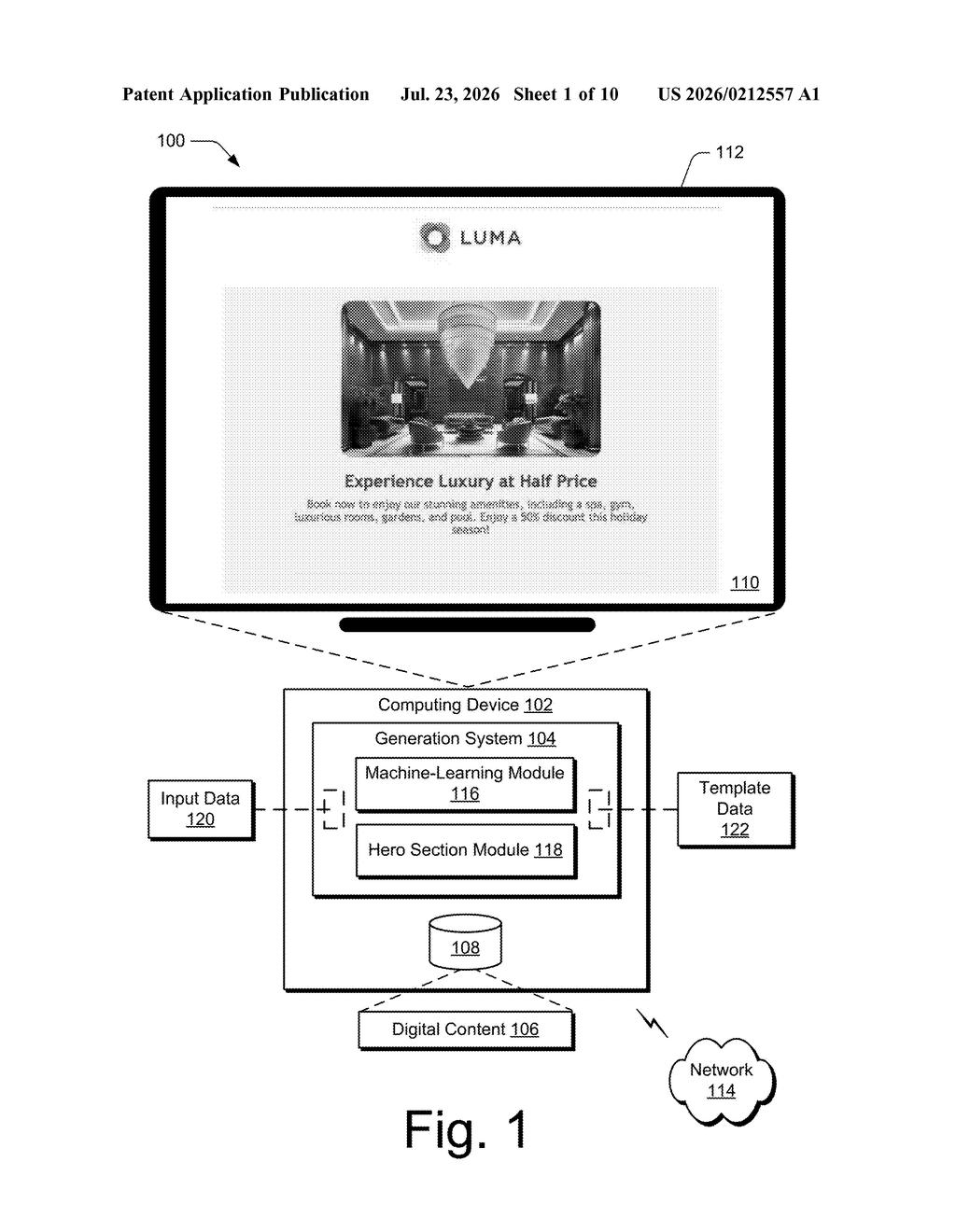
What Adobe's hero-section detector actually does
Imagine asking an AI to build you a promotional web page from a template. The AI needs to know which part of the page is the hero section, that big, attention-grabbing banner at the top where your main headline and key image live. If it gets that wrong, your most important message ends up buried.
Adobe's patent describes a machine-learning system that looks at a template and identifies the hero section on its own, before generating any content. It does this by examining things like how large the images are, where they sit on the page, and how prominent the text is relative to everything else around it.
Once the system knows which section is the hero, it tailors the generated content so that your core message, whatever goal you typed into the prompt, lands right there at the top. It's the kind of layout awareness that a good human designer would apply automatically, but applied by an AI working from your plain-English instructions.
How the model scores images and text to pick the hero
The patent describes a machine-learning model that analyzes the structure of a design template to locate the hero section (the primary visual and text block, usually at the top of a web page or email) before any content is generated.
To identify a candidate hero image, the model weighs several signals:
- How many elements appear above the image in the layout
- How large those elements are
- The image's own dimensions and aspect ratio
- Its vertical position on the page
For candidate headline or body text, it looks at different signals:
- The display level (is it an H1 or a small caption?)
- Its size relative to surrounding text
- Its position in the document's container hierarchy
- The size of any text that appears above it
Putting those signals together, the model scores each candidate element and picks the most likely hero section. When the user's prompt arrives describing what the content should accomplish, the system directs the generated copy and imagery toward that identified section so the stated goal is front and center. The rest of the page is then built around that anchor.
What this means for AI-generated marketing pages
For anyone using AI tools to generate marketing pages, email campaigns, or landing pages from templates, this kind of automatic layout awareness removes a real friction point. Right now, generic AI content generators don't necessarily know that the banner image at the top of your template is more important than the footer logo. A system like this one could make AI-generated pages feel more intentional and on-brand without you having to manually specify where the headline should go.
For Adobe, which has been building generative AI into products like Adobe Express and Firefly, this kind of structural intelligence fits squarely into its pitch: AI that understands design, not just text. If this capability ships in a product, you'd get output that respects the visual hierarchy a designer already built into the template rather than dumping copy wherever it fits.
This is a useful, unsexy piece of infrastructure work. Hero-section detection isn't glamorous, but getting it wrong makes AI-generated pages look generic and thoughtless. Adobe is essentially teaching its AI to read a layout the way a designer would before it types a single word, which is the right instinct. Whether it actually works well in practice depends entirely on how varied the training templates are.
There are more where this came from
We read every patent application Big Tech publishes and send you the ones worth knowing. Plain English, free, every week.
The drawings
10 drawing sheets from US 2026/0212557 A1 · click any drawing to enlarge


Want this weekly breakdown for a company we don't cover? Patentlyze Pro →
Be the first to weigh in