
Microsoft Patents an AI Content Tool That Lets You Dial In What You Actually Want
Telling an AI to 'write me a blog post' often produces something close but wrong in ways that are hard to explain. Microsoft's latest patent imagines a different approach: the AI asks you what matters, then adjusts one dial at a time.
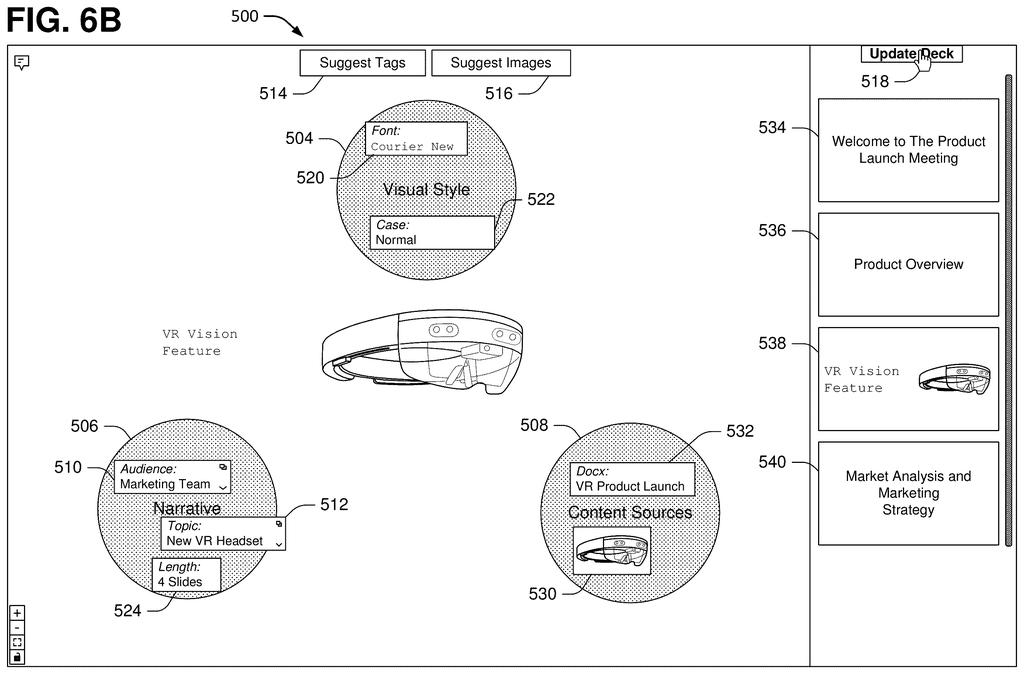
How Microsoft's intent-tag system changes AI writing prompts
Imagine you ask an AI to draft a product announcement. It writes something, but the tone is off, the length is wrong, and the audience feels like a mismatch. You try rewriting your prompt a dozen ways and still can't get there.
Microsoft's patent describes a system where the AI doesn't just take your prompt and run. Instead, it reads what you're trying to do and surfaces a set of labeled options, called concept tags, like "tone," "audience," or "formality." You pick one, choose a specific value (say, "conversational" or "expert"), and the AI regenerates the content based on that choice.
The key idea is that you can keep adjusting these tags one by one, watching the content update as you go. Instead of guessing at the right prompt, you're tuning the output like adjusting sliders on an equalizer until it sounds right.
How the model surfaces tags and turns values into content
The system works in a back-and-forth loop between the user and a generative machine learning model (an AI system trained to produce text, images, or other content).
- You describe what you want to create in plain language.
- The AI analyzes your input and suggests a list of concept tags, labeled properties relevant to your task, like "length," "tone," "reading level," or "structure."
- You select a tag and pick a value for it. Each tag has multiple possible values (for example, "tone" might offer "formal," "casual," or "persuasive").
- The AI generates or regenerates the content item based on the chosen value. You can then select another tag, assign another value, and the content updates again.
The patent specifies that this is an iterative process. Over time, as you set values for more tags, the AI keeps the previously set values in place and layers in the new ones, so you're progressively shaping the output rather than starting over with each change. The tags themselves are suggested by the AI based on your original input, not selected from a fixed menu.
What this means for Microsoft's AI productivity tools
Most AI writing tools today give you a blank prompt box and hope you know how to use it well. That works fine for people who have learned prompt engineering, but it leaves most users guessing. A structured tag system would lower that learning curve considerably, because you'd be reacting to options rather than inventing instructions from scratch.
This approach also fits naturally into Microsoft's existing products. Copilot is already embedded in Word, PowerPoint, and Outlook. A tag-based refinement layer on top of Copilot's existing generation capabilities would give everyday Office users a more controlled, less frustrating way to get AI output that actually fits what they had in mind.
This is a genuinely practical idea. The gap between 'I described what I wanted' and 'the AI understood what I wanted' is real, and structured concept tags are a reasonable way to close it. Whether Microsoft ships this as a Copilot feature or it stays a research paper, the underlying problem it's solving is one of the most common complaints about AI writing tools right now.
There are more where this came from
We read every patent application Big Tech publishes and send you the ones worth knowing. Plain English, free, every week.
The drawings
25 drawing sheets from US 2026/0212158 A1 · click any drawing to enlarge


Want this weekly breakdown for a company we don't cover? Patentlyze Pro →
Be the first to weigh in