
Nvidia Patents a Way to Keep Self-Driving Cars Clear of Roadside Obstacles
When a self-driving car encounters a parked truck or a stray dumpster in the road, it needs to know not just that the object is there, but exactly how far to steer around it. Nvidia's new patent tackles that second, trickier part.
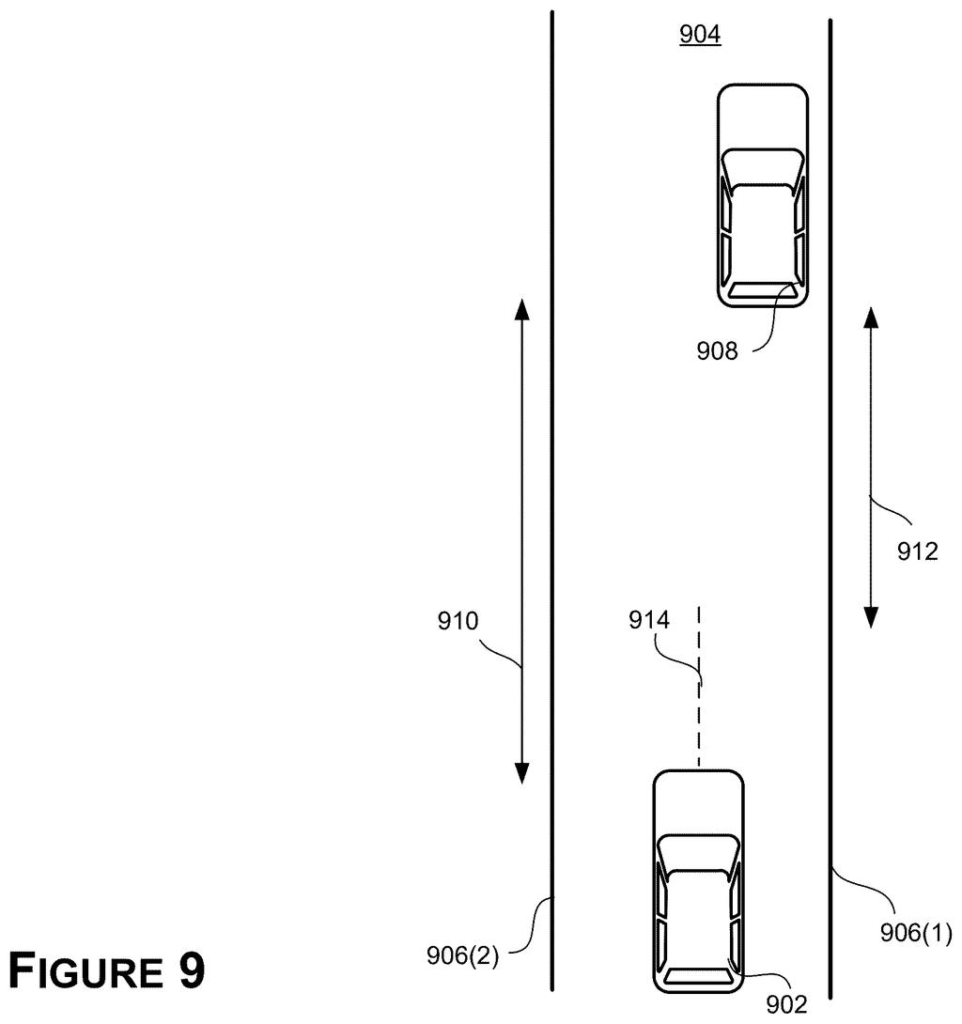
How Nvidia's lane-biasing system steers around parked cars
Imagine a self-driving car rolling down a narrow street where someone has double-parked a delivery van. The car's cameras and sensors can see the van, but the street has no clear lane markings to tell the car how far over it should move. That's the exact problem this patent is designed to solve.
Nvidia's system figures out where the lane boundaries probably are, even when the paint on the road is faded or missing entirely, by looking at where stationary objects are sitting and analyzing which parts of the road surface are actually drivable. It uses that information to draw a virtual lane for itself.
Once it has those virtual lanes, the system takes the vehicle's planned route down the center of the lane and shifts it sideways, away from the obstacle, by a calculated safety margin. The result is a new, adjusted path that keeps a comfortable buffer between your car and whatever's blocking the road.
How the system shifts a vehicle's path using object locations
The patent describes a two-stage process. First, the vehicle's onboard sensors scan the environment and identify static objects (things that aren't moving, like parked cars, cones, or debris) along with their precise positions and orientations.
Because many real-world roads lack clear lane markings, the system generates its own lane geometry on the fly. It does this using two inputs: the positions and angles of those static objects (which often line up with the edge of a usable road surface) and a drivable free-space analysis (essentially a map of where the road surface is actually passable versus where it's blocked or off-limits).
With a virtual lane now defined, the system calculates a new driving path by taking the current planned centerline and shifting it laterally by a distance derived from how close the obstacle is to the lane edge. The bigger the intrusion into the lane, the more the path shifts away:
- Sensor data identifies object locations and poses
- Virtual lane boundaries are computed from objects and free-space data
- The planned centerline is shifted away from obstacles by a safety margin
- The adjusted path feeds into the vehicle's planning and control systems
The hardware described includes CPUs, GPUs, and dedicated accelerator chips, suggesting this is designed to run in real time on Nvidia's own automotive compute platforms.
What this means for self-driving safety in unstructured roads
Most autonomous driving research assumes reasonably well-marked roads. The real world is messier: construction zones, old neighborhood streets, parking lots, and rural roads often have no usable lane lines at all. A system that can infer where lanes should be, and then plan around obstacles within them, is important for making self-driving vehicles work outside of highway pilot programs.
For Nvidia, which sells the Drive platform to automakers including Mercedes-Benz, Volvo, and BYD, this kind of low-level path-planning capability is core infrastructure. If it works well in practice, it could reduce the number of edge cases where a vehicle has to hand control back to a human driver or come to a stop.
This is unglamorous but genuinely important work. The gap between 'can drive on a well-marked highway' and 'can navigate a messy city block' is one of the hardest problems in autonomy, and lane biasing in unmarked environments is a direct attack on that gap. It's not a flashy AI demo, but it's the kind of patent that actually ships inside a production vehicle stack.
There are more where this came from
We read every patent application Big Tech publishes and send you the ones worth knowing. Plain English, free, every week.
The drawings
16 drawing sheets from US 2026/0208764 A1 · click any drawing to enlarge


Want this weekly breakdown for a company we don't cover? Patentlyze Pro →
Be the first to weigh in