
Samsung Patents a Robot Arm That Zooms In Before It Grabs
Before a robotic arm reaches for an object, Samsung's new patent wants it to automatically zoom in on the relevant area of the scene, generate a sharper targeting image, and only then commit to the grab. It's the robotic equivalent of a camera autofocusing before the shutter fires.
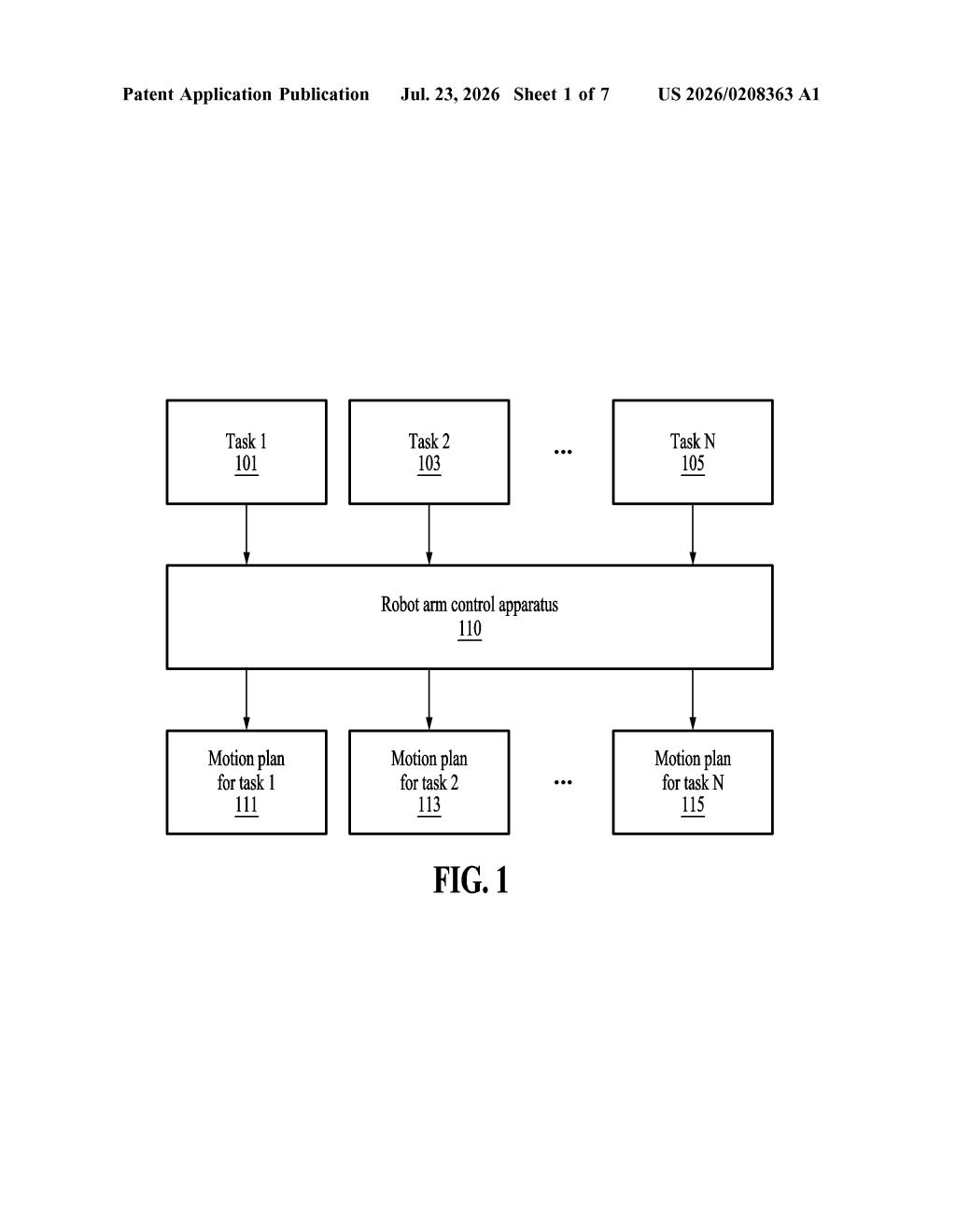
How Samsung's robot arm decides where to reach
Imagine asking a robot to pick up a small bolt off a cluttered workbench. If the robot is only working from a wide-angle view of the whole table, the bolt might look tiny and easy to miss. Samsung's patent describes a system that solves this by giving a robot arm the ability to zoom in on the exact spot it needs before it moves.
Here's the rough sequence: the robot's camera captures a picture of the arm and the surrounding scene. An AI model looks at that image and produces a heat map, a kind of probability spotlight that says "the target is probably around here." Based on how confident (or uncertain) that first heat map looks, the system automatically decides how much to zoom into that region. Then it generates a second, much sharper heat map from the zoomed view.
That second, high-resolution heat map is what actually guides the arm to the right spot. Think of it as a two-step look before a careful reach, rather than one blurry guess.
How the two-pass heat map and zoom system works
The system receives three inputs for every action: a camera image of the robot arm and its gripper (called an end-effector), a point cloud (a 3D map of where every pixel sits in real space, like a depth scan), and a plain-language or coded instruction describing what task to perform.
Using the camera image and the 3D point cloud together, the processor renders a synthetic view of the scene from a chosen virtual camera angle. This first rendered image is fed into a first heatmap generation model alongside the task instruction. The model outputs a probability map highlighting where the gripper should go, but at full scene scale it may lack fine detail.
A separate magnification determination model then reads that first heat map and decides how much to zoom in on the region of interest. It picks a magnification level that makes the target area fill more of the frame. The system re-renders the scene at that zoom level to produce a second rendering image.
Finally, a second heatmap generation model processes the zoomed image and produces a much more precise targeting map. The robot arm uses this second heat map to calculate the exact 3D position it should move to, then executes the motion. The two-pass approach trades a little computation time for a significant gain in positional accuracy.
What this means for factory and household robots
Robotic arms in factories today often struggle with small, closely spaced objects because their vision systems have to balance seeing the whole scene and seeing fine detail at the same time. Samsung's approach sidesteps that trade-off by doing a coarse look first, then an automatic close-up only where it counts. That could make the same hardware more reliable without swapping in more expensive cameras.
For anyone thinking about robots in less controlled environments, like a home kitchen or a hospital supply room, this kind of adaptive zoom matters even more. Objects aren't always in the same spot, and lighting changes. A system that can self-correct its view before committing to a movement is less likely to knock something over or grab the wrong item, which is exactly the kind of reliability that keeps robots out of trouble.
This is a practical, incremental improvement to robot vision rather than a conceptual leap, but that's not a knock against it. The two-pass zoom idea is elegant and addresses a real bottleneck in robot arm accuracy. Samsung is clearly building toward more capable home and industrial robots, and patents like this one show the unglamorous but necessary engineering work that makes them actually usable.
Which company should we read for you?
We track 17 companies here. Pro is the same weekly breakdown for any company you choose, delivered privately. Type a name and we'll scope it and send you a quote.
Get one Big Tech patent every Sunday
Plain English, intelligent commentary, no hype. Free.
Editorial commentary on a publicly published patent application. Not legal advice.