
Nvidia Patent Teaches AI Animation Rules for Generating Lifelike Character Motion
Nvidia has filed a patent for an animation system that works a bit like a fill-in-the-blanks puzzle: you tell the AI what a character must do (or must not do), and the system figures out all the motion in between.
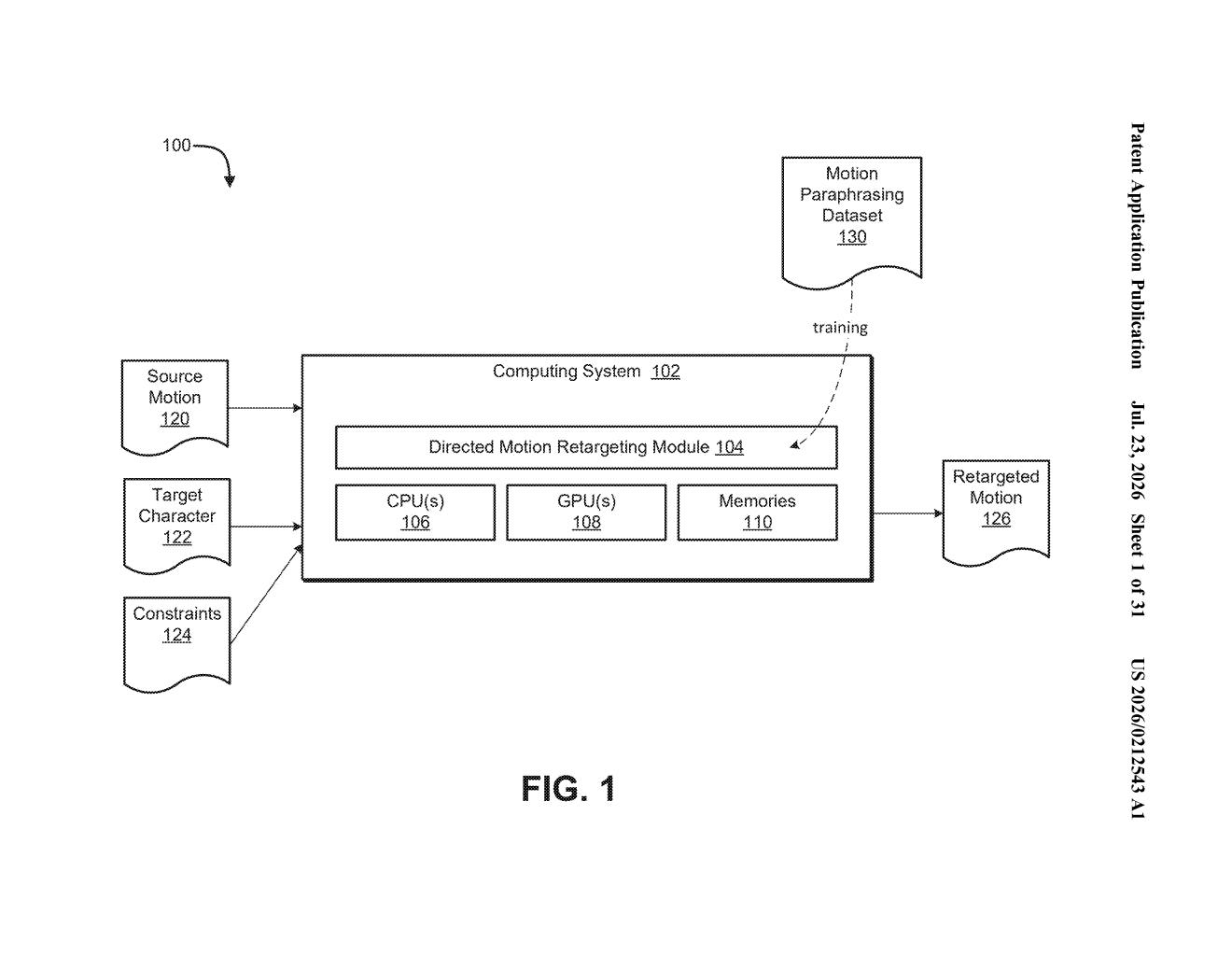
How Nvidia's constrained animation system actually works
Imagine you're directing an animated film and you need a character to walk through a door, pick up a glass, and sit down. Right now, animators often have to draw or manually adjust hundreds of individual poses to make that look natural. It's slow, expensive, and fiddly.
Nvidia's patent describes a system where you define the rules for a character's movement upfront, things like which body parts must be in certain positions at certain times. The AI then takes a blob of random digital noise and gradually refines it, step by step, until it becomes a smooth, rule-following animation sequence.
The key idea is that the rules act as guardrails before the AI starts generating anything, so the result doesn't need to be fixed after the fact. Think of it like autocomplete that already knows the first and last word of the sentence before it writes the middle.
How the denoising network turns noise into motion frames
The system relies on a class of AI models called diffusion models (the same family behind image generators like Stable Diffusion). These models work by starting with pure random noise and progressively cleaning it up into something coherent, a process called denoising.
What's specific here is how Nvidia structures the inputs. Before denoising begins, the system accepts constraints on a character's attributes. An attribute could be a limb position, a joint angle, a speed, or a physical property like weight. The constraints tell the model what the animation must satisfy, and the noise representations are constructed to embed those requirements from the start.
The neural network then generates video frames by working through the denoising process, producing motion that inherently respects the original constraints rather than needing a separate correction pass afterward. The patent covers:
- Obtaining constraints tied to specific character attributes
- Building noise representations that already encode those constraints
- Running one or more neural networks to produce compliant animation frames
The approach is sometimes called motion retargeting (adapting motion data to fit a specific character's body proportions and physical limits), which is a persistent headache in game and film production pipelines.
What this means for game studios and film animators
For game developers and animators, the big cost in character animation isn't drawing key poses, it's making all the in-between motion look believable across dozens of character types, body shapes, and physical situations. A system that bakes the rules in early could cut that correction work significantly.
Nvidia already sells tools to game studios and simulation researchers through its Omniverse platform, and this kind of constrained diffusion approach fits directly into that ecosystem. You probably won't notice this patent directly, but if future games or animated films feature more fluid, physically convincing character movement, this type of AI pipeline is part of why.
This is a solid, focused patent in a real production pain point. Constrained diffusion for animation is an active research area, and Nvidia is staking out IP in a space where it already has commercial relationships with studios and game developers. It's not flashy from the outside, but it addresses a genuinely tedious part of how animated content gets made.
Which company should we read for you?
We track 17 companies here. Pro is the same weekly breakdown for any company you choose, delivered privately. Type a name and we'll scope it and send you a quote.
Get one Big Tech patent every Sunday
Plain English, intelligent commentary, no hype. Free.
Editorial commentary on a publicly published patent application. Not legal advice.