
Samsung Patents an AI Photo Editor That Reads Your Image and Offers Swap Options
Samsung is working on a photo editing system where an AI looks at your picture, identifies what's in it, and then hands you a menu of options to change specific things, no typing required.
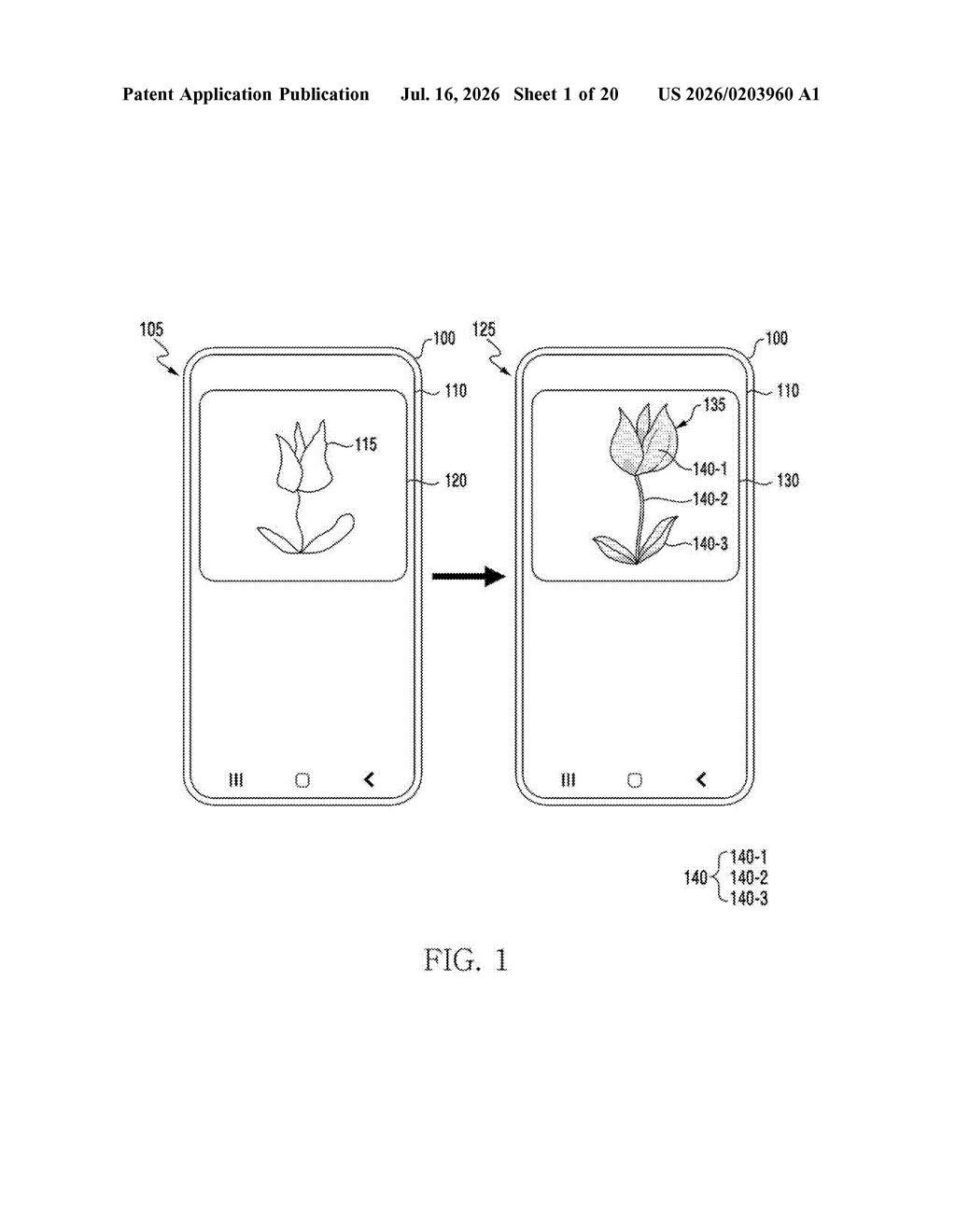
How Samsung's keyword-based photo editing actually works
Imagine you take a photo of your dog sitting on a red couch. Instead of typing out a description from scratch, you tap a button and the phone's AI reads the photo itself, figures out what's in it, and says: 'I see a couch. Want it in blue, green, or gray?' You pick one, and a new version of the photo appears with that change.
That's the core idea behind this Samsung patent. The AI model does two jobs: first it analyzes your original photo and pulls out descriptive keywords (like the color or style of an object), then it uses those keywords to generate a new image. The UI shows you toggle-style options tied to each keyword, so you're choosing from a curated list rather than guessing what to type.
The result is a third image where the selected element has changed to whatever option you picked. It's essentially AI photo remixing with a guided menu instead of a blank text box.
How the trained model turns image analysis into prompt-driven output
The system works in three stages, all driven by a single trained AI model (likely a large vision-language model capable of both analyzing images and generating new ones).
- Stage 1, Image analysis: The user's original photo is fed into the model, which returns a block of descriptive text called 'information.' That text includes keywords describing notable visual elements in the image.
- Stage 2, Option generation: For each keyword, the system also retrieves a set of options, variations the AI knows are possible. Think of it like the model saying 'this object is currently red; alternatives include blue, yellow, or white.'
- Stage 3, Prompted generation: The model takes that description text, wraps it into a prompt, and generates a new image. The display shows both the new image and a row of UI buttons, one per option.
When the user taps a UI button, the model generates a third image that's the same as the second but with the chosen variation applied to the target object. The claim language refers to these as visual objects representing keywords, meaning the on-screen edit is directly tied to a labeled concept the AI extracted, not a pixel region the user drew by hand.
What this means for AI photo editing on Galaxy devices
Current AI image editors, including Samsung's own Galaxy AI tools, typically require you to either type a text prompt or circle an area with your finger. Both approaches demand effort and often produce unpredictable results because the model doesn't know what you want to change. This patent describes a tighter loop: the AI proposes the edit targets, you just confirm or pick an alternative.
For Galaxy smartphones, where Samsung has been aggressively building generative AI features into its camera app, this kind of guided editing could lower the barrier for casual users considerably. It also hints at a direction where the AI takes a more active role in framing your choices rather than waiting for your instructions.
This is a solid UX-forward patent that solves a real problem with current AI photo editors: most people don't know what to type. Turning the model's own image analysis into a selection menu is genuinely useful thinking, and it fits squarely into where Samsung's Galaxy AI camera features are already heading. It's not a technical moonshot, but it's the kind of patent that actually ships as a product feature.
Which company should we read for you?
We track 17 companies here. Pro is the same weekly breakdown for any company you choose, delivered privately. Type a name and we'll scope it and send you a quote.
Get one Big Tech patent every Sunday
Plain English, intelligent commentary, no hype. Free.
Editorial commentary on a publicly published patent application. Not legal advice.