
Qualcomm Patent Targets Video Filter Selection Through Encoding Error Analysis
Every compressed video frame carries hidden clues about what went wrong during compression. Qualcomm's new patent wants decoders to read those clues before deciding how to clean up the image.
What Qualcomm's residual-guided video filter actually does
Imagine your video player is like a chef reheating a dish someone else half-cooked. The dish arrives looking a little rough around the edges, and the chef has to decide how much seasoning to add to fix it. Most chefs use the same fix every time. Qualcomm's idea is to first taste the dish and adjust accordingly.
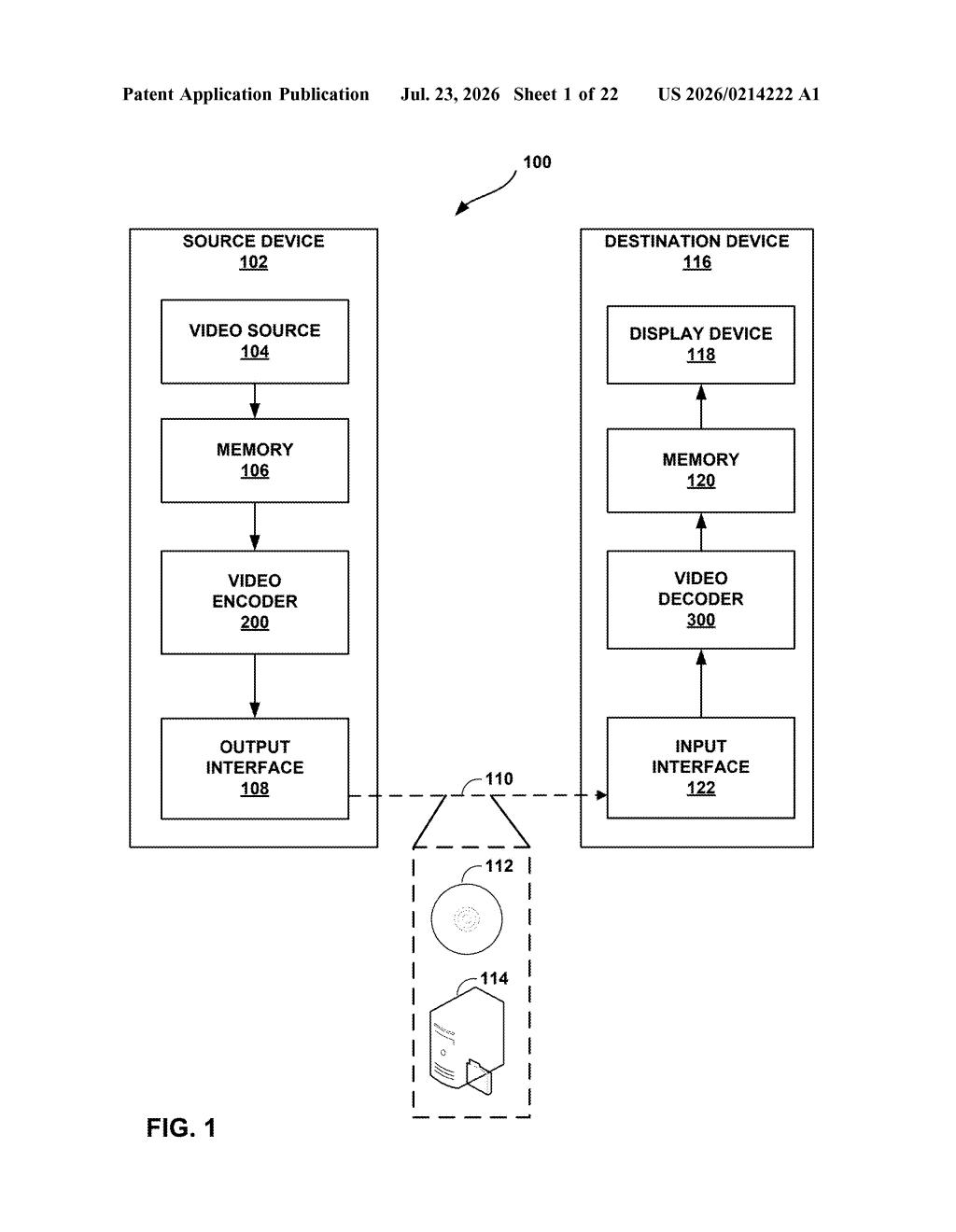
When a video is compressed and sent to your phone or TV, the decoder rebuilds each frame from two pieces: a prediction (a rough guess at what the frame looks like) and a residual (the difference between that guess and reality). Normally, a post-processing filter cleans up visual artifacts without looking too closely at that residual data. This patent says: look at it, remember it, and use it to pick the right filter.
The result is that the decoder applies a more targeted cleanup pass tailored to each block of the frame, rather than a one-size-fits-all approach. That should mean fewer blurry edges and compression artifacts in the final picture, without sending more data over the network.
How the decoder picks a filter from stored residual samples
The patent describes a change to the Adaptive Loop Filter (ALF) stage of video decoding. ALF is a standard step in modern video codecs (like H.266/VVC) where the decoder runs a mathematical filter over a reconstructed frame to smooth out compression noise before displaying it.
Normally, ALF picks which filter to apply based on the reconstructed pixel values alone. This patent adds a new step: before the decoder adds the prediction block and residual block together, it pre-processes the residual block and saves that data separately.
The residual block (the error signal left after prediction) carries information about where the encoder struggled most. High residual values indicate areas with lots of detail or motion that were hard to compress cleanly. By storing that pre-processed residual data and feeding it into the filter selection step, the decoder can choose from a set of available filters more precisely, matching the filter to the actual difficulty of each image region.
- Decoder generates a prediction block (rough guess at a frame region)
- Decoder computes the residual block (what the guess got wrong)
- Residual data is pre-processed and stored before reconstruction
- ALF uses that stored data to select the best filter for cleanup
What this means for video streaming and chip efficiency
For consumers, better filter selection means cleaner video at the same bitrate. You get fewer blocky artifacts or soft edges during fast-moving scenes, without the app needing to pull more data from the network. That matters especially on mobile networks where bandwidth is tight.
For Qualcomm, this is squarely in their core business: the company's Snapdragon chips handle video decoding for a huge share of Android phones and streaming devices. A patented improvement to ALF that reduces visual noise without increasing compute cost would be a selling point for their next-generation video processing hardware. It also positions Qualcomm to influence how future codec standards handle loop filtering.
This is a focused, incremental improvement to a well-established part of the video decoding pipeline. It's not a headline-grabbing concept, but codec efficiency patents like this are exactly where chip companies win real competitive advantages. If this technique makes it into Snapdragon silicon or a future VVC profile, millions of people benefit without ever knowing why their video looks a little crisper.
There are more where this came from
We read every patent application Big Tech publishes and send you the ones worth knowing. Plain English, free, every week.
The drawings
22 drawing sheets from US 2026/0214222 A1 · click any drawing to enlarge


Want this weekly breakdown for a company we don't cover? Patentlyze Pro →
Be the first to weigh in