
Qualcomm Patents a Video Filter That Removes Blurring and Blocky Distortions from Streamed Footage
When video gets compressed for streaming, edges and colors often fall apart. Qualcomm's new patent describes a filtering approach that uses both color and brightness information together to clean up those artifacts more precisely than current methods.
How Qualcomm's video filter smooths compressed footage
Imagine watching a streaming show and noticing that hard edges, like the outline of a person's face, look slightly blurry or have a faint color halo around them. That's a byproduct of video compression, the process that squishes video files down so they can travel quickly over the internet.
Qualcomm's patent describes a filter that runs during video decoding to fix exactly that. Instead of looking at just one type of pixel information at a time, it looks at both brightness and color from the same pixel and its neighbors, then uses that combined picture to decide how much corrective adjustment each pixel needs.
The result is a more targeted cleanup pass that doesn't over-smooth areas that are already fine. It's the kind of behind-the-scenes processing that happens inside a chip or a codec, invisible to you but responsible for whether a compressed video looks crisp or slightly off.
How the filter classifies pixels using chroma and luma data
The patent describes an extension of a technique called Cross-Component Sample Adaptive Offset (CCSAO), a filter used in video codecs (the software or hardware that encodes and decodes video). Standard SAO filters apply small corrective offsets (tiny brightness or color adjustments) to pixels after decompression. CCSAO extends this by letting the luma channel (brightness) influence corrections to the chroma channels (color), or vice versa.
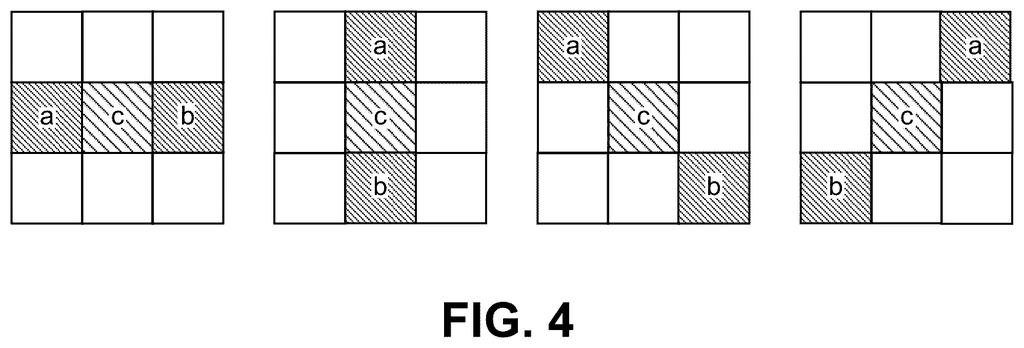
This patent adds what it calls an edge offset mode. The key innovation is in how pixels are classified before the offset is applied. Rather than sorting a pixel into a correction band using only one type of signal, the system uses:
- Chroma information from the pixel itself
- The collocated luma value (the brightness at the same spatial location)
- The collocated chroma value (color at that same location)
By combining all three signals, the filter can more accurately identify whether a pixel is sitting on a genuine edge in the image or just in a flat region that got noisy during compression. Once classified, the appropriate offset is applied.
Note that claim 1 was canceled, which typically happens during patent prosecution when the examiner pushes back. Dependent claims often survive, but the full claim set here is limited in what we can assess.
What this means for streaming and video compression quality
Video compression standards like VVC (Versatile Video Coding) and its predecessors rely heavily on post-processing filters to recover quality that compression destroys. Better classification means fewer artifacts at the same file size, or the same quality at a smaller file size. For streaming services, chipmakers, and device manufacturers, even small filter improvements can translate into real bandwidth savings at scale.
Qualcomm is a major supplier of chips used in phones, TV streaming sticks, and automotive displays, all of which decode compressed video constantly. A filter improvement baked into silicon could raise the baseline video quality across a huge range of consumer devices without any change the user has to make.
This is a narrow, incremental codec patent in a very competitive standards-driven field. It's not a product announcement or a big strategic reveal. It matters if you follow video compression standards bodies like JVET, where Qualcomm is an active contributor, but general readers won't feel the impact directly.
There are more where this came from
We read every patent application Big Tech publishes and send you the ones worth knowing. Plain English, free, every week.
The drawings
12 drawing sheets from US 2026/0214220 A1 · click any drawing to enlarge


Want this weekly breakdown for a company we don't cover? Patentlyze Pro →
Be the first to weigh in