
Qualcomm Patents a System That Blocks Devices From Being Overwhelmed by Junk Traffic
Wireless networks can be knocked offline by a flood of fake messages, and Qualcomm's new patent describes a filter that detects the attack while it's happening and selectively blocks offenders without shutting everyone else out.
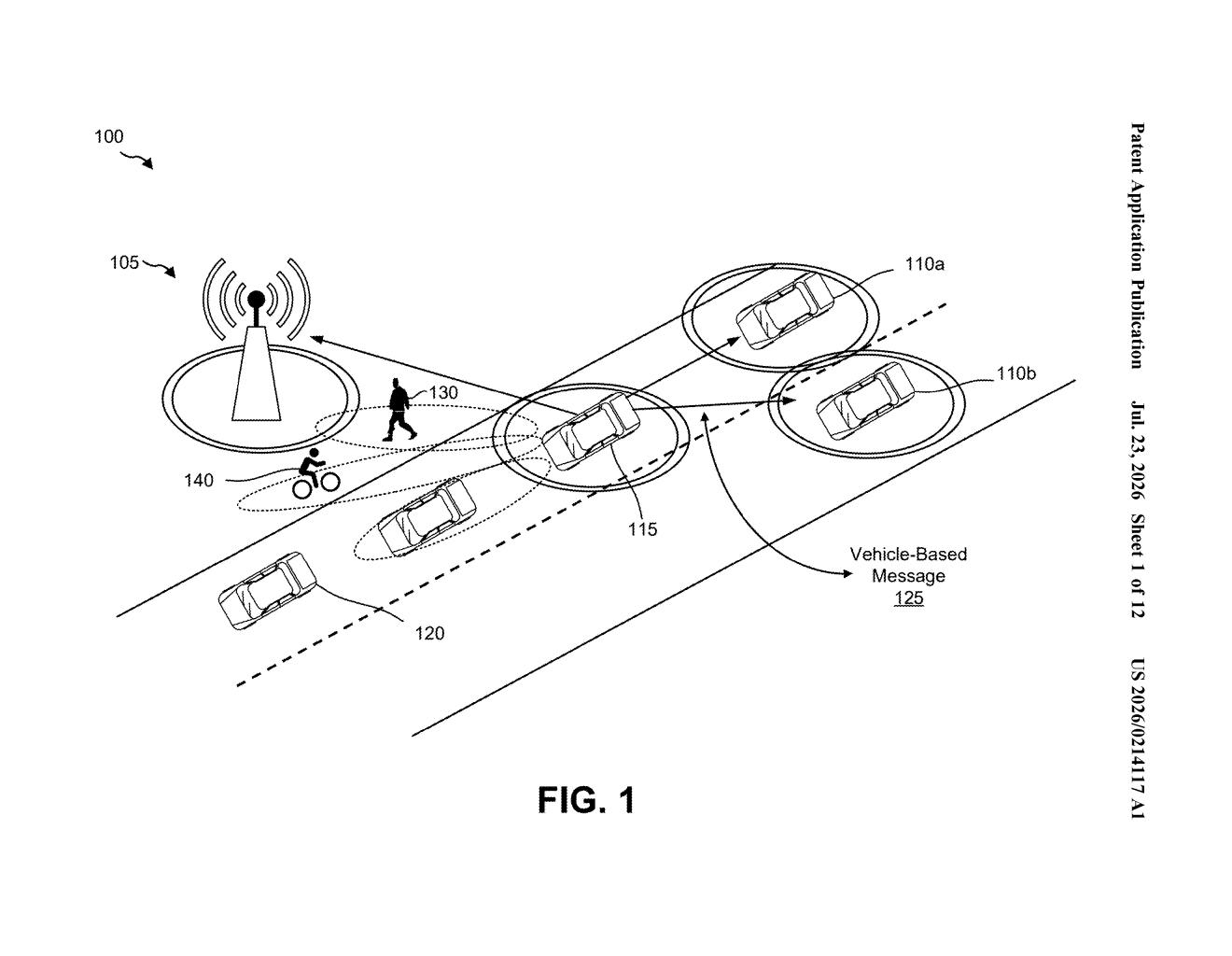
What Qualcomm's flooding attack filter actually does
Imagine a crowded highway where one driver keeps cutting in and out of every lane, slowing traffic to a crawl for everyone else. A wireless flooding attack works the same way: a bad actor fires so many messages at a device or network that legitimate traffic can't get through.
Qualcomm's patent describes a system that watches the rate of incoming messages in real time. When it notices the rate shooting past a normal threshold, it flags a flooding attack and starts filtering. Crucially, it doesn't just slam the door shut for everyone; it alternates between an open window (accepting messages from any sender) and a filtered window (blocking suspicious senders), so ordinary traffic still has a chance to get through.
The system also checks how busy the device already is before deciding how aggressively to filter. If the device is under heavy load and an attack is underway, it tightens the filter. That two-factor check is what makes the approach more careful than a simple on/off block.
How the two-phase filtering window switches on and off
The patent describes an adaptive message filtering method designed for wireless communication systems. It runs across two consecutive time windows, called evaluation intervals.
- Attack detection: During the first interval, the system counts incoming messages and checks whether the cumulative rate exceeds a preset threshold. If it does, it flags an active flooding attack.
- Load check: Separately, it checks a message load indicator (essentially how backed-up the system already is). If that also exceeds its threshold, both conditions together trigger a specific filtering response.
- Alternating filter states: In the second interval, the system enters a filtering mode that has two phases. During one phase (the open phase) it accepts messages from any sender. During the other phase (the filtered phase) it blocks messages from flagged senders. This alternating rhythm keeps the channel partially open for legitimate users.
The patent also references cloning attacks in its title, meaning the technique is designed to handle cases where a bad actor spoofs (copies) a legitimate device's identity to sneak past a simple block. The alternating filter logic can distinguish between a known-good sender and a cloned impostor by tracking identifier patterns over time.
Why wireless attack defense matters for connected devices
Flooding and cloning attacks are real threats in vehicle-to-vehicle (V2X) and IoT wireless networks, where devices broadcast short messages constantly and a single compromised sender can overwhelm a receiver. As more cars, factories, and infrastructure rely on real-time wireless messaging, defending against these attacks without simply cutting off all traffic becomes genuinely important.
For you as a consumer, the most direct implication is in connected vehicles and smart infrastructure. A system that can stay partially open during an attack, rather than going dark, could be the difference between a car receiving a collision warning and missing it entirely. Qualcomm supplies wireless chips to a huge range of device makers, so a filtering approach like this could show up in automotive modems, industrial IoT hardware, or cellular chipsets.
This is solid, practical security work rather than a flashy concept. The two-phase alternating filter is a genuinely clever middle ground between doing nothing and blocking everyone, and the dual-condition trigger (attack rate plus load level) reduces false positives. It's the kind of defensive patent that matters more once V2X networks are actually deployed at scale.
There are more where this came from
We read every patent application Big Tech publishes and send you the ones worth knowing. Plain English, free, every week.
The drawings
12 drawing sheets from US 2026/0214117 A1 · click any drawing to enlarge


Want this weekly breakdown for a company we don't cover? Patentlyze Pro →
Be the first to weigh in