
IBM Patents a Memory Defense System That Shrinks Attack Surfaces on IoT Devices
Your smart thermostat probably has the same memory layout whether it's running normally or under attack. IBM's new patent wants to change that by carving device memory into walled sections that can physically shrink the moment something suspicious is detected.
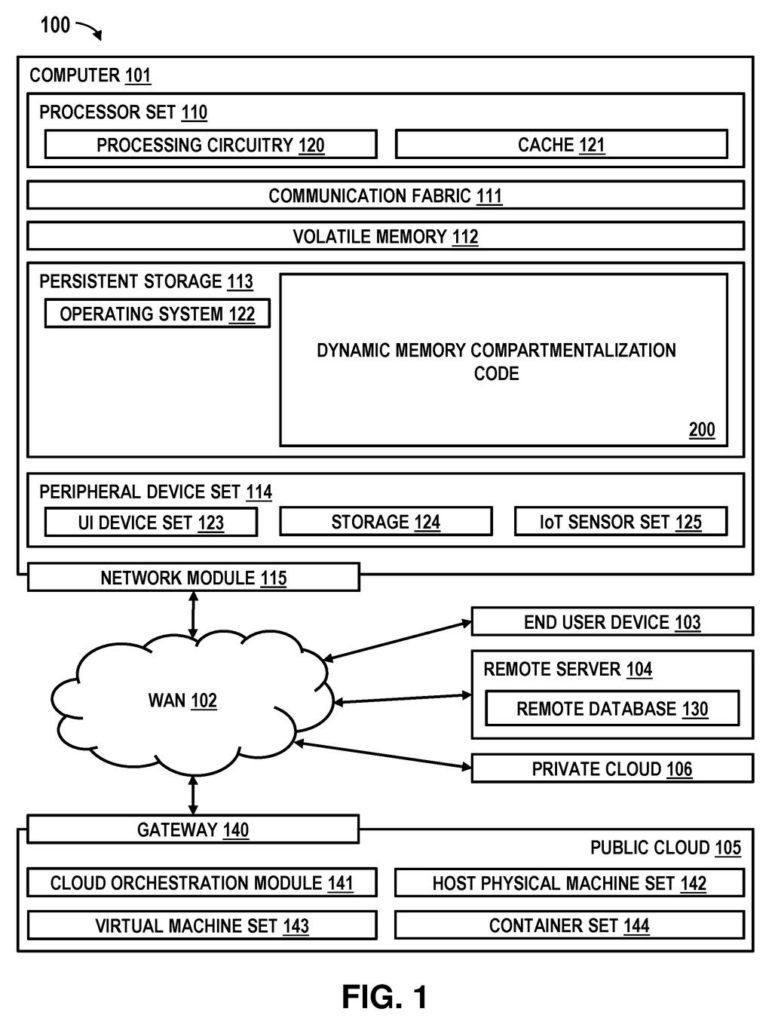
How IBM's IoT memory walling actually works
Every time a connected device processes data, every part of its memory is technically reachable if an attacker gets a foothold. A compromised smart lock, a hacked hospital monitor, a tampered industrial sensor: the damage often spreads because there's nothing stopping one infected part of the device's memory from touching everything else.
IBM's patent describes a way to divide an IoT device's memory into separate, walled-off compartments. Each compartment holds different types of data or processes, and they're kept apart using built-in security features of the device's own chip. The device is also watching its own sensors the whole time: if something looks off, the system detects which compartment is at risk and automatically shrinks it, reducing how much memory a potential attacker could reach.
Think of it like a submarine's watertight doors. The compartments are always there, but the moment a breach is sensed, the doors seal tighter. You don't have to do anything, and you don't have to wait for a software patch to ship.
defining isolated memory compartments in a memory of an Internet of Things (IoT) device using a security capability architecture …
Translation: The system divides a connected device's memory into secure sections using built-in security features.
How the system detects threats and reshapes memory sections
The system has four main moving parts that work together to keep an IoT device's memory from becoming a single, attackable target.
- Memory compartmentalization: At startup, the device divides its memory into isolated sections using something called a "security capability architecture" (a built-in hardware feature on modern chips that lets software mark memory regions as off-limits to each other). Each compartment holds specific data or processes.
- Context detection: The device reads its own sensor data continuously, things like network traffic patterns, temperature, usage load, or location, to understand what it's currently doing and whether that matches normal behavior. This "operational context" is the device's live self-assessment.
- Threat detection: If the sensor data and operational context signal something anomalous, the system flags a specific compartment as potentially compromised. Rather than raising a general alarm, it pinpoints which section of memory is involved.
- Dynamic resizing: The flagged compartment's boundaries are tightened automatically, reducing the surface area an attacker could exploit. The rest of the device continues operating normally.
The resizing step is the part that sets this apart from static memory partitioning. Most existing approaches draw the walls once, at setup, and leave them fixed. This system treats those walls as adjustable in real time based on what the device is actually experiencing.
… dynamically adjusting a size of the respective one of the isolated memory compartments based on the detecting the threat …
Translation: When danger is sensed, the device automatically shrinks the vulnerable memory area to limit damage.
What this means for the billions of unsecured IoT devices
IoT devices are one of the most consistently overlooked security problems in consumer and enterprise technology. Billions of them ship with minimal security controls, run for years without updates, and sit on the same networks as far more sensitive systems. When one gets compromised, attackers often use it as a foothold to move laterally through a network rather than treating the device itself as the target.
A system that can isolate a compromised memory region automatically, without waiting for a human to intervene or a patch to deploy, addresses one of the most practical gaps in that threat model. The approach is also hardware-anchored, meaning it doesn't rely purely on software that an attacker could itself corrupt. Whether IBM ships this inside its own IoT security products or licenses the approach, IBM's interest in hardware-level security suggests this fits into a longer effort to push security controls closer to the device itself.
IBM's 349th filing in our IBM coverage since May continues a pattern of socially aware AI, building on AI timing in group talks and one curbing AI false claims.
Hospitals, factories, and homes now run on thousands of small networked devices that almost never receive security updates and cannot defend themselves once something goes wrong. When one gets compromised, the damage spreads across everything it touches, and the sheer number of these devices makes human oversight impossible.
IBM's approach tries to match the actual shape of that problem by having each device read its own sensor data and wall off the portions of its memory that look most at risk, adjusting those walls as threats change. That is meaningfully different from a fixed rulebook that ignores what the device is doing in the moment.
The real test is whether this works on the cheap, low-powered chips inside most of these devices, where every bit of processing draws down a battery or slows a critical function. If it does, the problem is large enough that even a partial solution matters enormously.
There are more where this came from
We read every patent application Big Tech publishes and send you the ones worth knowing. Plain English, free, every week.
The drawings
3 drawing sheets from US 2026/0278069 A1 · click any drawing to enlarge


Want this weekly breakdown for a company we don't cover? Patentlyze Pro →
Be the first to weigh in