
Nvidia Files Patent for Precise Interior Vehicle Passenger and Object Measurement
Before a sensor can track whether a driver is drowsy or a child is left in a back seat, it needs to know exactly where it is inside the car. Nvidia's new patent is about solving that geometry problem automatically.
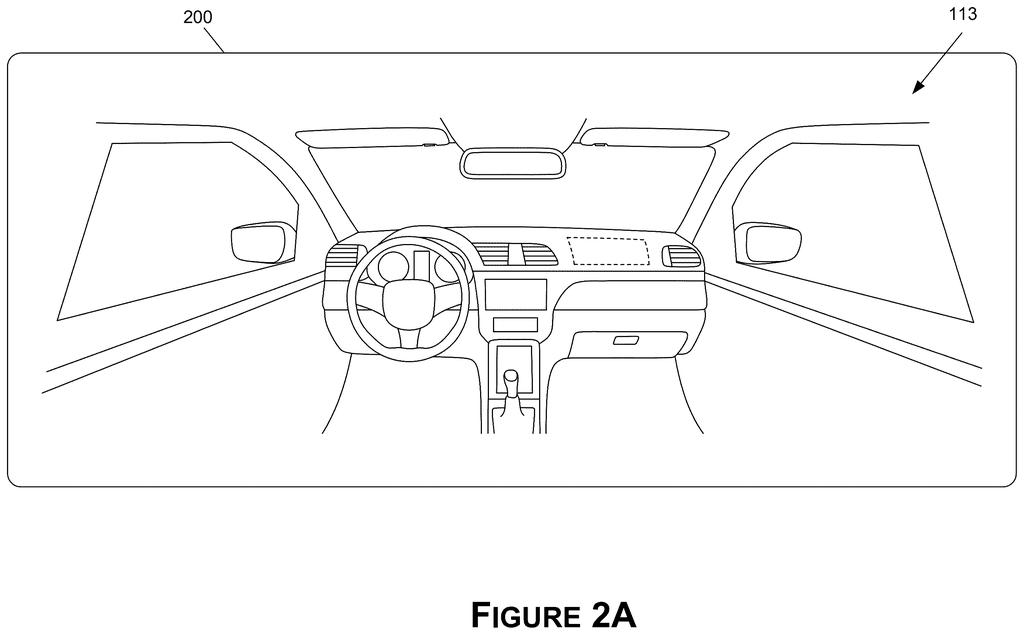
How Nvidia's interior 3D mapping actually works
Imagine you want to set up a security camera inside a room, but the camera needs to know the exact distance to every wall, seat, and surface before it can do its job properly. Normally someone would have to measure all of that by hand. Nvidia's patent describes a system that figures all of this out on its own.
The system looks at a digital model of a vehicle's interior, picks out the important surfaces (like the dashboard, seats, and headliner), and builds precise 3D shapes around each one. It then fits a flat geometric outline to each surface, which gives the monitoring sensors an exact spatial reference to work from.
The practical goal is accurate in-cabin monitoring: knowing, for example, how far a camera is from the driver's face or whether a rear seat is occupied. Instead of relying on rough estimates, the system gives those sensors a detailed geometric map to work from.
How the system turns surface scans into polygon geometry
The patent describes a pipeline for reconstructing the 3D geometry of an interior space, primarily a vehicle cabin, using an existing digital geometry model rather than raw sensor data alone.
Here's the core sequence:
- The system selects regions of interest from a geometry model of the interior (a digital twin of the cabin's shape) corresponding to specific surfaces like seats, the roof lining, or the instrument panel.
- It generates a point cloud (a dense set of 3D coordinate samples) representing each selected surface.
- A 3D bounding shape is fitted around each point cloud, with its axes aligned to a shared coordinate system so all surfaces speak the same spatial language.
- The bounded points are then projected onto a best-fit plane using a surface fitting algorithm (a mathematical process that finds the flat shape that most closely matches a curved or irregular cloud of points), producing a non-circumscribed polygon, which is a polygon that hugs the actual surface outline rather than wrapping around it from outside.
The resulting polygon models give the Occupant Monitoring System (OMS) sensors precise measurements of distances and angles between themselves and every relevant interior surface, enabling accurate occupant detection and tracking.
What this means for in-cabin driver and passenger monitoring
In-cabin monitoring is becoming a standard requirement for new vehicles, driven by regulations around driver attention, child presence detection, and airbag deployment tuning. The accuracy of those systems depends on sensors knowing their exact spatial relationship to every surface in the cabin. Right now, calibrating that geometry is tedious and often approximate.
Nvidia's approach automates the geometry step by deriving it from an existing digital model of the cabin, which every automaker already produces during the design phase. If this works as described, it could make OMS sensor calibration faster and more repeatable across different vehicle trim levels, and it positions Nvidia's automotive computing platform as the natural place to run that calculation.
This is focused engineering work aimed squarely at the automotive safety sensor market, where Nvidia has been pushing hard with its Drive platform. It's not a flashy consumer feature, but accurate in-cabin geometry is genuinely a bottleneck for occupant monitoring systems, and automating it from existing CAD data is a sensible approach. Worth watching as a signal that Nvidia wants to own more of the sensor-fusion stack inside vehicles.
There are more where this came from
We read every patent application Big Tech publishes and send you the ones worth knowing. Plain English, free, every week.
The drawings
17 drawing sheets from US 2026/0212597 A1 · click any drawing to enlarge


Want this weekly breakdown for a company we don't cover? Patentlyze Pro →
Be the first to weigh in