
Nvidia Patents a Two-Step System for Pinpointing Exact Lane Line Positions
Cameras are great at spotting lane lines, but not so great at knowing exactly where they are. Nvidia's new patent describes a system that uses laser sensors to correct a camera's best guess, giving self-driving vehicles a much more precise position to work with.
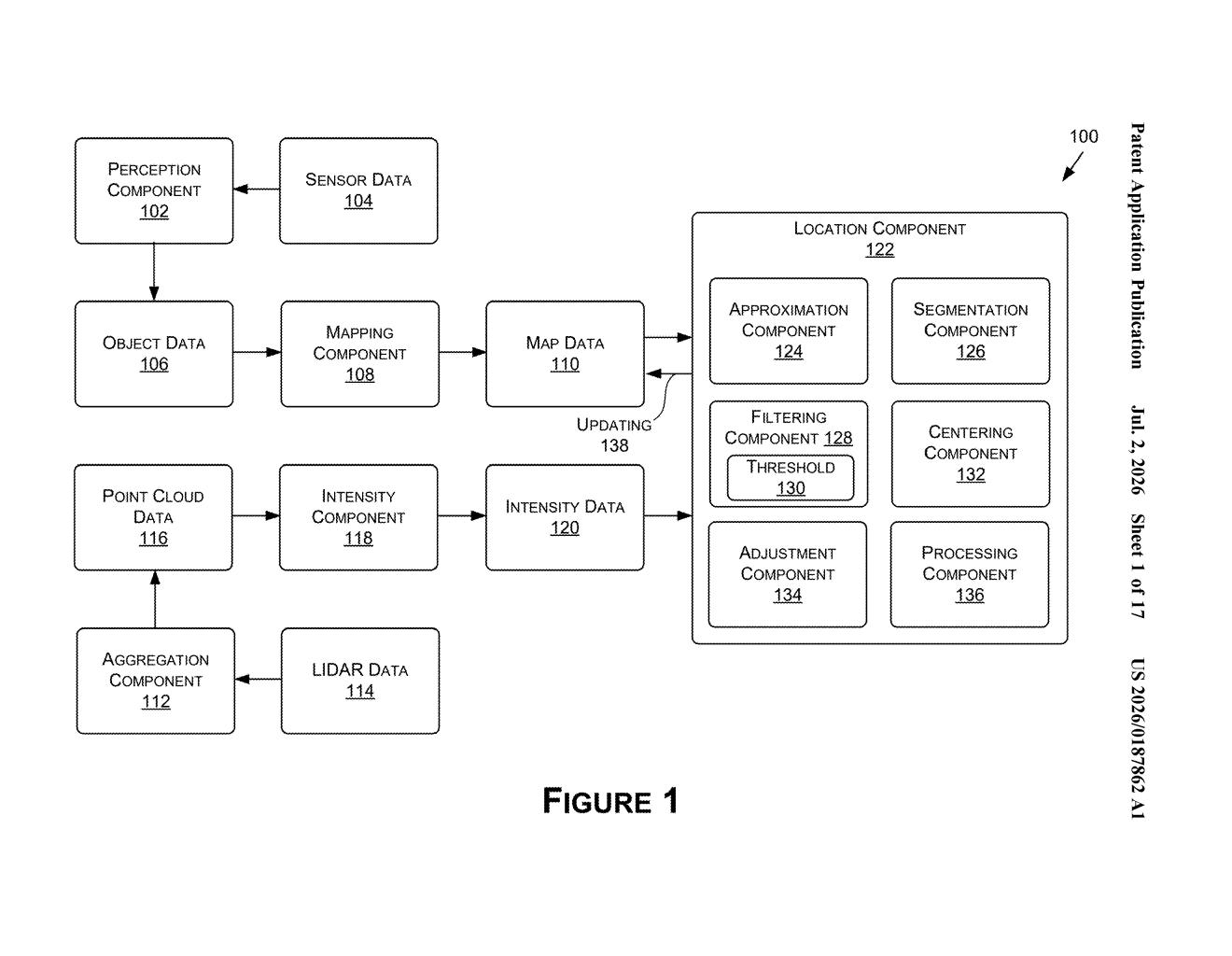
How Nvidia's cameras and LiDAR work together on lane lines
Imagine you're trying to park a car using only a phone camera. The camera can clearly see the painted lines in the lot, but judging the exact distance to them is surprisingly hard. A camera gives you a picture; it doesn't give you precise measurements.
That's the same challenge self-driving cars face with lane markings. A camera can identify that a lane line is there, but figuring out its exact position on the road takes more than a photo. Nvidia's patent describes a two-step fix: a camera first spots the road marking and produces a rough location, then a LiDAR sensor (a laser-based distance scanner) refines that location to pinpoint the true center of the painted line.
The result is a corrected, high-precision location that the vehicle's navigation and steering systems can actually rely on. It's a straightforward idea, but getting lane positions slightly wrong is the kind of subtle error that compounds over miles of highway driving.
How LiDAR corrects the camera's initial road marking guess
The system works in two distinct passes. First, image data from the vehicle's cameras is processed to produce an initial location for a road marking, such as a lane line. This is the camera's best estimate, but camera-based depth perception has known accuracy limits, especially at distance or in poor lighting.
Next, LiDAR data (short for Light Detection and Ranging, a technology that fires laser pulses and measures how long they take to bounce back) is used to refine that initial estimate. Because LiDAR returns precise distance measurements rather than visual pixels, it can determine the actual center of the paint on the road surface with much higher accuracy. The system effectively asks: given roughly where the camera thinks the line is, what does the laser data say about where it really is?
The corrected, second location then replaces or adjusts the original estimate. That final position feeds directly into:
- Path planning (deciding where the vehicle should go)
- Navigation (mapping the route relative to lane boundaries)
- Control operations (steering and positioning within the lane)
The patent covers both fully autonomous vehicles and semi-autonomous systems, meaning the technology could apply to anything from robotaxis to driver-assist highway features.
What sharper lane detection means for self-driving reliability
Lane-keeping and highway autopilot features are already in millions of cars today, and they all rely on cameras knowing where lane lines are. A small position error, say a few centimeters, does not matter much at low speeds but becomes meaningful at highway speeds or when a vehicle is making tight lane changes. A system that actively corrects camera estimates using LiDAR data could reduce those drift errors without requiring a complete sensor overhaul.
For Nvidia, which supplies the Drive platform chips powering many autonomous vehicle programs, this kind of sensor-fusion patent reinforces the company's position as a full-stack AV technology provider. The claim is broad enough to cover any autonomous or semi-autonomous machine, so the approach could extend beyond cars to delivery robots, forklifts, or autonomous trucks.
This is a solid, practical engineering patent rather than a flashy AI claim. The two-step camera-then-LiDAR correction idea is intuitive, and the value is in the specific implementation details Nvidia is trying to protect. It won't make headlines outside the AV industry, but it addresses a real accuracy problem that affects every production self-driving system on the road today.
Get our take in your Top Stories
Liked this breakdown? Add Patentlyze as a preferred source on Google, and our plain-English take shows up more often in your Top Stories the next time Nvidia patent news breaks.
There are more where this came from
We read every patent application Big Tech publishes and send you the ones worth knowing. Plain English, free, every week.
Want this weekly breakdown for a company we don't cover? Patentlyze Pro →