
Samsung Patent Links Virtual Objects to Real-World Physical Map Locations
Samsung is patenting a system that lets your phone display virtual objects anchored to specific physical spots, then automatically flips back to a map the moment you walk away or tilt your phone.
What Samsung's location-locked AR system actually does
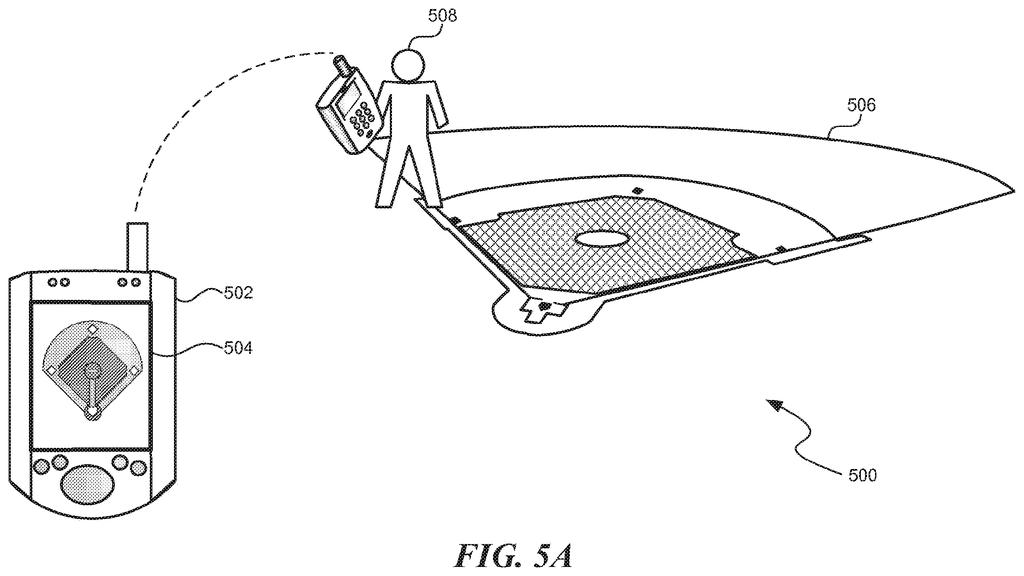
Imagine you're in a park and you open an app that shows a map of your surroundings. You tap a spot on the map, walk over to that location, and your phone's camera shows a virtual object floating right there in the real world. That's the core idea here.
Samsung's patent describes a system where virtual objects are tied to specific physical locations. Your phone checks whether you're actually standing in the right spot before it shows you the object. No GPS match, no virtual object.
The clever part is what happens when you move away. Instead of you having to tap a back button, the app detects the motion of your phone and automatically returns to the map view on its own. It's the kind of small friction-reducing detail that makes apps feel more natural to use.
How the map, GPS check, and motion trigger work together
The patent describes a device-based method with a few distinct steps working in sequence.
- Map selection: The user opens an interface showing a map and taps a region they want to explore.
- Location check: As the user physically moves to that spot, the device continuously reads location data and compares it against a stored criterion, essentially a geofence defining where the virtual object is allowed to appear.
- AR rendering: Once the location requirement is satisfied, the device overlays a simulated object (a virtual item not attached to the user themselves) onto the live camera feed.
- Motion-triggered exit: When the device detects a change in motion, it automatically dismisses the AR view and returns to the map, without requiring any additional tap or button press.
The system also references automatic adjustment of the simulated object based on how the device moves, meaning the virtual item can stay visually anchored to its spot as you shift your viewing angle. The whole loop, map to location check to AR view to map again, is designed to happen with minimal manual input from the user.
What this means for AR apps and location-based experiences
Location-based AR has been around since Pokemon Go made it mainstream, but most implementations treat the map and the AR camera as two separate modes you manually switch between. This patent tries to make that transition automatic, which could meaningfully reduce the awkward back-and-forth that makes current AR apps feel clunky.
For Samsung, this kind of patent fits naturally into the Galaxy phone and smart glasses ecosystem. If the motion-triggered map return works reliably in practice, it could make location-based AR feel less like a demo and more like a feature people actually keep using. Whether it ships as a standalone app or as a layer inside something like Samsung's existing AR Zone tools remains to be seen.
This is a thoughtful quality-of-life patent, not a foundational AR breakthrough. The motion-triggered map return is the genuinely interesting piece: it treats the transition between map mode and AR mode as something the hardware should handle, not the user. Whether Samsung can execute that smoothly enough to matter is the real question.
There are more where this came from
We read every patent application Big Tech publishes and send you the ones worth knowing. Plain English, free, every week.
The drawings
20 drawing sheets from US 2026/0214098 A1 · click any drawing to enlarge


Want this weekly breakdown for a company we don't cover? Patentlyze Pro →
Be the first to weigh in