
Samsung's New Patent Covers a Filing That Uses Memory of Previous Scenes to Sharpen Blurry Streaming Footage
Every time you watch compressed video, a filter runs in the background trying to undo the blurring that compression creates. Samsung is patenting a version of that filter that draws on what it already learned from previous frames, rather than treating each frame as if it had never seen video before.
What Samsung's frame-memory video filter actually does
When video is compressed for streaming or storage, it loses detail. The decoder on the other end has to reconstruct the image as best it can, and a filter runs as part of that process to clean up visual artifacts like blurring and blockiness. The problem is that most filters treat each frame in isolation, even though consecutive frames in a video are almost always related.
Samsung's patent describes a neural network filter that works differently. Instead of starting fresh every frame, it pulls a compact summary of what it learned from one or two earlier frames and uses that to adjust how it filters the current frame. Think of it like a doctor who reads your previous visit notes before examining you today, rather than starting from scratch each time.
The result is a filter that is better tuned to the specific content it is working on, whether that is a sports broadcast, a film with lots of dark scenes, or a video call. You probably wouldn't see a settings toggle for any of this; it would happen automatically inside the decoder.
generating, based on first state information obtained from a feature map corresponding to a first reference image for a current image or second state information obtained from a feature map corresponding to a second reference image for the current image, layer information to be used in at least one layer within a filtering neural network; …
Translation: The system uses data from past video frames to set up a neural network for the current frame.
How the neural network uses past-frame data to tune its filter
The patent describes a method for in-loop filtering (a cleanup step that runs inside the video decoding process, before the image is displayed) that is powered by a neural network rather than the older rule-based filters used in most video codecs today.
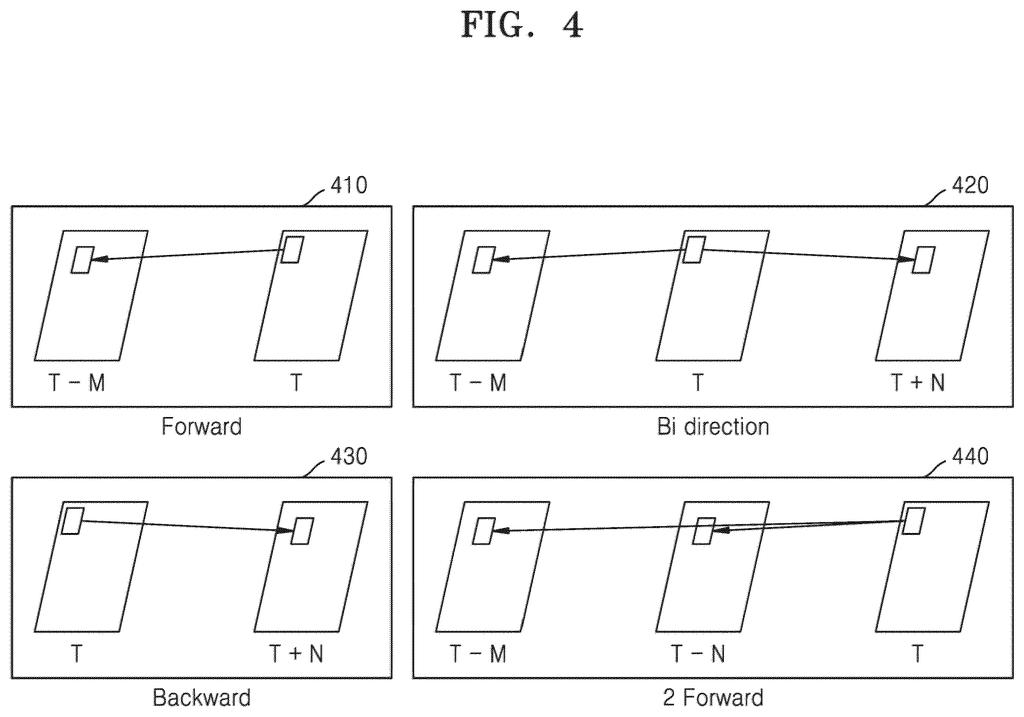
The key innovation is how the neural network gets configured for each frame. The system extracts a feature map from one or two reference frames (earlier frames the decoder already processed). A feature map is a compact, compressed representation of visual patterns the network found in those frames. From that feature map, the system derives state information, which is stored at a lower resolution than the actual image to keep it small and fast to use.
That state information is then used to generate layer information, meaning it adjusts the internal parameters of specific layers inside the filtering neural network before the current frame is processed. In plain terms: the network reads notes from previous frames, re-tunes itself slightly, and then filters the current frame with that context baked in.
- Reference frame feature maps are extracted at reduced resolution to limit memory and compute cost
- Layer information is generated from first or second reference frame state, or both
- The tuned network then applies in-loop filtering to the current frame
- State information for the current frame is saved for use by future frames
… obtaining an image in which in-loop filtering has been applied to the current image by inputting, to the at least one layer in which the layer information has been used, the information corresponding to the current image, …
Translation: It processes the video data through that configured network to produce a sharper final picture.
What this could mean for streaming quality on your screen
For anyone watching video on a phone, TV, or laptop, the quality of in-loop filtering is one of the invisible factors that separates sharp, clean playback from that slightly smeared look you get with heavy compression. A filter that adapts based on what came before it in a scene can, in theory, handle fast motion, dark scenes, and fine textures better than one working blind.
The catch is that this kind of approach adds computational complexity, and whether it pays off in real-world devices depends on how efficiently it can be implemented. Samsung's track record in video codec patents suggests this is part of a longer-term push toward neural-network-based encoding and decoding, an area the whole industry is moving toward as traditional codec improvements hit diminishing returns.
Samsung's 131st filing we've tracked in our camera sensor push since May builds on work like the autofocus and HDR chip and the thinner zoom lens.
For most people, this patent will never show up as a moment of recognition. Video filtering lives inside chips and decoders, and when it works, you just feel like the picture looks good without knowing why.
The practical change here is that the filter carries a memory of what it already processed, letting it make smarter decisions on each new frame rather than starting from scratch. That matters most when the picture is hard: a dark chase scene, a fast break in basketball, a stream buffering on weak Wi-Fi. Those are exactly the moments when video tends to fall apart, and a filter that learns from the frames before it has a real shot at holding things together.
The reduced detail in that memory is a sign the engineers were thinking about real devices, not just lab benchmarks. A filter that works on your actual TV or phone matters more than one that only shines on specialized hardware.
There are more where this came from
We read every patent application Big Tech publishes and send you the ones worth knowing. Plain English, free, every week.
The drawings
20 drawing sheets from US 2026/0292263 A1 · click any drawing to enlarge


Want this weekly breakdown for a company we don't cover? Patentlyze Pro →
Be the first to weigh in