
Samsung Patents a Robot Vacuum That Learns Which Bumps It Can Cross
Robot vacuums are notorious for getting stuck on or refusing to cross door thresholds. Samsung's latest patent describes a system that lets a cleaning robot figure out, on its own, whether a bump on the floor is a threshold it can roll over safely.
How Samsung's vacuum tells a threshold from a wall
Picture your robot vacuum sitting at a doorway, staring at the little strip of metal or wood between two rooms. Right now, most robots either charge at it blindly, get stuck, or give up entirely. Samsung wants to fix that.
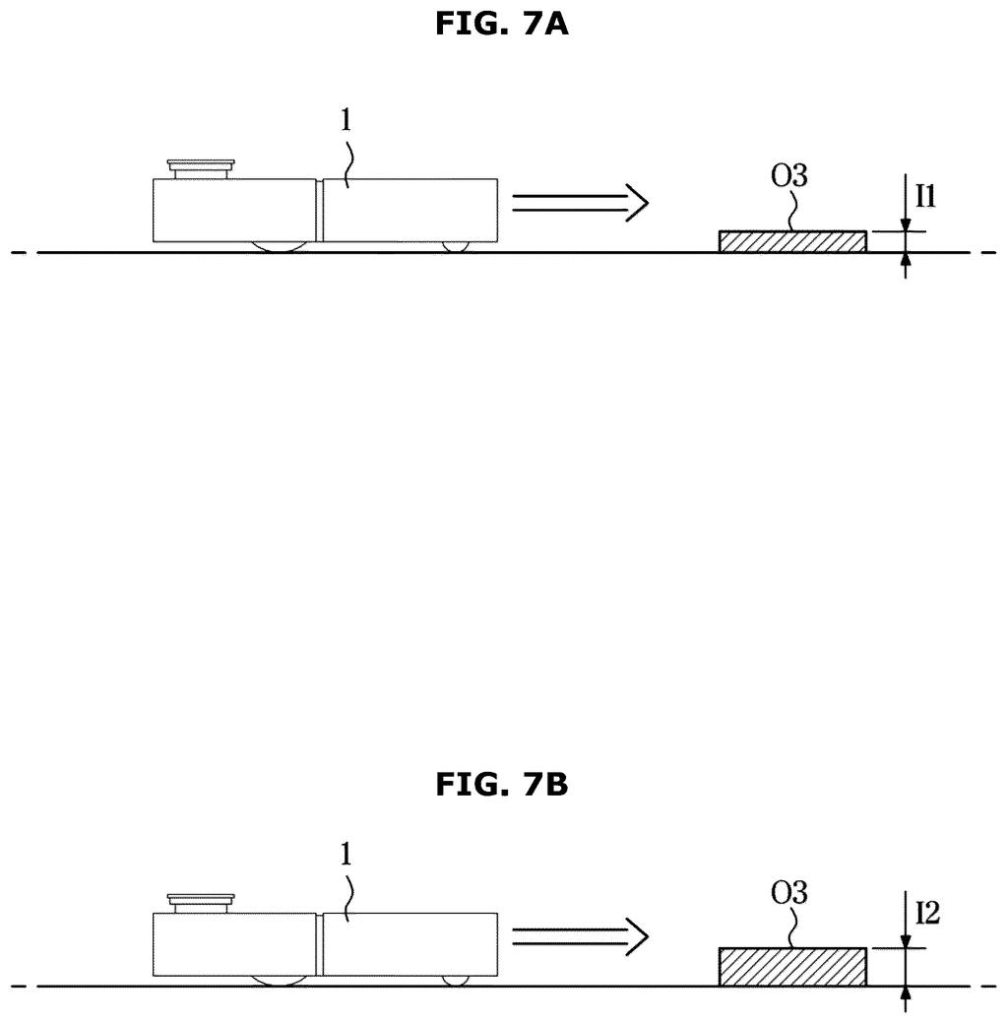
This patent describes a robot that scans any object blocking its path and asks three questions: How tall is it? What shape is it? And what's around it? If the answers match the profile of a door threshold (low, flat, with a door frame nearby), the robot decides it can safely roll over and keeps cleaning.
The robot also records what it finds in a map of your home, so it can remember which thresholds it has already cleared. The goal is a vacuum that navigates your whole house on its own, without you having to lift it over every doorway.
How the sensor data drives the crossing decision
The patent centers on a detection-and-decision loop built into the robot's software. When the robot's object detection sensor picks up an obstacle, the system pulls out three pieces of information:
- Height of the object
- Shape information (the profile and geometry of what it sees)
- Surrounding environment information (what's nearby, such as door frames or walls)
Those three data points feed into a classification check. If the object is short enough, has the flat elongated profile of a threshold strip, and sits in a doorway context, the robot labels it a traversable door threshold and commands its wheels to roll over it.
If any of those conditions fail (say, the object is too tall, or the shape doesn't match, or there's no door context around it), the robot treats the obstacle differently, possibly going around it or stopping.
The robot also writes the shape and environment data into a persistent map of the cleaning space, so future passes through the same doorway don't require re-evaluation from scratch.
What this means for robot vacuums in real homes
Door thresholds are one of the most common reasons robot vacuums fail to clean an entire home in a single run. A vacuum that confidently identifies and crosses thresholds on its own would let owners set it loose and genuinely expect it to cover every room, not just the rooms it happens to reach.
For Samsung, this feeds directly into making its Jet Bot line more autonomous. The context-awareness angle (checking not just the object's shape but what's around it) is also a broader capability: the same logic could eventually help robots distinguish other passable bumps from real obstacles, making the whole navigation system more reliable in cluttered, real-world homes like yours.
This is a practical, specific fix for a well-known frustration, which makes it more interesting than most robot-vacuum patents. The three-factor check (height, shape, context) is a sensible approach that avoids over-engineering the problem. Don't expect this to be a headline feature, but if it ships, it's the kind of quiet improvement that makes people actually trust their robot vacuum.
There are more where this came from
We read every patent application Big Tech publishes and send you the ones worth knowing. Plain English, free, every week.
The drawings
12 drawing sheets from US 2026/0208367 A1 · click any drawing to enlarge


Want this weekly breakdown for a company we don't cover? Patentlyze Pro →