
Samsung Patents a System That Adjusts Warehouse Robots Around Live Worker Traffic
Samsung wants warehouse robots to stop operating on fixed schedules and start adapting in real time to where human workers are actually moving — and what that movement is costing the facility.
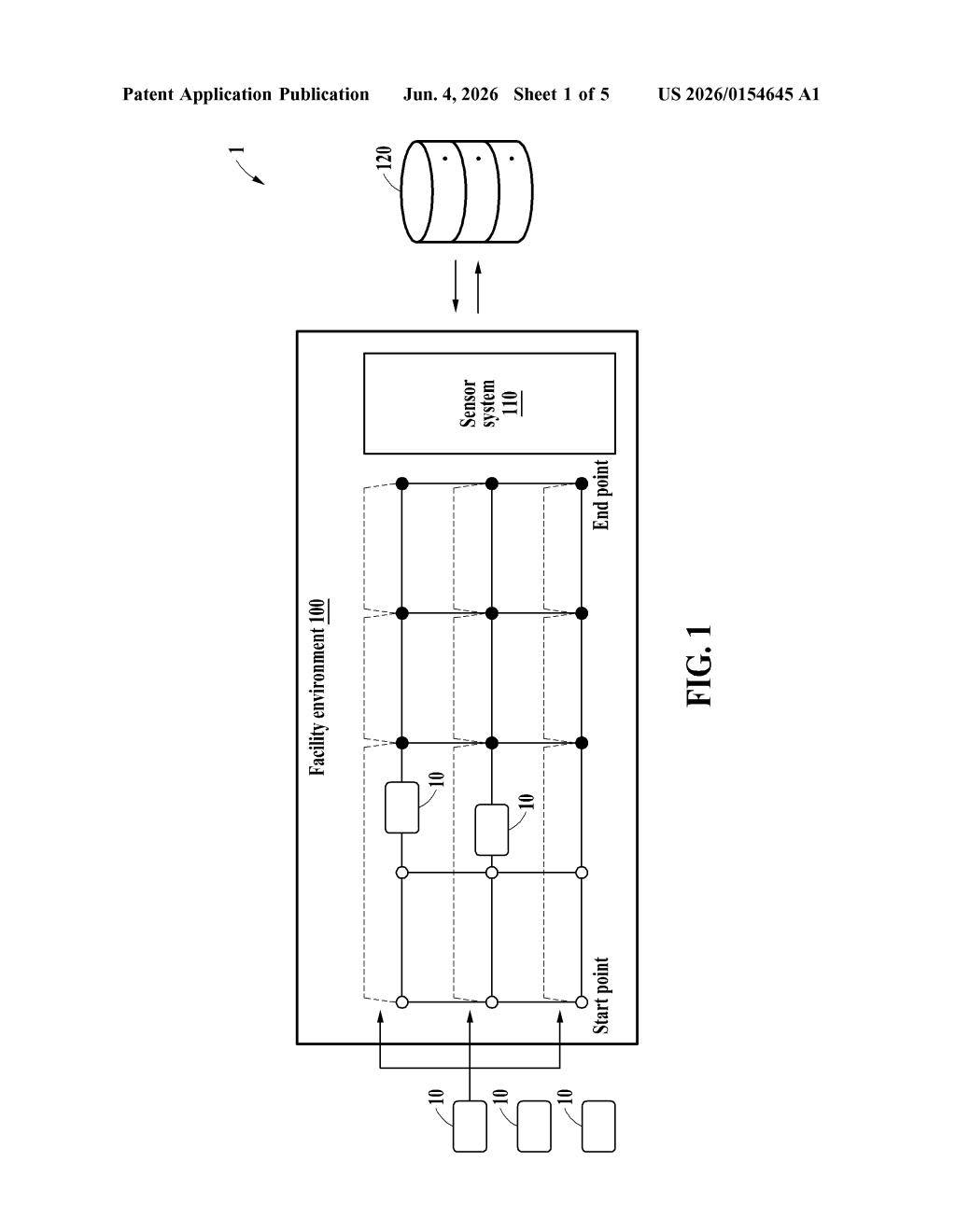
What Samsung's warehouse robot traffic system actually does
Picture a large fulfillment warehouse where dozens of robots zip around moving shelves and packages, while human workers walk the same floors. Right now, most robot fleets run on pre-planned routes that don't react quickly when workers cluster in one area or a bottleneck develops near a loading dock.
Samsung's patent describes a central system that continuously watches where workers are moving and what the facility's sensors are picking up, then builds a dynamic operation profile — essentially a living rulebook — that tells each robot how fast to go, which paths to take, and when to yield. The system also factors in cost data, like energy use or task completion time, so it's not just avoiding collisions but also trying to keep things efficient.
Whenever conditions change — a crowd of workers shifts to a new aisle, a sensor detects a spill — the profile updates automatically and sends fresh instructions to the relevant robots. Think of it like a traffic management system for a warehouse floor, but one that's constantly recalculating.
How the dynamic operation profile gets built and updated
The system works in a continuous loop with four main steps.
- Data acquisition: The controlling device collects worker traffic data (where people are moving and congregating on the facility floor) alongside environment sensing data (readings from cameras, lidar, or other sensors picking up obstacles, spills, or layout changes).
- Profile generation: Using that combined input, the system builds a dynamic operation profile — a set of per-robot operating parameters like speed limits, path priorities, and task assignments — for the entire autonomous mobile robot (AMR) fleet.
- Command transmission: The system pushes control commands down to individual robots in accordance with the current profile, effectively acting as a centralized fleet brain.
- Continuous updating: As worker traffic, sensor readings, and cost data (metrics like energy consumption or delivery throughput) shift, the system adjusts the profile and reissues commands to the robots that need to change behavior.
The inclusion of cost data as a third input alongside worker and environment data is the notable design choice here — it means the system isn't just optimizing for safety and collision avoidance but is also trying to balance operational efficiency as a first-class concern.
What this means for warehouse automation and worker safety
Warehouse automation is one of the fastest-growing robotics markets, and the hard problem isn't deploying robots — it's safely mixing them with human workers at scale. A system that can dynamically reroute or slow down robots based on live worker positions has real safety and throughput implications, especially as facilities push toward higher robot densities.
For Samsung, which makes AMRs through its robotics division and also supplies components to other manufacturers, this kind of centralized fleet intelligence layer could differentiate its warehouse offerings. The cost data input is particularly interesting: it suggests the system could make real-time trade-offs between worker safety margins and operational efficiency, a genuinely difficult balance that most current fleet management software handles clumsily.
This is solid, practical robotics infrastructure work — not flashy, but exactly the kind of orchestration logic that separates a useful warehouse robot fleet from a chaotic one. The three-input update loop (worker traffic + sensors + cost) is a reasonable architecture, and Samsung filing this suggests it's serious about competing in the fleet management software layer, not just the hardware. Worth tracking as a signal of Samsung's warehouse automation ambitions.
There are more where this came from
We read every patent application Big Tech publishes and send you the ones worth knowing. Plain English, free, every week.
Want this weekly breakdown for a company we don't cover? Patentlyze Pro →