
Microsoft Patents a Circuit That Monitors Tiny Display Lights Without Burning Them Out
Micro-LEDs are tinier and brighter than the pixels in modern best screens, but testing them without damaging them is a real engineering headache. Microsoft's latest patent tackles that problem with a set of go-between circuits that translate electrical signals into something safe to measure.
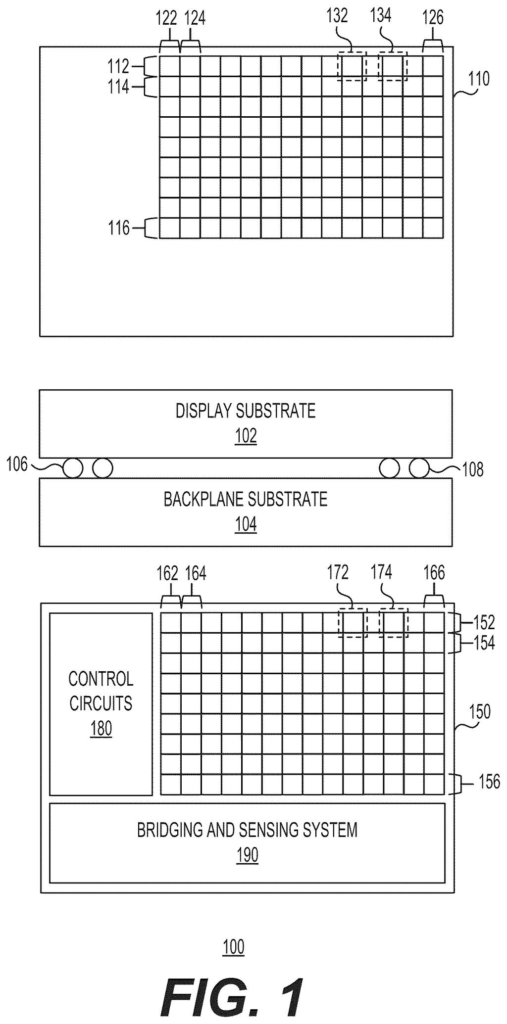
What Microsoft's micro-LED monitoring system actually does
Imagine trying to check whether a single lightbulb in a massive stadium scoreboard is working properly, but the scoreboard runs on industrial power and your testing gear only handles household current. Plug them together directly and you fry your equipment, or worse, the bulb itself. That's roughly the problem Microsoft is solving here for micro-LED displays.
Micro-LEDs are microscopic light sources being developed for next-generation screens. They operate at different voltage levels than the circuits used to measure and diagnose them. Microsoft's patent describes bridge circuits that sit between the micro-LEDs and the measurement gear, stepping the voltage down to a safe level and capping any surge of current if a pixel happens to short-circuit.
The practical upshot is that display manufacturers (or Microsoft itself) could check on individual pixels in a micro-LED panel without accidentally destroying the diagnostic hardware or the LEDs under test. It's unglamorous electrical engineering, but getting this right is a prerequisite for building reliable micro-LED products at scale.
How the bridge circuits scale voltage and limit current
The patent describes a micro-LED system made up of three main layers working together.
- The micro-LED array: a set of micro-LEDs where each LED has its own positive voltage input and they all share a common negative (cathode) terminal. The positive supply running the LEDs operates at a higher voltage than standard logic circuits can handle.
- Sensing circuits: diagnostic circuits that measure voltage and current on a selected subset of the LEDs. Critically, these sensing circuits run on a different, lower positive voltage supply than the LEDs themselves, which creates a mismatch that must be managed.
- Bridge circuits: the invention's core contribution. These intermediary circuits perform two jobs. First, when measuring voltage, they scale the LED's higher voltage down to a level the sensing circuit can safely read. Second, when measuring current, they limit how much current can flow through the sensing circuit in the event a micro-LED shorts out (meaning electricity takes an unintended direct path), preventing damage to the measurement hardware.
The bridge circuits act as a translator and a fuse combined. By decoupling the two voltage domains, the system can continuously monitor pixel health during operation or testing without requiring the sensing hardware to tolerate the full power levels the display uses.
What this means for future Microsoft display hardware
Micro-LED displays are considered the successor technology to both OLED and LCD, promising higher brightness, longer lifespan, and better power efficiency. But one of the manufacturing challenges holding micro-LED back is yield: making sure every pixel in a panel actually works. Reliable in-system testing is essential to catching defects early.
This patent positions Microsoft to build more self-diagnosing display hardware into future products, whether that's AR glasses, headsets, or high-end monitors. If a pixel fails or behaves unexpectedly, the bridge circuit approach means the system can detect and flag it without needing external test equipment or risking collateral damage to surrounding pixels.
This is solidly unglamorous work that matters a great deal if Microsoft is serious about shipping micro-LED displays in wearable or mixed-reality hardware. The patent doesn't reveal a product, but it does suggest Microsoft's display engineering team is working through the low-level electrical problems that anyone building a micro-LED device has to solve before they can get to the fun stuff.
There are more where this came from
We read every patent application Big Tech publishes and send you the ones worth knowing. Plain English, free, every week.
The drawings
9 drawing sheets from US 2026/0221078 A1 · click any drawing to enlarge


Want this weekly breakdown for a company we don't cover? Patentlyze Pro →
Be the first to weigh in