
Qualcomm Patent Fixes a Hidden Bottleneck in AI Image Processing
Every time an AI model looks at an image, it often drags along a small but stubborn piece of overhead called a classification token. Qualcomm's new patent describes a way to eliminate that overhead without losing accuracy.
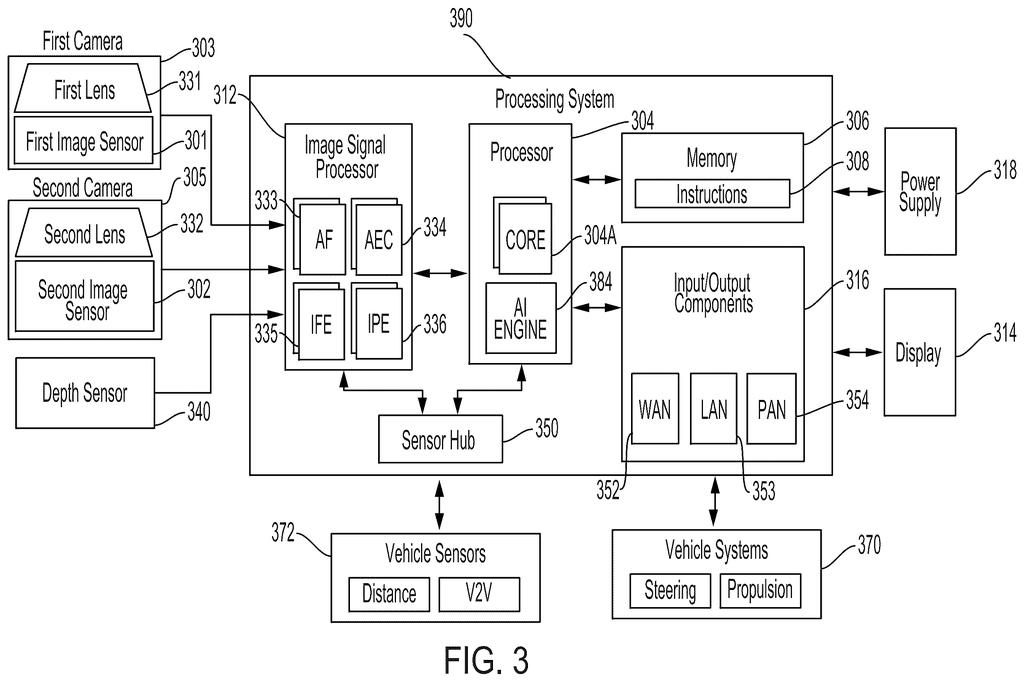
What Qualcomm's leaner image AI actually removes
Imagine you hired a chef to cook a meal, but every time they cooked anything, they also had to prepare a separate "tasting plate" even when nobody ever ate it. That's roughly what happens inside AI models that analyze images: they carry around a special processing marker called a classification token, even when they're only being used to describe what's in an image, not to label it.
Qualcomm's patent describes a way to train the AI to skip that extra step. A small add-on layer, called an adapter, learns to produce the same quality results without the unnecessary overhead. The adapter gets trained by comparing what the model produces with the token versus without it, then learns to close the gap on its own.
The result is a leaner model that uses less compute to do the same job. Qualcomm specifically calls out autonomous driving systems, mobile apps, and data centers as places where that kind of efficiency saving adds up fast.
How the adapter layer replaces the classification token
Vision transformers work by chopping an image into small patches and treating each patch as a token (think of tokens as the AI's unit of attention, similar to words in a text model). Traditionally, these models include an extra token called a classification token (or CLS token), a placeholder that collects summary information about the whole image for categorization tasks.
The problem is that many modern deployments use vision transformers as pure encoders (models that describe image content and pass it along) rather than as classifiers that output a label. In those cases, the CLS token adds compute cost without contributing useful output.
- The patent's system removes the CLS token from inference entirely.
- A lightweight adapter layer is trained using a vector-comparison process (measuring the difference between model outputs with and without the CLS token) so the remaining model learns to compensate.
- Once trained, the adapter can be merged directly into downstream processing layers, so it adds no extra runtime overhead.
The approach is designed to slot into existing model weights without retraining the whole network from scratch, which is a meaningful practical advantage given how expensive large vision model training is.
What this means for on-device AI vision tasks
For Qualcomm, this is directly relevant to the AI workloads running on its Snapdragon chips, which power everything from Android phones to car infotainment systems. Vision-language models (AI that reads both images and text together) are increasingly common in these devices, and they almost always use vision transformers as their image-understanding backbone. Shaving compute from that backbone means faster responses and lower battery drain on your phone, or lower server costs in a data center.
The broader industry has been moving toward these leaner, encoder-focused vision models anyway. Qualcomm's filing suggests it wants its hardware and the AI software running on it to be co-optimized from the ground up, rather than just running whatever architecture a researcher happened to design.
This is a focused, practical optimization patent rather than a flashy AI announcement. It targets a real inefficiency that anyone deploying vision transformers at scale will recognize, and the adapter-based approach is clever because it avoids expensive retraining. It matters most as a signal that Qualcomm is serious about owning the software-hardware co-design layer for on-device AI vision.
There are more where this came from
We read every patent application Big Tech publishes and send you the ones worth knowing. Plain English, free, every week.
The drawings
7 drawing sheets from US 2026/0220929 A1 · click any drawing to enlarge


Want this weekly breakdown for a company we don't cover? Patentlyze Pro →
Be the first to weigh in