
Samsung Patents Smarter Emergency Data Session Signaling for 5G Devices
What happens when your phone is in a restricted network zone and you need to make an emergency call? Samsung's latest patent tackles exactly that edge case — and the fix is surprisingly precise.
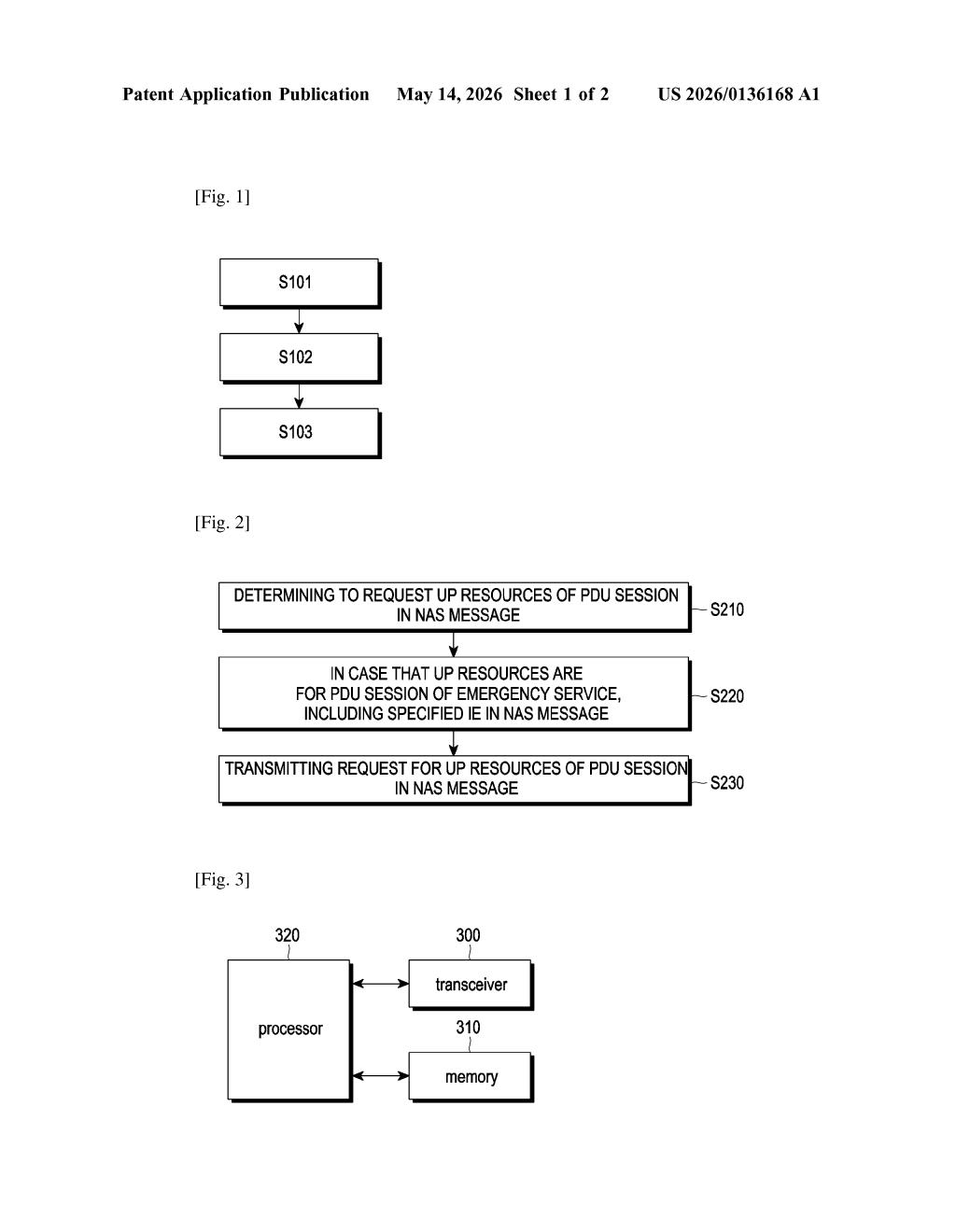
How Samsung's patent handles emergency calls in restricted zones
Imagine you're traveling internationally and your phone lands in what your carrier considers a 'non-allowed area' — a region where your plan doesn't permit normal data use. Normally, the network would block most requests from your device. But what if you need to call emergency services?
Samsung's patent addresses this scenario in 5G networks. It describes a rule for how a phone (User Equipment, or UE in telecom-speak) should behave when it wants to request a data connection (User Plane resources) while in a restricted zone. The key idea: your device should only include a special marker — called an Information Element (IE) — in its network message if the data session it's requesting is specifically for an emergency service.
This keeps things clean and unambiguous. The network sees the special flag, recognizes the emergency PDU session ID, and can decide to allow the connection even in areas where regular data would be blocked. It's a narrow but important rule that helps ensure 5G devices can still reach emergency services no matter where they are.
How the NAS message IE flags emergency PDU sessions
This patent defines a specific behavioral rule for 5G User Equipment (UE) — that's your phone or connected device — when it operates in a non-allowed area (a geographic or policy zone where the network restricts normal data access).
The core mechanism involves the Non-Access Stratum (NAS) — the protocol layer that handles signaling between your device and the core network, above the radio layer itself. When a UE wants to set up a PDU session (a data pipe, essentially — think of it as opening a lane for data traffic), it sends a NAS message to the network requesting User Plane (UP) resources.
The patent's rule is narrow and deliberate:
- If the device is in a non-allowed area and the PDU session is for emergency service, it includes a specified Information Element (IE) — a tagged data field — in the NAS message.
- That IE carries only the PDU session ID associated with emergency access — nothing else.
- If the session is not for an emergency, the IE is omitted entirely.
This conditional inclusion prevents ambiguity in the network's decision-making. The core network can parse the NAS message, see the emergency IE, and apply emergency-access policies rather than the standard non-allowed-area restrictions.
What this means for 5G emergency access in restricted areas
5G network slicing and policy enforcement are increasingly granular — carriers can restrict devices at a very fine level based on location, subscription, and session type. In that environment, a clear signaling convention for emergency access becomes genuinely important. Without a precise rule like this, a device in a restricted zone might either fail to signal its emergency intent or over-claim emergency status for non-emergency sessions, both of which create problems.
For end users, the practical upshot is reliability: your device should be able to reach emergency services even when your carrier's policy would otherwise block data. For network operators and standardization bodies, this kind of precise IE-inclusion rule is the unglamorous but essential work of making 5G behave correctly at the edges of its policy space.
This is a narrow 3GPP standards-alignment patent — the kind that exists to nail down exactly one behavioral rule so that interoperability testing doesn't fail in edge cases. It's not a product feature and it's not a research breakthrough. But emergency access reliability in 5G is a real regulatory concern, and Samsung is clearly positioning itself as an active contributor to how these rules get written.
There are more where this came from
We read every patent application Big Tech publishes and send you the ones worth knowing. Plain English, free, every week.
Want this weekly breakdown for a company we don't cover? Patentlyze Pro →