
Apple Patent Reveals Dynamic 3D Avatars That Track Movement in Video Calls
Imagine leaning forward in a video call and having the other person's avatar actually look like you got closer. Apple is patenting exactly that kind of spatial awareness for 3D communication.
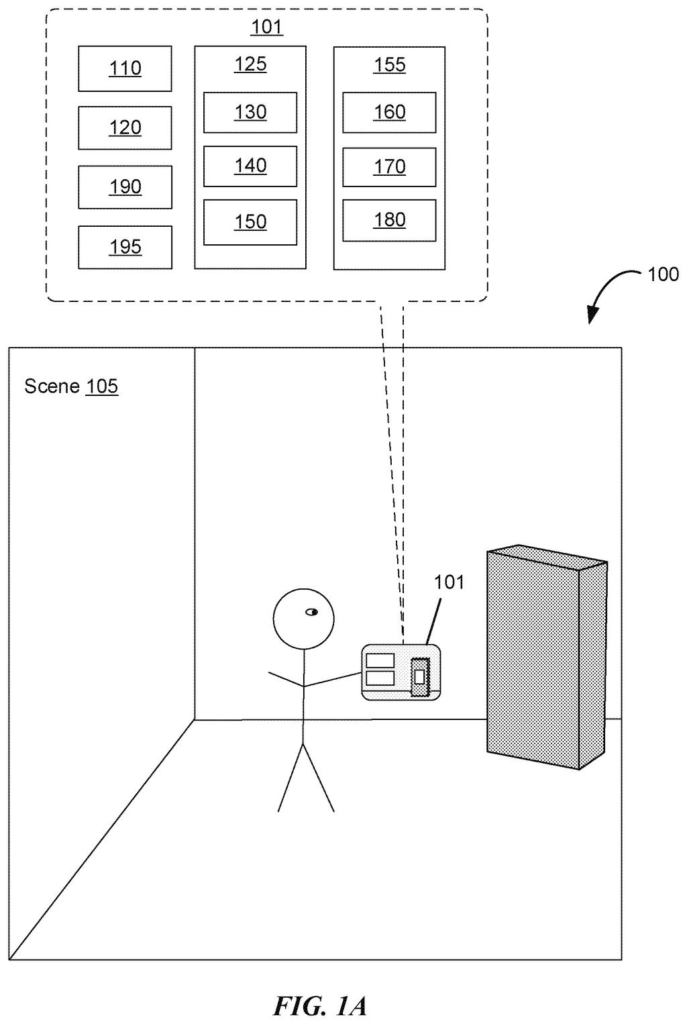
What Apple's moving-avatar video call system actually does
Picture a video call where, instead of a flat rectangle of your face, you're represented by a three-dimensional avatar. Now imagine that when you physically shift your position, or move your viewpoint inside a virtual environment, the avatar shown to other participants updates to reflect that new angle. That's the core idea in this Apple patent.
Right now, most video calls are flat: your camera captures one fixed angle and that's what everyone sees. In an augmented or virtual reality setting, though, you might be looking at the call from different positions as you move your head or body. This patent describes a system where your avatar's apparent angle updates automatically to match your current viewpoint relative to the shared virtual space.
In practice, if you're sitting in a virtual room and you turn to look at the call window from the left, other participants would see your avatar from a slightly different angle too. It's a small detail, but it makes virtual meetings feel considerably more like being in the same room.
How Apple's virtual camera tracks your viewpoint shift
The patent describes a system where a participant in a real-time communication session is represented by a three-dimensional avatar rendered from the perspective of a virtual camera. That virtual camera has a position inside a shared 3D environment.
When the participant's viewpoint changes relative to the communication session's representation in that environment, the system detects the shift and moves the virtual camera to a new position. The avatar is then re-rendered from that updated camera position and broadcast to other participants.
- First position: Where the virtual camera starts, based on the participant's initial viewpoint.
- Detected change: The system monitors shifts in the participant's viewpoint relative to the virtual session window or space.
- Second position: The new virtual camera location, derived from the viewpoint change, used to produce the updated avatar view.
The abstract also hints at related capabilities: modifying an avatar based on participant activity (for example, showing attention or disengagement), displaying a self-view so you can see your own avatar, and handling participant representations more generally. The core independent claim focuses specifically on the viewpoint-tracking and camera-repositioning logic.
What this means for spatial computing and FaceTime
This patent is clearly aimed at Apple's spatial computing platform and the Vision Pro headset, where users already inhabit a 3D environment and interact with floating windows. Video calls in that context have a spatial quality that flat-camera systems can't capture, and this approach would make the person you're talking to feel more physically present by reflecting their actual perspective.
For you as a user, the payoff is subtler than it sounds: an avatar that never updates its angle feels like a cardboard cutout, while one that shifts naturally as the person moves feels like a real presence. Over long calls or immersive work sessions, that difference adds up to a more believable sense of shared space.
This is a focused, well-scoped patent that solves a real problem with avatar-based calls in spatial environments: the disconnect between where you're looking and what others see. It's not flashy infrastructure work; it's the kind of perceptual detail that Apple tends to obsess over when building new interaction paradigms. Worth watching as Vision Pro's communication features mature.
There are more where this came from
We read every patent application Big Tech publishes and send you the ones worth knowing. Plain English, free, every week.
The drawings
35 drawing sheets from US 2026/0220865 A1 · click any drawing to enlarge


Want this weekly breakdown for a company we don't cover? Patentlyze Pro →
Be the first to weigh in