
Apple's New Patent Fixes Broken 3D Video on the Fly, Without Touching the Original File
When left-eye and right-eye video frames don't quite line up at the edges, your brain breaks — the 3D illusion collapses into a headache-inducing mess. Apple's new patent wants to fix that at playback time, without ever touching the original video.
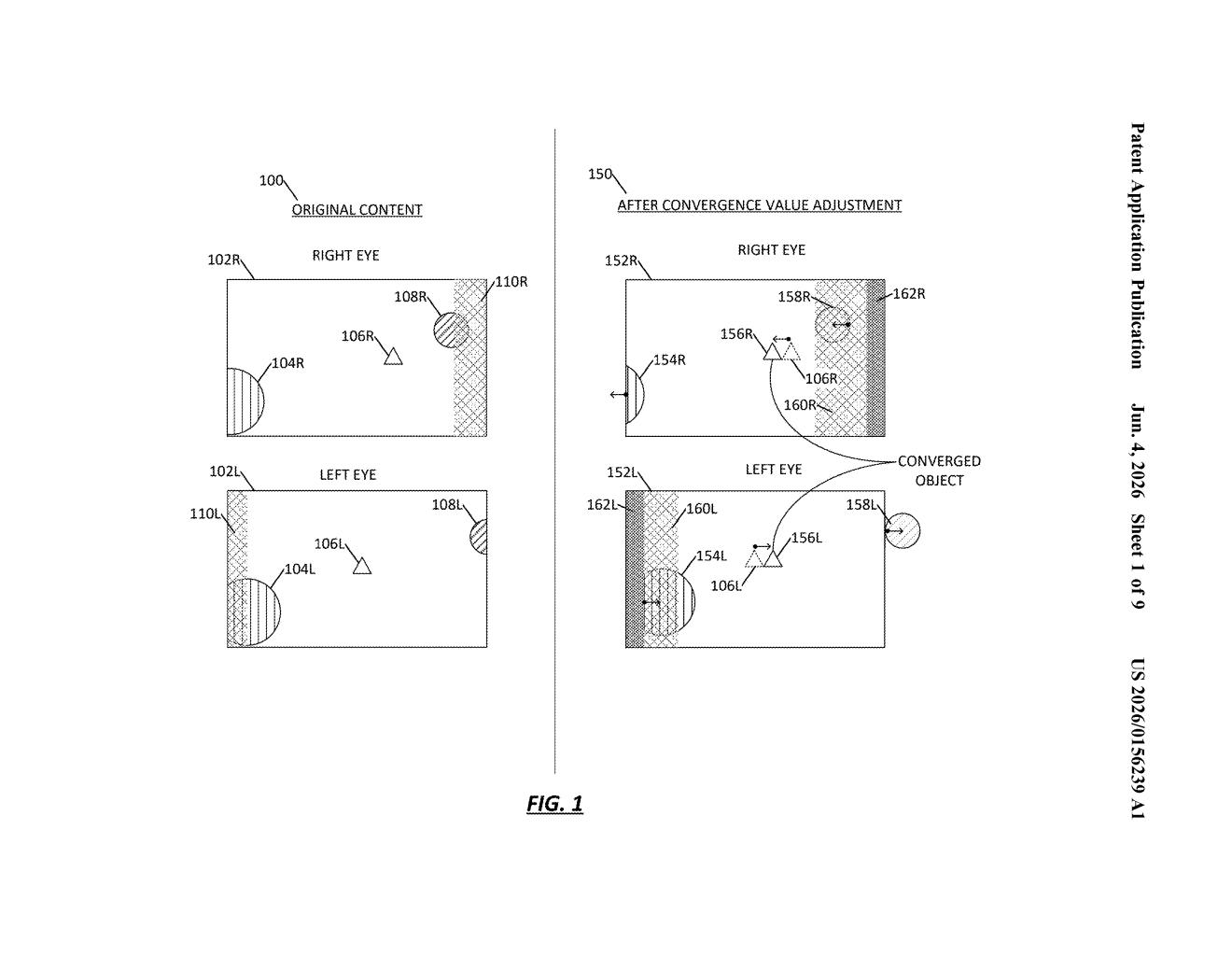
What Apple's stereoscopic window fix actually does
When you watch a 3D movie or video — the kind that uses separate left-eye and right-eye images to create depth — the effect depends on both images matching up perfectly. If an object gets cut off by the frame edge in one eye's view but not the other, your brain can't reconcile the two images and the whole 3D effect falls apart. It's disorienting, and it's a common problem in stereoscopic video production.
Right now, the standard fix is to permanently crop or edit the video to hide the mismatch — which means you're modifying the original content forever. Apple's patent proposes a cleaner alternative: store the correction instructions as metadata (essentially a separate set of notes attached to the video file) and apply the fix only when the video is actually playing back on a device.
The practical upside is that the original video stays untouched. Different devices could apply different corrections, and each individual frame pair in the video can get its own tailored adjustment rather than one-size-fits-all editing. It's the same idea as non-destructive photo editing — your edits live separately from the original.
How the floating window metadata corrects each frame pair
The patent describes a system for handling what the industry calls stereoscopic window violations — a specific failure mode in 3D video where the left-eye and right-eye image frames don't match up at their edges.
Imagine a 3D movie where a sword appears to pop out toward the viewer. If the sword gets clipped by the frame edge in the left-eye view but not the right-eye view, your brain receives conflicting signals and the 3D depth effect breaks down. That mismatch is a window violation, and it's a well-known problem in stereoscopic production.
The traditional fix is to crop or mask the video permanently — essentially baking the correction into the file itself. Apple's approach instead proposes attaching floating window region metadata alongside the video: a sidecar of per-frame instructions that define at least one offset value for each edge of each stereoscopic image pair. The metadata travels with the video but doesn't alter it.
At playback, a device reads the metadata and dynamically adjusts the aspect ratio of each left/right frame pair on the fly — cropping, masking, or repositioning as needed for that specific frame. Each frame pair can get its own correction geometry, so a slow pan with gradually shifting depth cues can be handled frame-by-frame rather than with one blunt global crop applied to the whole clip.
What this means for Apple Vision Pro and 3D content
Apple Vision Pro lives and dies on the quality of its spatial video and 3D content experience. Stereoscopic window violations are a real, persistent pain point for anyone shooting or encoding 3D footage, and a metadata-based correction layer would let content creators and encoders flag problems without destroying source material — important both for archival purposes and for flexible multi-device delivery.
For you as a viewer, this is invisible infrastructure — but it's the kind of invisible infrastructure that determines whether a 3D headset feels immersive or gives you a headache. If Apple builds this into its video pipeline, spatial video shot on iPhone or played back on Vision Pro could benefit from frame-accurate depth corrections that current workflows can't easily achieve.
This is genuinely useful plumbing for anyone serious about spatial video — it solves a real production problem in a non-destructive way that the industry doesn't currently have a clean standard for. It's not flashy, but metadata-driven non-destructive correction is exactly the kind of infrastructure Apple needs to make Vision Pro's spatial video story credible at scale.
There are more where this came from
We read every patent application Big Tech publishes and send you the ones worth knowing. Plain English, free, every week.
Want this weekly breakdown for a company we don't cover? Patentlyze Pro →