
Samsung Patents a Smartwatch Back Panel Where the Health Sensor and Charger Share Wiring
Samsung is exploring a way to make the back of a smartwatch do two jobs with one set of wires, letting the health sensor and the wireless charging coil take turns using the same internal connection rather than each needing their own dedicated path.
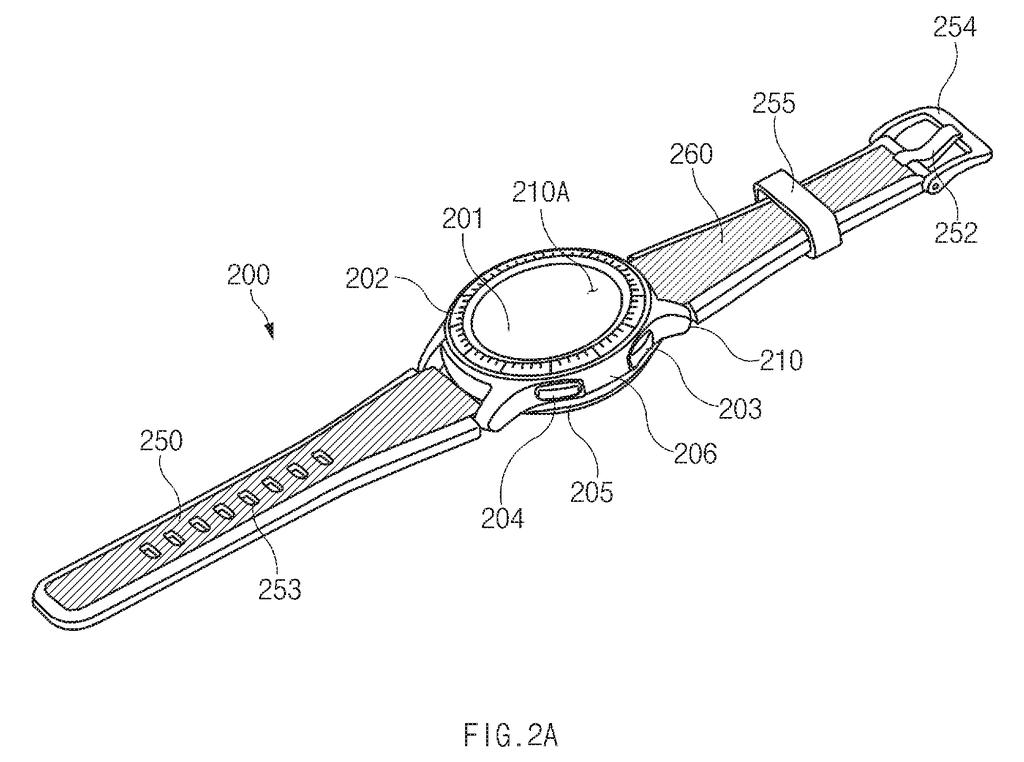
What Samsung's shared-circuit watch back actually does
Imagine the back of your smartwatch as prime real estate. Right now, it has to fit a health sensor (for heart rate, blood oxygen, and similar readings) and a wireless charging coil, and both need their own wiring running to the main circuit board inside.
Samsung's patent describes a design where those two components share some of the same connector pins inside the watch. A small switch circuit acts like a traffic light: when you put the watch on a charger, it connects the charging coil. When you're wearing the watch and not charging, it connects the health sensor instead.
The idea is that the two functions are never needed at the same time, so there's no reason they can't share the same lane. This could let Samsung pack more into a thinner or smaller watch body without doubling up on internal connectors.
How the switch flips between charging and sensing
The patent describes a wearable device (almost certainly a smartwatch) with two components mounted on the rear plate: a biometric sensor (the cluster of optical and electrical sensors that reads health data from your wrist) and a wireless charging coil that wraps around the sensor.
Normally, each component would need its own dedicated connector linking it back to the main circuit board. Samsung's design instead routes both through a single multi-pin connector, with a switch circuit in between that physically connects one or the other depending on what the device needs.
The switching logic is straightforward:
- When the watch detects a wireless charging request (you've placed it on a charging pad), the switch connects the charging coil to the connector.
- When no charging request is detected (you're wearing the watch), the switch connects the biometric sensor instead.
The processor on the main circuit board controls the switch and remains electrically aware of both components at all times. The key claim is that the biometric sensor and the charging coil share at least one terminal on the connector, meaning fewer dedicated signal paths are needed inside the housing.
What this means for future Galaxy Watch designs
Smartwatch internals are an engineering puzzle in miniaturization. Every connector, cable, and pin takes up space and adds thickness. By letting two components time-share the same wiring, Samsung could free up room for a larger battery, additional sensors, or a slimmer profile, all of which are persistent requests from Galaxy Watch users.
This also has a reliability angle. Fewer connectors can mean fewer potential failure points. Whether Samsung actually ships this in a future Galaxy Watch model is an open question, but the filing signals that the company is actively rethinking how the back of a watch is wired, not just what sensors go on it.
This is a smart piece of internal plumbing work, not a headline feature. The average person will never know it's there, but if it lets Samsung shave a millimeter off watch thickness or add battery capacity, it will have been worth filing. The underlying logic (two functions, never simultaneous, so share the wire) is elegant in its simplicity.
There are more where this came from
We read every patent application Big Tech publishes and send you the ones worth knowing. Plain English, free, every week.
The drawings
18 drawing sheets from US 2026/0219707 A1 · click any drawing to enlarge


Want this weekly breakdown for a company we don't cover? Patentlyze Pro →
Be the first to weigh in