
Google Patents an AI System That Predicts Upcoming Video Frames
Google has patented an AI model that looks at a handful of video frames and predicts what comes next, pixel by pixel. It's the kind of capability that could reshape how video is compressed, streamed, or understood by machines.
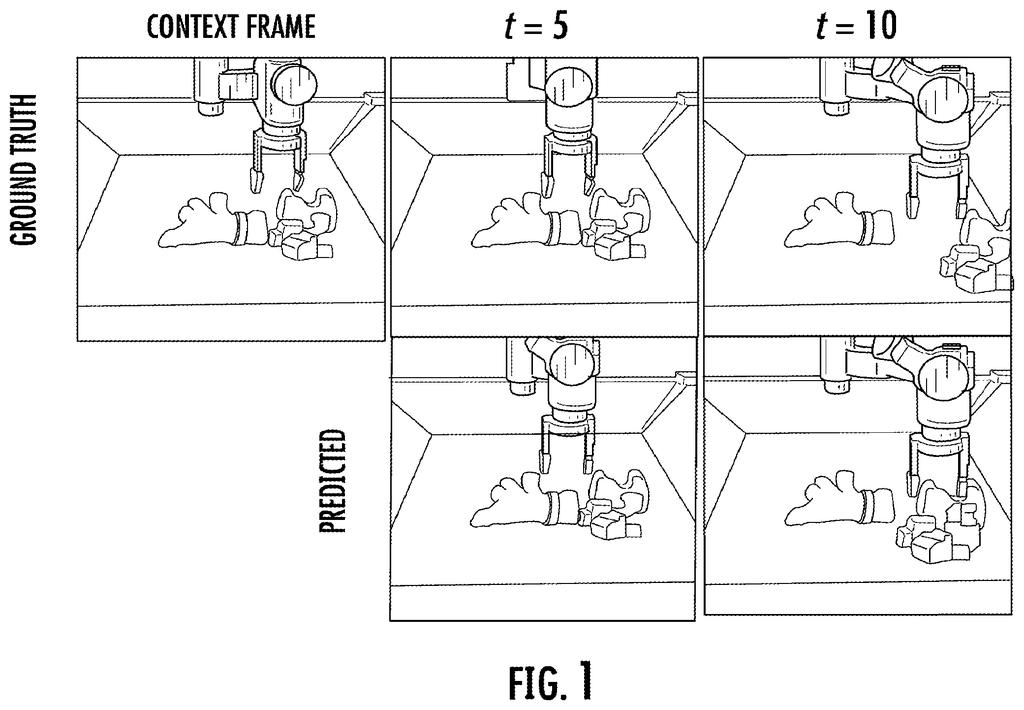
What Google's video-prediction AI actually does
Imagine you're watching a video call and your internet cuts out for a split second. Instead of freezing or showing a blurry mess, what if your device could guess the next few frames well enough to fill the gap? That's the core idea behind this Google patent.
Google's system is an AI model trained to look at one or more previous frames of a video and produce a believable prediction of what the next frames will look like. It works at the pixel level, meaning it's not just guessing broadly; it's generating a full image.
This kind of technology has uses well beyond fixing dropped calls. It's relevant anywhere a machine needs to anticipate visual change quickly, from video compression to robots that need to predict how the world in front of them is about to move.
How the encoder-decoder model generates future frames
The patent describes a machine-learned video prediction model built around a convolutional variational autoencoder (CVAE). An autoencoder is an AI architecture with two halves: an encoder that compresses input data into a compact internal representation, and a decoder that reconstructs (or generates) output from that representation. "Convolutional" means it uses layers specially designed to process images, and "variational" means it introduces a degree of controlled randomness, which helps it generate plausible future frames rather than just averaging them into a blur.
The encoder portion takes in one or more past video frames and distills them into a compressed summary of what's happening visually. The decoder portion then uses that summary to generate predicted future frames.
The patent emphasizes both performance and efficiency, suggesting the architecture is designed to run this prediction process without requiring enormous amounts of computing power, which would be necessary for real-time or on-device applications.
The inventors include researchers well known in the machine learning field, with backgrounds in model-based reinforcement learning and video generation, which hints at the broader ambitions behind this work.
What this means for streaming, robotics, and AI video
Video prediction sits at the intersection of several fast-moving areas: video compression (predicting frames means you can transmit less data), robotics (a robot that can anticipate what the world will look like next can plan better actions), and generative video AI (the same machinery used to predict frames can be adapted to generate them from scratch).
For everyday users, the most tangible application is smoother streaming and video calls under poor network conditions. For Google specifically, this capability could feed into products ranging from YouTube's video delivery infrastructure to AI-powered robotics research, where predicting visual outcomes is a core part of how machines learn to act in the physical world.
The patent itself is fairly narrow, covering a specific architecture rather than a broad concept, so it's not a land-grab on all video prediction. But given the research team behind it, which includes prominent names in model-based reinforcement learning, this reads more like infrastructure for something larger than a standalone product feature.
There are more where this came from
We read every patent application Big Tech publishes and send you the ones worth knowing. Plain English, free, every week.
The drawings
10 drawing sheets from US 2026/0222617 A1 · click any drawing to enlarge


Want this weekly breakdown for a company we don't cover? Patentlyze Pro →
Be the first to weigh in