
Google Patents a System That Auto-Builds Animations from Your Content's Own Style
Google is patenting a way to generate animations automatically, not by having a designer pick colors and motion styles, but by letting the system read your content and figure out the look on its own.
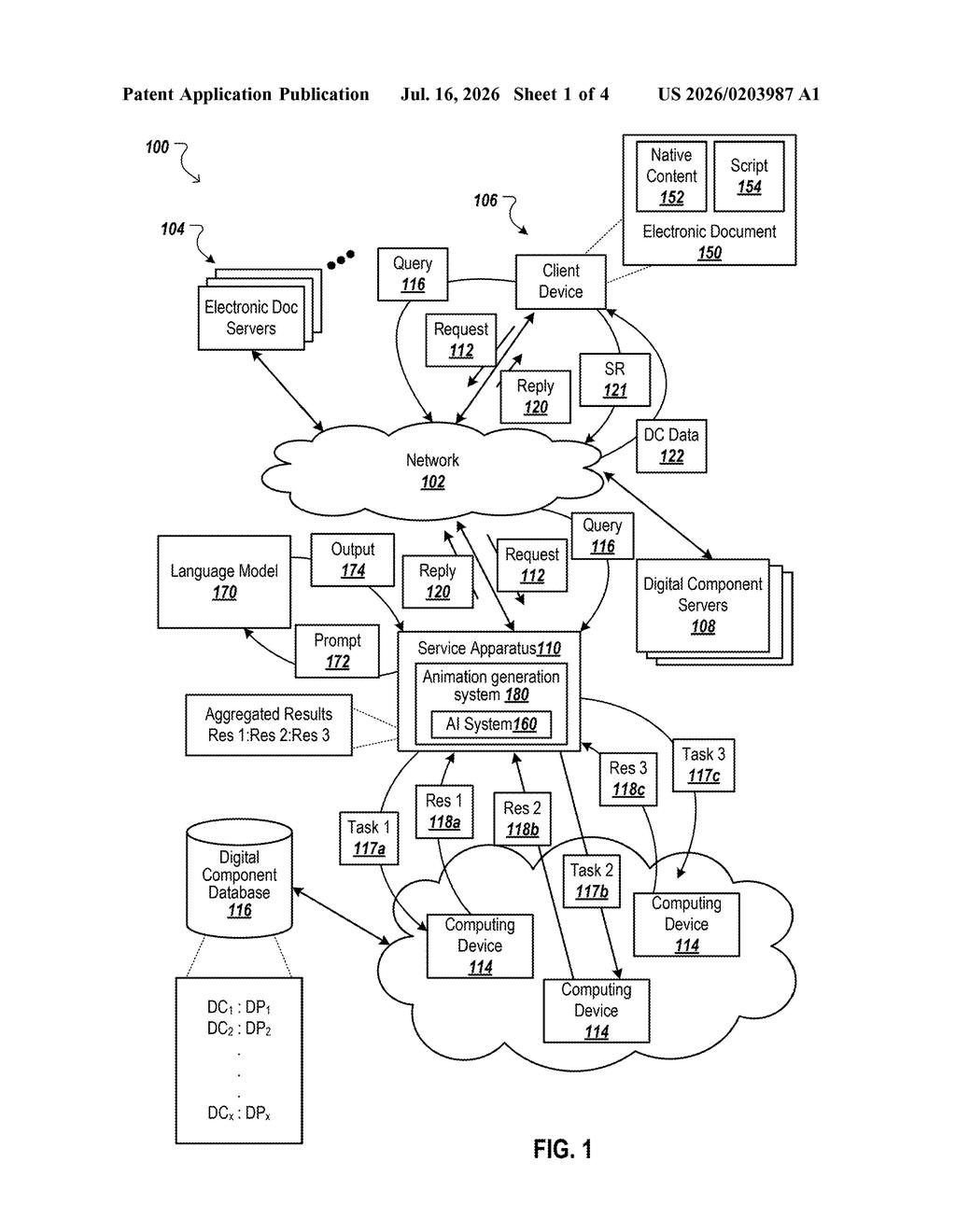
What Google's auto-animation system actually does
Imagine you're a small business uploading a product photo and some text to Google's ad platform. Right now, turning that into a polished animated ad usually takes a designer or at least a lot of manual fiddling with templates. Google's new patent describes a system that skips most of that.
The system takes your content, analyzes it to pick up on visual style cues (like color palette, tone, or the type of image), and then automatically fills in an animation template with those cues. The result is an animation that's built around your content rather than a generic preset someone else designed.
Think of it like a smart photo filter, except instead of just tweaking colors, it's building a whole animated sequence around what it detects in your material. You upload your stuff, and the system handles the motion, timing, and visual style.
How the system reads content and fills animation templates
The patent describes a pipeline with a few distinct stages. First, the system collects digital content data, which could be images, text, logos, or other media elements. It also pulls in an animation template, a pre-built structure that defines where each piece of content goes (called component slots) and what kind of motion or timing rules apply to each piece.
The interesting part is the middle step: the system processes the input content to determine style features. That means it's analyzing your content to extract visual or contextual properties, things like dominant colors, image type, or text sentiment, and using those to decide how the animation should look and feel.
Those style features are then applied to the components and the template together, generating the final animation data. The finished animation is then distributed to one or more client devices, meaning it's built server-side and delivered rather than rendered on the user's phone or browser.
The system is described in broad terms, so it could apply to:
- Automated ad creative generation
- Presentation or slide tools
- Social media content tools
The patent doesn't specify a particular product.
What this means for Google's ad and media tools
Google runs one of the largest digital advertising businesses on the planet, and a persistent bottleneck for advertisers, especially small ones, is creative production. If this system ships inside Google Ads or a related tool, it would let advertisers generate animated creatives automatically, without hiring a designer or building animations manually in something like Google Web Designer.
For you as an advertiser or content creator, the practical upside is speed and consistency: your animation looks like it belongs to your brand because the system derived its style from your own content rather than a random template. Whether Google can actually pull that off reliably is a separate question, but the direction is clear.
This is a pretty direct bet on automated ad creative, which is a space Google has been building toward for years through tools like Performance Max and responsive ads. The patent itself is broad and process-level rather than describing a specific technical breakthrough, so it reads more like defensive IP around a product direction than a novel invention. Worth tracking if you follow ad tech, but not a headline-grabbing disclosure on its own.
There are more where this came from
We read every patent application Big Tech publishes and send you the ones worth knowing. Plain English, free, every week.
Want this weekly breakdown for a company we don't cover? Patentlyze Pro →
Be the first to weigh in