
Sony Patent Switches VR View to Real World Mid-Game
Imagine you're deep in a VR world and someone walks into your room, or your character dies, and your headset automatically shows you the real world instead of leaving you blind. That's exactly what Sony is patenting.
What Sony's automatic VR pass-through switch actually does
Picture this: you're wearing a VR headset, totally immersed in a game, and your roommate tries to get your attention or a delivery person knocks on the door. Right now, you'd have no idea. Sony's patent describes a system that monitors what's happening both inside the virtual world and in your physical surroundings, and automatically flips your view to a live camera feed of the real room around you when it matters.
The trigger can come from two directions. Something inside the game, like your character being eliminated or reaching a pause point, can prompt the switch. Or something in the physical world, like a detected noise or motion nearby, can trigger it too.
The headset then swaps from the rendered VR scene to a see-through image, which is a live camera view of your actual surroundings. When the moment passes, it can switch back. It's an automatic safety net that keeps you connected to both worlds.
How the system decides when to cut to the real world
The patent describes a display control apparatus built around two detection systems running at the same time.
- VR event detection watches for specific moments inside the virtual space, things that happen to the object you're controlling (your in-game character or tool) or to other objects around you in the game.
- Real-world event detection watches for predetermined events in your physical environment, a noise, a motion, or any trigger the system is set to recognize.
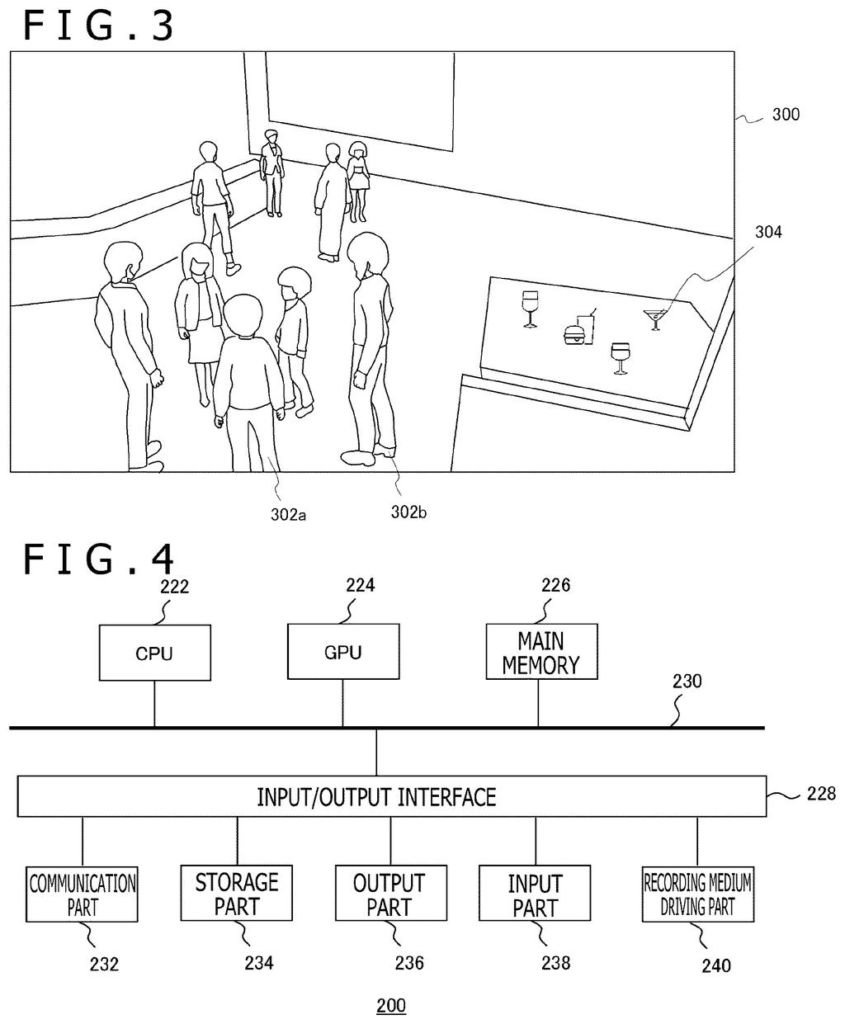
When either type of event fires, a mode switchover component decides whether to redirect the headset's display from the rendered virtual image to a see-through image (a live camera feed showing the real room). The patent refers to the physical device as a head-mounted display (HMD), and the content processing apparatus, likely a console or PC, handles all the detection and switching logic.
The claim is deliberately broad. The patent doesn't lock down specific trigger types, which means the system could theoretically respond to anything from a game-over screen to a smoke alarm, depending on how it's configured.
What this means for VR safety and PlayStation headsets
For anyone who has bumped into furniture, tripped over a pet, or missed an urgent knock at the door while wearing a VR headset, this is a real quality-of-life fix. Automatic pass-through switching removes the need to yank the headset off every time you need to check your surroundings, which makes extended VR sessions feel less isolating and genuinely safer.
Sony makes the PlayStation VR2, which already includes outward-facing cameras capable of pass-through video. A patent like this points toward making that feature proactive rather than manual, so the headset looks out for you instead of waiting for you to remember to ask. That's a meaningful shift in how VR hardware thinks about the person wearing it.
This is a practical, user-safety-focused patent rather than a flashy tech demo. The idea of context-aware pass-through switching is genuinely useful, and Sony's PSVR2 already has the camera hardware to support it. The broad claim language is smart filing strategy, but whether the final implementation feels smooth or jarring in practice will depend entirely on how well Sony tunes the event triggers.
There are more where this came from
We read every patent application Big Tech publishes and send you the ones worth knowing. Plain English, free, every week.
The drawings
9 drawing sheets from US 2026/0222534 A1 · click any drawing to enlarge


Want this weekly breakdown for a company we don't cover? Patentlyze Pro →
Be the first to weigh in