
Samsung Patents a Way to Stop Phone Calls From Howling When Two Devices Get Too Close
You've probably heard that piercing screech when two phones on the same call end up in the same room. Samsung's new patent uses ultra-wideband radio to detect exactly that situation and automatically kill the feedback before it starts.
What Samsung's UWB anti-howl system actually does
Imagine two people sitting in the same office, both dialed into the same conference call on their own phones. The moment one person's speaker plays audio, the other person's microphone picks it up and sends it right back, creating that painful, looping squeal called audio howling. It's one of those problems that's hard to fix because the phone doesn't automatically know it's sitting near another phone on the same call.
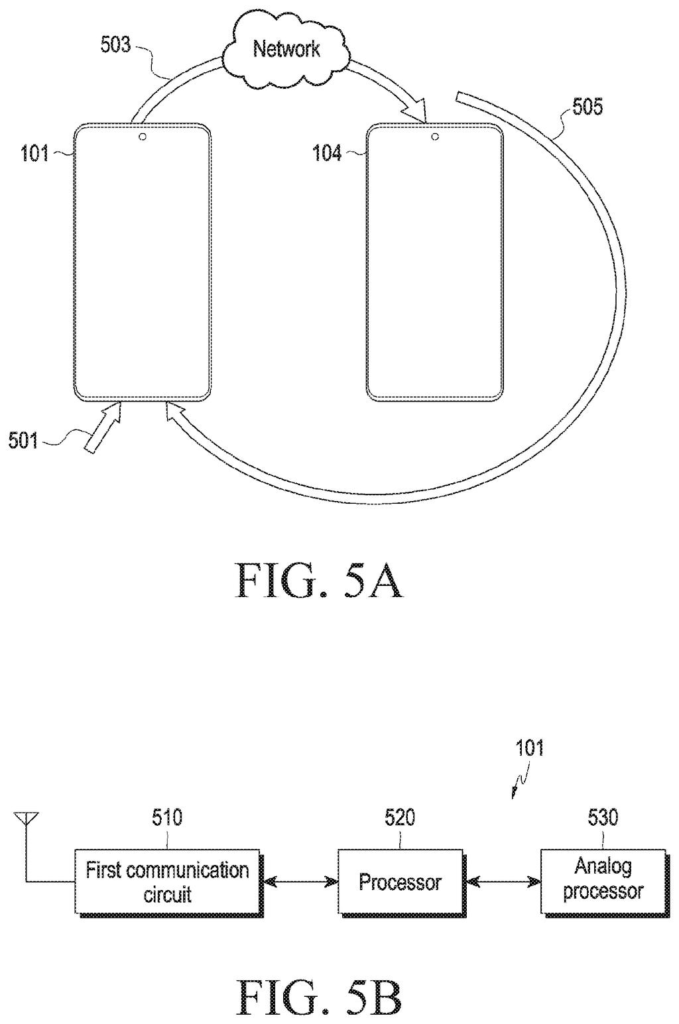
Samsung's patent describes a fix built around ultra-wideband (UWB) radio, the same short-range wireless technology already used in iPhone and Galaxy phones to pinpoint locations with centimeter-level accuracy. When your phone makes a call, it broadcasts a small packet of data called a token that contains information about the call. Nearby devices do the same. If your phone receives a token that matches your own call details, it knows there's another device from the same call sitting close by.
Once your phone confirms the other device is on the same call, it uses UWB to measure exactly how far away it is and at what angle. Armed with that information, it hands control to an anti-howling circuit that can dial back or cancel out the audio feedback automatically, no user action required.
How UWB tokens and distance data control the audio filter
The patent describes a call-aware spatial awareness system built on ultra-wideband (UWB) radio, a short-range wireless technology that can measure distance and direction far more precisely than Bluetooth or Wi-Fi.
When a device joins a phone call, it generates a token, essentially a small signed data packet that encodes details about that specific call session. The device broadcasts this token over UWB and listens for tokens from nearby devices. If a received token's call information matches the device's own active call, the system concludes that the sender is another participant on the same call and is physically nearby.
With the two devices mutually identified, UWB ranging kicks in to measure:
- Distance between the two devices
- Angle of arrival, meaning the direction one device is relative to the other
That spatial data feeds directly into an anti-howler circuit, which is dedicated hardware or DSP logic (digital signal processing, the chip work that shapes audio in real time) designed to suppress the looping feedback signal. The closer and more directly aligned two devices are, the more aggressively the anti-howler can attenuate the feedback path. The system is dynamic, so as devices move around a room, the correction adjusts continuously.
What this means for speakerphone and shared-room calling
Audio howling on shared-call scenarios is a genuinely common annoyance, and today's fixes are mostly blunt instruments: echo cancellation that degrades voice quality, or just telling people in the same room to mute one phone. This approach is more targeted because the phone actually knows the other device is on the same call before applying any filtering, which means it can tune the correction specifically to that situation rather than guessing.
For you, the practical upside is clearer speakerphone calls in shared spaces, whether that's a household where two people join the same video call or a small meeting room where devices cluster together. Samsung's Galaxy phones already include UWB hardware, so this wouldn't require new chips, just a software and firmware update to enable it.
This is a genuinely practical patent solving a real, everyday problem rather than a speculative future-product play. The use of UWB for call-context verification, not just location, is a clever extension of hardware that already ships in current Galaxy devices. It's not headline-grabbing, but it's exactly the kind of thoughtful audio engineering that makes a phone feel polished.
There are more where this came from
We read every patent application Big Tech publishes and send you the ones worth knowing. Plain English, free, every week.
The drawings
12 drawing sheets from US 2026/0222728 A1 · click any drawing to enlarge


Want this weekly breakdown for a company we don't cover? Patentlyze Pro →