
Samsung Patents a UWB Session Handoff System for Multi-Device Ranging
Ultra-wideband is already how your phone unlocks your car or finds a lost item — but what happens when you walk out of range of one device and into range of another? Samsung's new patent tackles exactly that handoff problem.
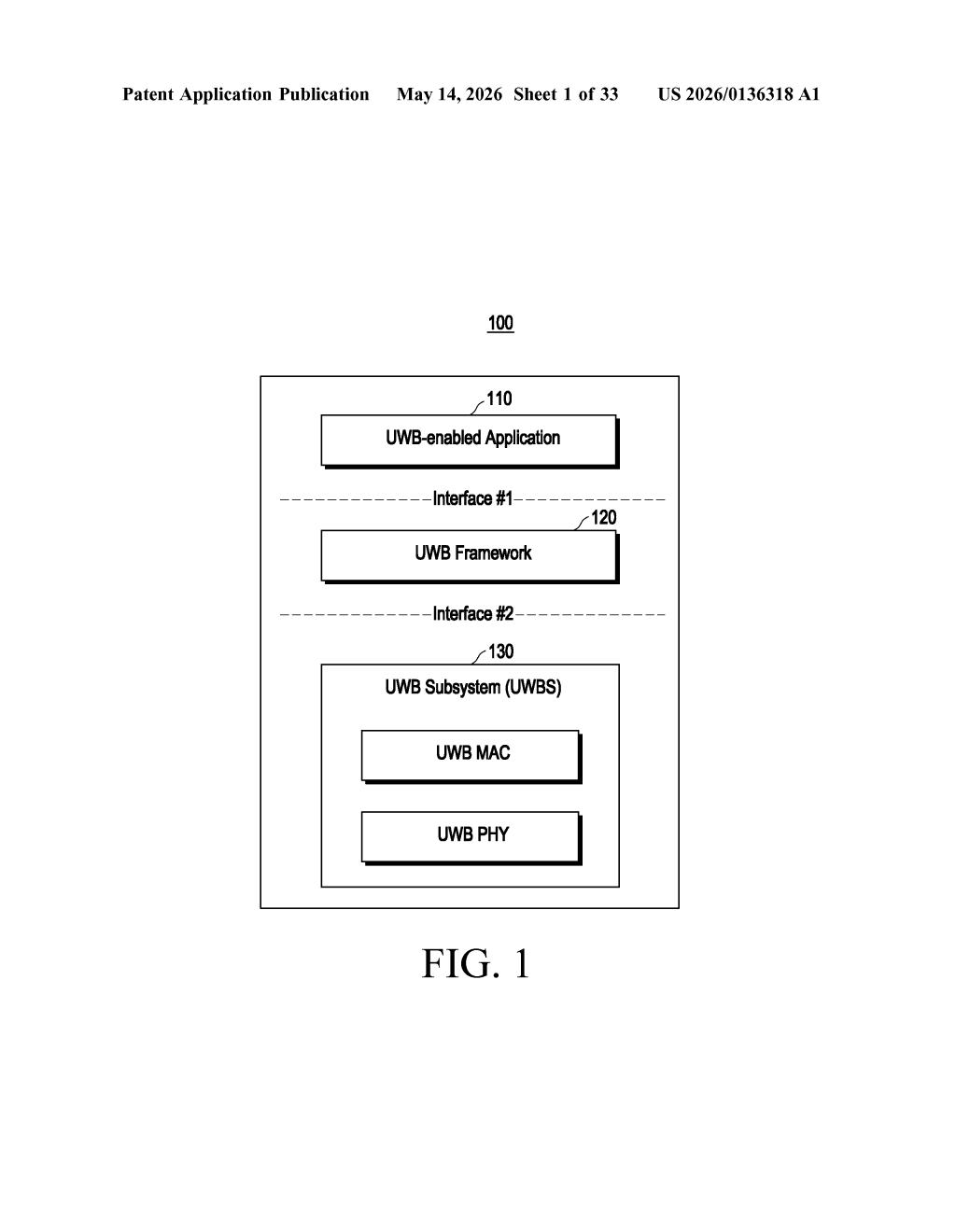
What Samsung's UWB session handoff actually does
Imagine you walk into your house and your phone is doing precise location tracking — figuring out exactly where you are relative to a smart lock or a tag — using a technology called UWB (ultra-wideband). UWB is like GPS but for indoors, accurate to centimeters. The problem is: each UWB conversation is tied to one specific device. If you move rooms, that conversation has to start over from scratch.
Samsung's patent describes a system where the first device you're talking to can recognize that you're moving away, then smoothly hand your UWB session off to a second device — kind of like how your Wi-Fi router hands your phone to a mesh node in another room. The first device passes along connection credentials so the second device can pick up without missing a beat.
The result is that your UWB-enabled experience — whether that's precise indoor navigation, a digital car key, or a spatial handoff to a smart home hub — doesn't drop just because you moved through a doorway.
How the first device decides to pass the UWB session
The patent describes a three-device choreography: a user device (think: your smartphone), a first electronic device (an anchor like a smart lock or hub), and a second electronic device (another registered anchor further along your path).
The first device continuously performs UWB ranging — measuring the precise distance and angle to the user device using time-of-flight radio pulses. Based on those range measurements, it evaluates whether a session handoff is warranted. The patent doesn't hardcode a single trigger; the "necessity" determination could account for signal quality, distance thresholds, or device load.
When a handoff is deemed necessary, the first device transmits UWB connection information about the second device back to the user device. This packet contains whatever the user device needs — addressing, security credentials, configuration — to establish a fresh UWB session with the second device directly. The flow from the patent diagrams includes:
- Optional secure channel setup between devices
- A UWB configuration exchange step
- A clean UWB session start with the new anchor
The second device must already be registered with the first device — so this isn't an open handoff to any random nearby hardware, but a trusted relay within a known ecosystem.
What this means for Samsung's connected device ecosystem
UWB is increasingly the backbone of proximity-aware features across Samsung's Galaxy lineup, its SmartThings ecosystem, and its digital car key partnerships. Right now, each UWB interaction is essentially stateless — one device, one session. A reliable handoff mechanism would let Samsung build continuous spatial awareness across a home, office, or vehicle without requiring the user to reconnect manually or suffer a gap in tracking precision.
For you as a user, this could mean a smart lock that anticipates which door you're heading toward, or a spatial audio system that hands off head-tracking duties as you move through a space. For Samsung's platform ambitions, it's the kind of plumbing that makes a multi-device UWB mesh actually viable — not just a collection of isolated point solutions.
This is infrastructure-layer work, not a flashy consumer feature — but it's exactly the kind of thing that separates a mature platform from a collection of demos. Samsung is clearly building toward a persistent UWB mesh, and session continuity is the unsexy prerequisite that makes it real. Worth watching as SmartThings hardware expands.
There are more where this came from
We read every patent application Big Tech publishes and send you the ones worth knowing. Plain English, free, every week.
Want this weekly breakdown for a company we don't cover? Patentlyze Pro →