
Patent Targets the Random Flickering That Disrupts Computer-Generated Visual Simulations
Flickering in rendered scenes is one of those problems that looks minor until you see it, and then you can't unsee it. Nvidia has filed a patent for a method that stops it at the source, by making sure simulations always pull from the same reference points no matter what order the computer processes them.
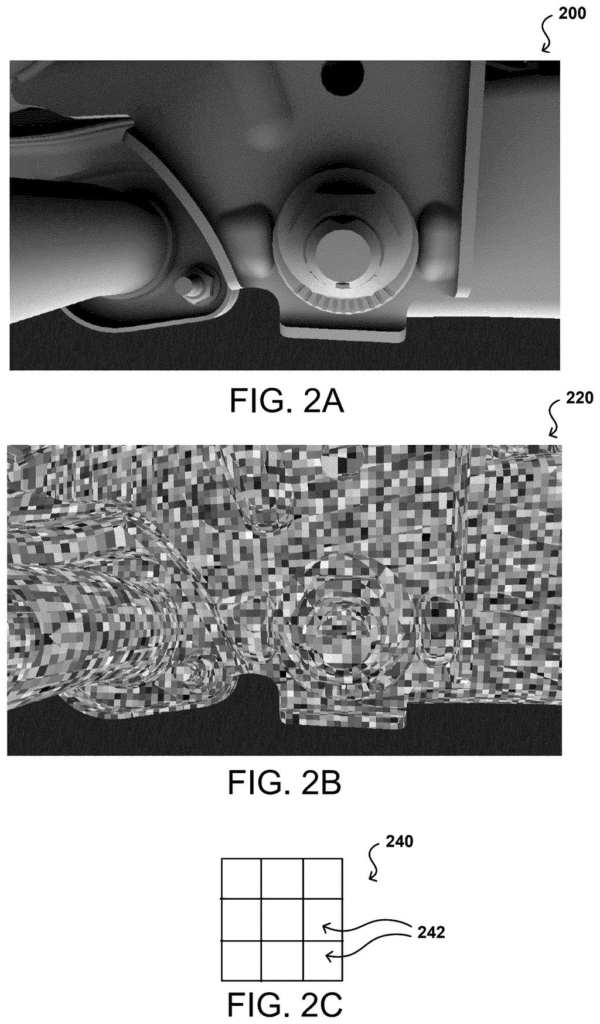
What Nvidia's anti-flicker rendering fix actually does
Imagine you're watching a real-time game scene where the lighting keeps subtly strobing or small details flicker for no obvious reason. That jitter usually happens because the software is picking slightly different calculation points each frame, producing inconsistent results.
Nvidia's patent describes a way to fix that. When a simulation divides a scene into a grid of cells (called a spatial hash map), each cell needs one reliable location to run its calculations from. Nvidia's method picks one representative spot per cell and locks it in, so every frame uses the same starting point, killing the inconsistency that causes flicker.
The trick is in how that information is stored. Instead of keeping two separate pieces of data that could conflict when multiple threads race to write them, Nvidia packs both into a single number and uses a built-in hardware operation to resolve any tie-breaking automatically. The result is stable, flicker-free output without extra overhead.
… storing a selector value and a location index value for the respective hash map entry in a combined value; and providing the combined value to determine the location for a computing operation to be performed for the respective hash map entry during the simulation.
Translation: Packing two different tracking values together helps the computer keep simulation points steady.
How Nvidia packs two values into one to lock sample points
The patent tackles a specific problem in spatial hashing, a common technique where a 3D scene is divided into a grid and each grid cell (a hash cell) stores data about the geometry or lighting inside it. When multiple simulation threads run in parallel, they can write to the same cell in different orders on different frames, causing the selected calculation point to shift unpredictably. That shift produces flickering.
Nvidia's fix involves choosing a single representative point for each hash cell and ensuring it wins out regardless of thread execution order. To do that, two pieces of information are packed into one combined integer value:
- Lower bits: the location index (which specific point in the scene this cell is anchored to)
- Higher bits: a selector value (a priority number used to pick the winner when threads compete)
Because the selector value occupies the higher-weight bits, an atomic maximum operation (a hardware-level instruction that resolves write conflicts instantly without needing a lock) will naturally favor the selector value first. The location index only acts as a tiebreaker when two entries share the same selector. This means the hardware's conflict resolution does the right thing automatically, with no extra logic needed.
The end result is that every execution of the simulation picks the same representative point for a given cell, producing consistent frames and eliminating the flicker.
Both a location index and a selector value are stored for this hash map entry in a single value, where lower bits store the location index and higher bits represent the selector value.
Translation: Dividing up a single digital value lets the system prioritize which data it checks first.
What this means for real-time rendering and game graphics
Flickering artifacts are a persistent annoyance in real-time rendering, particularly in path-traced lighting and physics simulations that divide scenes into spatial grids. Fixing them usually requires expensive per-frame checks or extra memory passes. Nvidia's approach offloads the consistency work onto a single packed integer and a hardware atomic operation, meaning the fix costs almost nothing in terms of performance.
For you as a player or a developer, the practical payoff is cleaner-looking scenes in games and applications that use Nvidia's simulation pipelines, without a frame-rate penalty. Given that spatial hashing is widely used in real-time global illumination (the tech that makes lighting in modern games look convincingly natural), a low-cost stability fix like this has broad reach across Nvidia's graphics ecosystem.
This is unglamorous but genuinely useful engineering. Flickering in spatial-hash simulations is a real problem that costs visual quality, and Nvidia's bit-packing trick is a clean, low-overhead solution. It's the kind of detail that makes a renderer feel polished without anyone outside the dev team knowing why.
There are more where this came from
We read every patent application Big Tech publishes and send you the ones worth knowing. Plain English, free, every week.
The drawings
17 drawing sheets from US 2026/0228962 A1 · click any drawing to enlarge


Want this weekly breakdown for a company we don't cover? Patentlyze Pro →
Be the first to weigh in